Could trying to keep rain out put you at greater risk than the damaged roof itself? If you’re wondering how to secure a roof tarp before a storm, start by staying off the ladder. A tarp may help limit water entry, but only when conditions are safe and the roof can be approached without putting anyone in danger.
It’s understandable to want to protect your home quickly when roof damage leaves it exposed. But rain, strong winds, unstable materials, steep slopes, and hidden structural damage can make DIY tarping hazardous. A tarp is temporary coverage, not a repair. Never install one during dangerous weather or walk on it once it’s in place.
This guide explains when temporary coverage may help, what safe anchoring involves, and when to leave the work to a roofing professional. You’ll also learn what to document and what to do next, including arranging roof repair, storm-damage restoration, and insurance-claim assistance.
Key Takeaways
- Understand the limits of temporary coverage and why a tarp should never depend on loose or damaged roofing for support.
- Assess roof height, slope, wetness, visible damage, and wind from a safe location. If conditions are unsafe or unclear, stay off the roof.
- Plan coverage so rain can run off the roof rather than collect on the tarp.
- Do not climb if rain, wind, lightning, or roof damage creates a hazard.
- After temporary coverage, monitor it from a safe location and take ground-level photos of visible damage for repair planning.
Why secure a roof tarp before a storm, and when not to climb
Roof damage can leave shingles, underlayment, or roof decking exposed to rain. Water may then reach the attic, ceilings, insulation, and other parts of the home, even if the opening looks small from the ground. Covering the damage may seem like the fastest way to protect your home, but climbing onto the roof isn’t always safe.
A tarp is a flexible sheet used for temporary covering. You can read more about common tarp uses and materials in What is a Tarp? On a roof, its role is limited: it may shield an exposed area for a time, but it doesn’t repair damaged roofing or guarantee that water won’t enter. Wind can lift the covering, heavy rain can overwhelm it, and poor anchoring can leave the damage exposed again. A roof tarp is temporary weather protection, not a roof repair or a promise against storm damage.
What a roof tarp can and cannot protect
Think of temporary coverage as a buffer between an opening and incoming rain, not as a watertight replacement for missing shingles or damaged decking. Correct placement may reduce direct exposure, but conditions can change quickly. Wind may catch the tarp’s edges, and rain can find gaps or run beneath loose material. If the roof is unstable, covering it won’t make it safe to approach.
That distinction matters when deciding how to secure a roof tarp before a storm. The goal is to limit further exposure without creating a new hazard or causing more damage. A tarp also hides what’s underneath it, so it can’t show whether there are structural problems that need inspection and repair after the immediate danger has passed.
When homeowners should stay off the roof
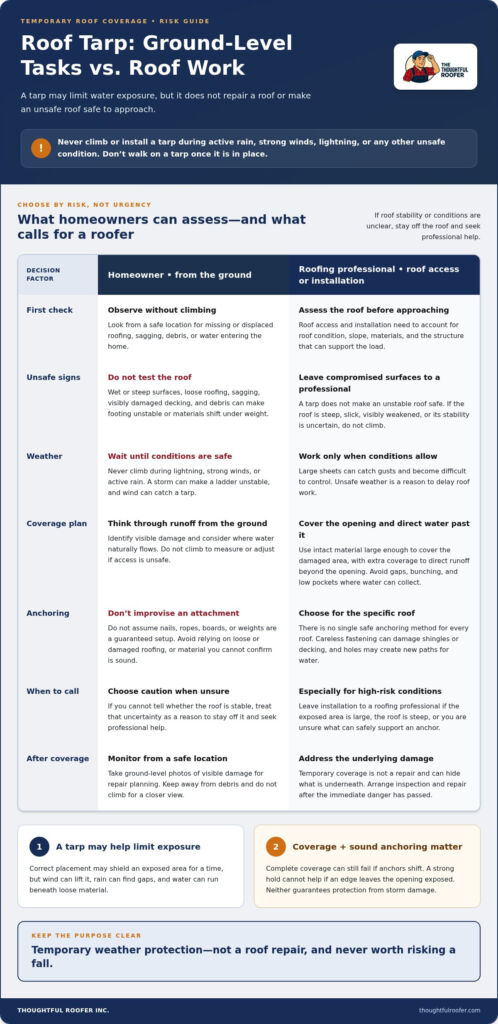
Never climb onto a roof during lightning, strong winds, active rain, or any other unsafe condition. Wet shingles can be slick, and steep slopes make footing less secure. Loose roofing, sagging areas, visibly damaged decking, and debris can shift under a person’s weight. Don’t step onto or test a section that looks weakened. A storm can also make a ladder unstable, and wind can catch a tarp and pull at the person handling it.
Leave steep, slick, unstable, or visibly weakened roofs to a roofing professional. If damage followed a storm, wait until conditions are safe rather than trying to beat the weather. A fall or further roof damage can turn an urgent repair into a more serious emergency.
From the ground, look for missing roofing, displaced materials, sagging, or water entering the home. Keep away from debris and don’t climb for a closer view. If you can’t tell whether the roof is stable, treat that uncertainty as a reason to stay off it and seek professional help. Protecting your household comes first. Temporary coverage can wait until it can be handled safely.
How tarp coverage and anchoring help limit water entry
A tarp only helps if it covers the exposed area and stays positioned so rain can run off the roof. Before installation, the coverage plan needs to account for the damaged section, the surrounding roof, and the direction water naturally flows. A sheet that leaves an opening exposed, shifts in the wind, or forms a low pocket can let water reach the roof or collect on top.
There isn’t one anchoring approach that’s safe for every roof. The right method depends on the roof’s condition, slope, materials, and the structure available to support the load. That’s one reason to leave roof access and tarp installation to a professional whenever the roof or weather creates uncertainty.
Choosing a tarp and planning adequate coverage
Temporary coverage should use intact material large enough to cover the damaged area, with extra coverage to direct runoff beyond the opening. Plan where the edges will sit and how rain will flow before handling the sheet. A tarp that’s too small may leave damage exposed as it shifts. One that bunches or sags can create places for water to collect.
Large sheets can catch gusts and become difficult to control. Don’t try to carry or position one in gusty conditions, and don’t climb onto a roof to measure or adjust coverage when access is unsafe.
Anchoring without creating another roof problem
An anchor must hold the tarp through changing conditions without relying on loose shingles, damaged roofing, or a weakened section of roof. Careless fastening can damage shingles or decking, and holes may create new paths for water. A method that appears secure on one roof may be unsuitable on another, so ropes, weights, and fasteners aren’t universal solutions.
Tarp security depends on both complete coverage and anchoring to a sound, suitable structure. A strong hold won’t help if rain can run beneath an uncovered edge. Broad coverage can fail if anchor points shift or roof materials give way. Don’t improvise an attachment if you can’t tell whether the supporting material is sound.
When researching how to secure a roof tarp before a storm, start with decisions you can make from the ground: identify visible damage, consider where runoff should go, and decide whether conditions allow professional work. Don’t treat any combination of nails, ropes, boards, or weights as a guaranteed setup. Careful planning can’t make roof access safe during dangerous weather or on a compromised surface.
If the exposed area is large, the roof is steep, or you’re unsure what can safely support an anchor, leave installation to a roofing professional. Once conditions allow, professional roof repair can address the underlying damage rather than relying on temporary coverage alone.
DIY roof tarp or professional help: decide based on risk
Before deciding whether to handle a tarp yourself, separate what you can safely do from the ground from any task that requires stepping onto the roof. You can observe visible damage, keep people away from the area, and document what you see without climbing. Roof access changes the risk significantly, especially when the surface is steep, wet, damaged, or exposed to wind.
A tarp is temporary protection, not a way to make a roof safe in severe weather. Don’t assume it can withstand Alabama tornadoes or strong storm winds. Conditions can worsen while work is underway, so a plan that seemed manageable earlier may no longer be safe as a storm approaches.
Conditions that make DIY tarp work unsafe
Stop if the roof is steep, wet, unstable, visibly damaged, or has loose shingles, decking, or other materials. Overhead power lines are another serious hazard. Wind can pull at a tarp or affect your balance, and a worsening forecast can quickly change the risk. Keep children and bystanders away from the damaged area while you assess it from a safe location.
When professional roof protection is the safer choice
Professional help is the safer option when roof access, visible damage, or changing weather creates uncertainty. A roofer can assess the damaged area and identify problems that may not be obvious from the ground. Storm-damage repair can address visible issues and less obvious roof damage after the immediate threat has passed. For a broader overview of recovery steps, see this storm damage roof repair guide.
Use this comparison to make a cautious decision. If a condition is unclear, choose the safer option and stay off the roof.
| Conditions | Safer choice | Reason to stop |
|---|---|---|
| Damage is visible from the ground, and no roof access is needed to keep people clear or record it. | Stay at ground level; observe and document from a safe distance. | There’s no need to take on roof-access risk just to get a closer look. |
| The roof is steep, slick, or high, or roofing materials appear loose. | Leave tarp work and assessment to a roofing professional. | Footing or the roof surface may not safely support a person. |
| Decking appears weakened, the structure is unstable, or damage may extend beyond the visible opening. | Keep off the roof and arrange a professional inspection. | Hidden damage can make the surface unpredictable. |
| Wind is rising, rain or lightning is present, or the forecast is worsening. | Do not climb; wait for safe conditions and professional assessment. | Weather can make both access and tarp handling dangerous. |
| Power lines are near the damaged area or the safe approach is uncertain. | Stay clear and seek professional help. | Electrical hazards and uncertain access aren’t worth attempting to manage from the roof. |
If you’re weighing how to secure a roof tarp before a storm, remember that choosing not to climb is a sound safety decision, not a failure to protect your home. Ground-level observation can help you explain what you see, while a professional can assess whether temporary coverage and repair are appropriate when conditions allow.
How to prepare roof tarp work before storm conditions arrive
Preparation starts before anyone handles a tarp or approaches a ladder. A clear forecast and a safe view from the ground help you decide whether temporary coverage is practical or whether the risk is already too high. In Huntsville, Madison, Owens Cross Roads, Gurley, and Athens, check current alerts and local conditions through the National Weather Service or another authoritative weather source. Forecasts can change, so reassess before any work begins.
Assess the forecast, damage, and work area
Use this checklist in order. If any step points to danger, stop and keep off the roof. A tarp is never worth risking a fall or delaying urgent help.
- Check weather alerts and current conditions. Don’t proceed if wind, rain, lightning, or a worsening forecast could make roof access or tarp handling unsafe.
- Observe the roof from the ground. Note visible openings, loose materials, sagging, debris, and nearby power lines. Don’t climb for a closer look.
- Clear the area below the damage. Keep children, pets, and bystanders away from the house edge and any area where roofing or debris could fall.
- Decide whether roof access is safe. If the roof is steep, wet, unstable, or visibly weakened, leave the work to a roofing professional.
- Set a stop point before work starts. If conditions worsen, stop and retreat safely. Don’t try to finish as wind or rain increases.
Prepare materials and a safe fallback plan
Gather materials only if you can move and handle them without rushing or entering a hazardous area. A large tarp can catch gusts, so don’t unfold or carry it outdoors in windy conditions. Keep equipment organized at ground level, and don’t stage items on a roof unless a qualified professional is handling the work.
Plan how everyone will move away from the work area if the weather changes. Keep children and pets indoors or well clear, and leave the exit path unobstructed. If someone is injured, the structure is unsafe, or another immediate emergency arises, contact emergency services as appropriate. Don’t delay an emergency response to install or adjust a tarp.
Check the weather first, assess the roof from the ground, and proceed only if both conditions and access are safe. Complete safe, accessible work before conditions deteriorate, not as the storm approaches. If the safe window is closing, abandon the tarp plan and focus on protecting people and belongings indoors.
If you’re unsure whether the roof can be approached safely, arrange professional roof damage assessment rather than taking a chance on a rushed installation.
After temporary roof coverage: document damage and arrange repair
A tarp can reduce exposure for a time, but it doesn’t restore the roof or remove the need for follow-up. Monitor it only from a safe location, such as indoors or from the ground. If it shifts, loosens, or appears to be collecting water, don’t approach it or climb onto the roof to adjust it. Keep people clear of the area and arrange professional help when conditions allow.
Document visible damage without taking unnecessary risks
Once it’s safe, take photographs from the ground or another secure location. Capture the visible damage and surrounding roof area, and record the date the damage occurred or was first noticed. If water has entered the home, note where and when you see it, but don’t enter an area that may be unsafe.
Keep your notes and receipts related to temporary protection and later repairs together. These records can help you explain what happened and organize a conversation with your insurer, but they don’t guarantee coverage. Insurance decisions depend on the terms of your policy, so review its requirements and keep copies of related communication.
- Save ground-level photos showing the roof damage and any visible changes to the tarp.
- Record dates, observations, and any water intrusion inside the home.
- Keep receipts and documents related to emergency protection and subsequent repair work.
Move from temporary coverage to a durable repair
Even if the covering looks secure, arrange a professional inspection once conditions are safe. A tarp can conceal damage, and what’s visible from the ground may not show the full extent of the problem. An inspection helps determine what needs repair and whether storm damage has affected other parts of the roof.
Thoughtful Roofer Inc. provides residential roof repair and storm-damage restoration, along with assistance navigating insurance claims. A temporary covering is only a stopgap. The next step is understanding the damage and planning a durable repair. For additional homeowner guidance, this Huntsville roof repair guide explains considerations involved in roof repair.
Monitor the situation from a safe place until the roof has been inspected and repaired. Don’t wait for a visible leak to return before taking the next step, since temporary coverage may shift or allow water through without warning. If the tarp moves, stay clear and report what you can see from the ground.
If storm damage has left your roof exposed, get help with storm-damaged roofing from Thoughtful Roofer Inc. to move from temporary protection toward inspection and repair.
Choose a safer next step for your home
Once the immediate danger has passed, step back and make a clear plan. You don’t need to put yourself on a roof to prove you’re protecting your home. If you’re still weighing how to secure a roof tarp before a storm, let safety guide the decision and leave uncertain roof access to trained professionals.
Thoughtful Roofer is a veteran-owned local roofing company serving Huntsville, Madison, Owens Cross Roads, Gurley, and Athens. The team provides residential roof repair and storm-damage restoration, and can assist you as you navigate an insurance claim. Your next step can be a careful assessment, not a risky climb.
Get help with storm-damaged roofing and move toward a stable repair with support. You can protect your household while taking the time to make a safer, informed decision.
Frequently Asked Questions
Can I put a tarp on my roof while it is raining?
No. Don’t climb onto a roof or handle a tarp during active rain. Wet surfaces make footing unpredictable, and wind or lightning may develop quickly. If water is entering, move people, electronics, and valuables away from the affected room if you can do so safely. Place a container under a drip only from a stable indoor position, and wait for safe conditions before arranging a roof assessment.
How do you keep a roof tarp from blowing off?
A tarp needs adequate coverage and anchoring suited to the roof, but no fastening method works safely in every situation. In gusts, a large sheet can catch wind and become difficult to control. Don’t climb to secure it during windy conditions or rely on loose shingles to hold an anchor. If you’re unsure how to secure a roof tarp before a storm, leave the roof work to a professional.
Can a roof tarp protect my home during a tornado?
No. A roof tarp isn’t tornado protection and can’t be relied on to withstand severe winds. Follow official alerts and move to your designated safe shelter rather than attempting roof work as a storm approaches. After the threat passes, stay clear of fallen wires, debris, and damaged roof sections. Homeowners in Huntsville, Madison, Owens Cross Roads, Gurley, and Athens should wait until conditions are safe before arranging a roof inspection.
How long can a roof tarp stay in place?
There’s no dependable set duration for every tarp. Its condition depends on how it was installed, the weather it faces, and the damage underneath. Check for visible changes from the ground, but don’t climb to inspect or adjust it. If an edge appears loose or water is getting in, keep away from the roof and arrange a professional assessment so temporary coverage can be followed by a repair plan.
Can securing a roof tarp cause more roof damage?
Yes. Carelessly installed fasteners can puncture roofing or damage shingles and decking, while loose anchoring can let the tarp shift. Damage beneath the surface may also make the roof less stable than it appears. Avoid experimenting with attachment methods, especially on a steep or weakened roof. A professional inspection can help identify whether the roof needs repair beyond the area you can see.
Will homeowners insurance cover roof tarping after storm damage?
Coverage depends on your policy, the cause of the damage, and your insurer’s requirements, so don’t assume tarping or repairs will automatically be paid for. Save dated photos taken from a safe location, receipts, and notes about what happened, then review your policy and speak with your insurer. Thoughtful Roofer assists homeowners in Huntsville, Madison, Owens Cross Roads, Gurley, and Athens with storm-damage documentation and navigating the claims process.