What if the shingle color that looks coolest on your home isn’t the one that keeps your attic coolest? The pros and cons of dark vs light colored shingles involve more than appearance. Color can affect how much sunlight the roof absorbs, but insulation, ventilation, roof exposure, and your home’s overall design also matter. Before choosing a color that will shape your home’s look for years, consider how these factors work together.
In North Alabama, summer sun, storm exposure, and the colors of nearby brick and siding can all influence what works best. Dark shingles may create bold contrast and suit some exteriors, while lighter shades can reflect more sunlight and give a home a softer look. Neither is automatically right for every house, and color alone doesn’t determine shingle durability or maintenance needs.
This guide compares the practical trade-offs in heat, curb appeal, and upkeep, with local conditions in mind. You’ll learn how to weigh shade against roof exposure and your home’s exterior, and how an inspection can help bring roof condition into the decision. The goal is a color choice that suits your home and fits into a thoughtful plan for its protection.
Key Takeaways
- Compare dark and light shingles as broad color groups, not guaranteed indicators of roof performance.
- Sunlight, insulation, and ventilation work together to influence attic conditions and indoor comfort.
- Use the pros and cons of dark vs light colored shingles to weigh appearance, heat absorption, visible dirt or growth, and how each shade pairs with your exterior.
- Choose a color by considering your home’s materials, roof exposure, and personal priorities in North Alabama.
- A roof inspection can help you factor existing roof condition and exposure into a color decision or larger shingle project.
Do dark or light shingles really change how your home feels?
Choosing a roof color is a design decision, and it can also affect how much sunlight the roof absorbs. But a shingle shade alone can’t tell you what your rooms will feel like or how much energy your home will use. The practical pros and cons of dark vs light colored shingles depend on the whole roof assembly and the conditions around your home.
Roof color can influence heat at the roof surface, but it doesn’t guarantee a particular indoor temperature or energy bill. Dark and light are relative color groups, not technical performance ratings. Two shingles that look similarly dark may reflect different amounts of sunlight depending on their materials and surface characteristics.
What does shingle color change on a roof?
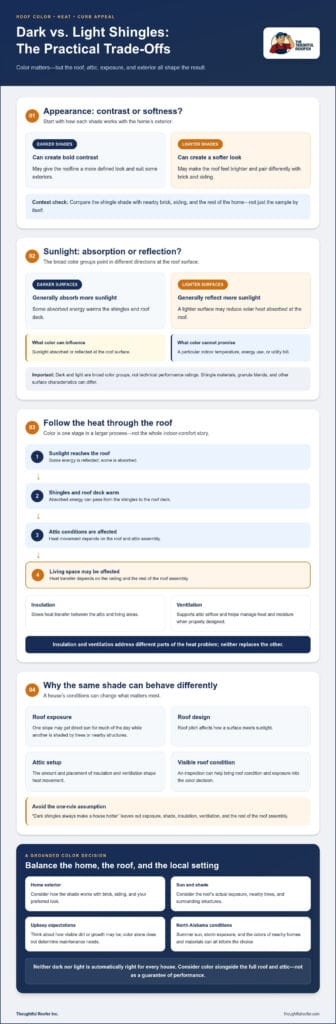
In general, darker surfaces absorb more sunlight, while lighter surfaces reflect more. Some absorbed solar energy warms the shingles and roof deck. From there, heat may move toward the attic, but the roof surface, attic, and living areas are separate parts of the process. A hotter roof surface doesn’t automatically mean the rooms below will become equally hot.
How much heat reaches the home depends on how the roof and attic manage it. Insulation slows heat transfer into the rooms below, while ventilation helps move air through the attic. Neither makes the other unnecessary. A lighter color may reduce solar heat absorbed at the surface, but that fact alone can’t predict a specific change in indoor comfort or cooling costs.
Why does the same color perform differently from home to home?
A roof’s exposure matters. One slope may receive direct sun for much of the day, while another is shaded by trees or nearby structures. Roof pitch affects how a surface meets sunlight, and the amount and placement of attic insulation and ventilation also shape heat movement. These factors can differ even between neighboring homes.
That’s why simple claims such as “dark shingles always make a house hotter” leave out important context. In Huntsville, Madison, Owens Cross Roads, Gurley, and Athens, homeowners should consider the roof’s actual sun exposure alongside the full roof and attic assembly, rather than assume color will have the same effect on every house. A roof inspection can help you consider visible roof conditions and exposure before making color part of a larger asphalt shingle roofing decision.
How roof color, insulation, and ventilation work together
To understand what a shingle color can do, follow the heat. Sunlight reaches the roof surface; some is reflected and some absorbed. The absorbed energy warms the shingles and can pass to the roof deck beneath them. From there, heat may affect attic conditions, then move toward the living space depending on the ceiling and roof assembly. Each step influences the next, so color is only one part of the picture.
What happens to sunlight on dark and light shingles?
Comparable darker surfaces generally absorb more solar energy than lighter ones, which tend to reflect more. But color isn’t a precise performance rating: shingle materials, granule blends, and other surface characteristics can vary within both groups. Some roofing products are designed to reflect more sunlight than standard options. The U.S. Environmental Protection Agency explains how Cool roofs reflect more sunlight and can help reduce heat absorbed by buildings.
That distinction matters when weighing the pros and cons of dark vs light colored shingles. A shade alone can’t predict how much heat will reach your rooms or whether your energy use will change. Even a cooler roof surface doesn’t guarantee a particular indoor temperature or utility-bill result.
Can attic insulation and ventilation outweigh color?
They address different parts of the heat problem. Insulation slows heat transfer between the attic and living areas. Ventilation supports airflow through the attic, helping manage heat and moisture when the roof’s ventilation system is properly designed. Neither is a substitute for the other, and adding airflow won’t correct inadequate insulation.
Indoor comfort depends on more than shingle color: insulation, attic ventilation, roof exposure, shade, roof design, and the condition of the full roof assembly all play a role. For example, two homes with the same shingle shade may respond differently if one gets more direct sun or has a different attic setup.
When planning asphalt shingle roofing, consider the existing insulation and ventilation along with color rather than treating a new shade as a fix for attic performance. If rooms feel unusually hot or you have concerns about the roof, a qualified inspection can help assess visible roof conditions. A roof inspection can also bring roof condition and exposure into the color discussion, helping you make a decision based on your home rather than a general rule.
Dark vs. light shingles: the practical pros and cons
The pros and cons of dark vs light colored shingles are easiest to compare by looking at everyday considerations side by side. Neither shade guarantees lower upkeep, better durability, or a more comfortable home. The table is a starting point: the specific shingle, roof exposure, nearby trees, and home exterior all shape what you’ll notice.
| Consideration | Darker shades | Lighter shades | Important caveats |
|---|---|---|---|
| Appearance | Can create contrast and a more defined roofline. | Can give the roof a brighter, softer look. | Whether a shade suits the home depends on siding, brick, trim, and personal preference. |
| Solar heat | Generally absorb more sunlight than comparable lighter shades. | Generally reflect more sunlight than comparable darker shades. | Shingle formulation and the full roof and attic assembly affect performance. |
| Debris and growth | May make some leaves or dark debris less noticeable. | May make dark stains, debris, or biological growth more noticeable. | Visibility varies with shade, trees, moisture, roofing materials, and maintenance. |
| Snow and ice | May warm more in sun, which can contribute to faster snowmelt in some conditions. | May absorb less solar heat under comparable conditions. | Results depend on weather, slope, shade, and roof conditions; snowmelt isn’t a safety benefit. |
What are the advantages and trade-offs of dark shingles?
Darker shades can anchor a light-colored exterior or complement some brick and trim combinations. They may also make certain dark debris less obvious, but that doesn’t mean the roof needs less care. Darker surfaces generally absorb more solar energy than comparable lighter ones, so the effect on a particular home depends on exposure and the roof assembly. Snow may melt sooner on a sunny dark slope in some conditions, but this varies and shouldn’t be treated as protection from ice or falling snow.
What are the advantages and trade-offs of light shingles?
Lighter shades can give a home a brighter roofline and typically absorb less solar energy than comparable darker shades. They can also make some dark marks easier to see. Tree cover, moisture, roof orientation, and the shingle’s surface all affect staining and visible growth. A light roof isn’t automatically cleaner, and color alone doesn’t establish how long shingles will last.
Choose based on your home and the roof’s real conditions, not a promise tied to shade. During asphalt shingle roof planning, an inspection can help you consider roof condition and exposure alongside appearance, so the color decision fits the project as a whole.
How to choose a shingle color for a North Alabama home
A roof color needs to work with the house you have, the sun your roof receives, and what matters most to your household. Huntsville’s summer sun and humidity make exposure and roof condition useful parts of the decision, but local weather doesn’t point every home toward the same shade. Use this process to narrow your options before choosing shingles.
How can you judge color samples more reliably?
Don’t choose from a screen alone. Colors can shift with lighting and display settings, and a small sample may look different across a full roof. Compare representative samples outdoors beside your siding, brick, and trim. View them in direct sun and shade, and at different times of day. If possible, step back far enough to picture the color across the whole roofline.
Keep both appearance and roof condition in view. A roof inspection can help assess visible roof needs and exposure as you plan a replacement or other asphalt shingle roofing work. For an overview of what to expect from the broader project, see professional roofing services.
Thoughtful Roofer Inc. helps homeowners in Huntsville, Madison, Owens Cross Roads, Gurley, and Athens consider roof condition and exposure as part of shingle planning. Learn more about shingle roofing projects and how to plan for your home.
Make the final shingle color decision with the whole roof in mind
There’s no universal winner in the pros and cons of dark vs light colored shingles. A suitable shade balances the home’s exterior and exposure with your preferences, but color is only one part of a sound roofing decision. Consider roof condition and the needs of the full project, especially if you’ve noticed a leak, visible damage, or signs of aging.
When should roof condition take priority over color?
If shingles are damaged, water is getting inside, or the roof is showing signs of age, start by understanding its condition. Choosing a new color before assessing what needs repair or replacement can put appearance ahead of the home’s protection. An inspection can help identify visible concerns and consider roof exposure and project needs before you settle on a replacement plan.
After severe weather, don’t rely on color or curb appeal to judge whether the roof is sound. If you’re seeing signs of storm impact, read this storm damage roof repair guidance for practical next steps.
What should homeowners do next?
Before discussing a project, jot down the shades you’re considering and what matters most to you. For example, note whether you’re focused on how the roof will look with the home, how much sun it receives, or concerns about existing wear. That short list helps keep the conversation focused on your home rather than a one-size-fits-all color rule.
Thoughtful Roofer Inc. handles residential asphalt shingle roofing and roof inspections for homeowners in Huntsville, Madison, Owens Cross Roads, Gurley, and Athens. A project discussion can connect your color preferences with the roof’s current condition and the home’s setting. If you’re also weighing a different roofing material, explore this metal roofing guidance as a separate comparison.
For guidance on your residential asphalt shingle roofing project, learn about working with Thoughtful Roofer Inc.
Choose a Roof Color That Fits Your Home
The pros and cons of dark vs light colored shingles come down to more than shade. Darker shingles generally absorb more solar energy than comparable lighter ones, but insulation, ventilation, roof exposure, and the condition of the roof assembly all influence how that heat affects your home. Appearance, visible debris, and how the color works with your exterior matter, too.
Neither dark nor light shingles are right for every North Alabama home. Compare samples against your exterior, consider your priorities, and put visible damage or leaks ahead of cosmetic choices. A roof inspection can help connect the existing roof’s condition and sun exposure to your plans.
Thoughtful Roofer Inc. is a veteran-owned local roofing business serving Huntsville, Madison, Owens Cross Roads, Gurley, and Athens with residential asphalt shingle installation, inspections, repairs, and storm damage restoration. Talk with Thoughtful Roofer about your asphalt shingle roofing project to discuss your roof’s condition, exposure, and color options.
Frequently Asked Questions
Do dark shingles make a house hotter?
Dark shingles generally absorb more solar energy than comparable light shingles, but that doesn’t directly determine indoor comfort. Heat moves through the roof assembly, and insulation, attic ventilation, roof design, shade, and sun exposure all affect how much reaches the home. A dark roof may have a warmer surface in sunlight, but color alone can’t predict room temperatures or cooling needs. Treat heat absorption as one factor in your decision.
Are light-colored shingles more energy efficient?
Lighter shingles generally absorb less solar heat than comparable darker options, but that doesn’t guarantee lower energy use. The result depends on the shingle’s properties and the whole roof assembly, including insulation, ventilation, and exposure to direct sun. If energy performance is a priority, consider those elements together rather than relying on color to deliver a specific saving. A roof inspection can help assess visible roof conditions as part of project planning.
Do dark shingles last longer than light shingles?
No color is automatically longer-lasting. Shingle life depends on product construction, installation, ventilation, sun and weather exposure, and maintenance. Darker shingles may absorb more solar heat, but that fact alone doesn’t prove they’ll wear out sooner or last longer than a lighter product. Compare the specific roofing materials and consider the roof’s condition. If you’re planning a replacement, an inspection can help identify issues that color selection won’t address.
Can light shingles help lower cooling needs in Huntsville?
They may absorb less solar heat than comparable dark shingles, so color can be one consideration for a Huntsville home. But it can’t guarantee reduced cooling needs. Insulation, attic ventilation, roof design, shade, and sun exposure also affect heat transfer and indoor comfort. The pros and cons of dark vs light colored shingles should be weighed alongside the complete roof system, not used to predict a specific change in energy use.
What happens if I choose dark shingles in a warm climate?
Dark shingles may absorb more solar energy than comparable light shingles, but choosing them doesn’t automatically make a home uncomfortable or inefficient. The outcome depends on product characteristics, roof orientation, shade, insulation, and ventilation. Consider the look you prefer alongside your home’s exposure and performance priorities. If you’re concerned about attic heat or roof condition, a professional roof inspection can help you understand the existing conditions before making a roofing decision.
Do light shingles show more dirt or algae?
How should I compare shingle colors before replacing my roof?
View representative samples outdoors beside your siding, brick, and trim, and compare them in direct sun and shade. A small sample may look different across a full roof, so step back and consider the whole exterior. Note your preferred shades and any concerns about exposure or existing roof wear. Homeowners in Huntsville, Madison, Owens Cross Roads, Gurley, and Athens can use a roof inspection to connect those preferences with roof condition and project needs.