What if the biggest source of stress during a roof replacement isn’t the noise, but not knowing what happens next? The roof replacement process from start to finish has clear checkpoints, but homeowners often worry about protecting their home, managing disruption, and what the crew might find beneath the old shingles. Those concerns are understandable. Knowing what to ask at each stage can make the project easier to follow, whether you live in Huntsville, Madison, Owens Cross Roads, Gurley, or Athens.
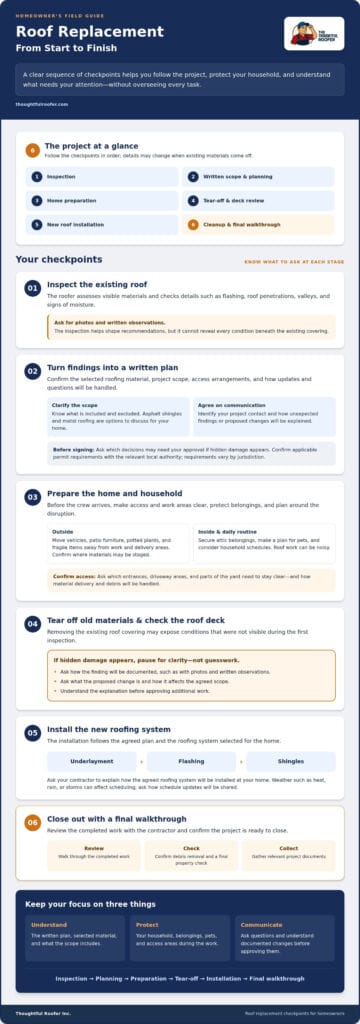
This guide walks you through the project, from inspection and planning to tear-off, installation, cleanup, and closeout. You’ll learn what to move before the crew arrives, how to prepare your household, and what to ask if the exposed roof deck needs attention. Understanding how the contractor will document a finding and explain a proposed change can help you make an informed decision.
Whether you’re considering asphalt shingles or exploring metal roofing, use these checkpoints to prepare questions and stay informed. You don’t need to oversee every task. Focus on understanding the written plan, protecting your household, and knowing how to communicate with your local roofing contractor.
Key Takeaways
- Track the roof replacement process from start to finish, from inspection and scope planning through installation and the final walkthrough.
- Before work begins, confirm the selected roofing material, project scope, access arrangements, and who to contact with questions.
- Prepare your home by moving vehicles and patio items, securing attic belongings, and planning around pets and household schedules.
- Ask how the contractor will document and discuss hidden roof-deck damage before you approve changes to the agreed scope.
- At closeout, review the completed work, confirm debris removal and a final property check, and collect relevant project documents.
Roof Replacement Process from Start to Finish: What Happens First?
A roof replacement follows a sequence, although details can change once the existing materials come off. The usual checkpoints are inspection, a written scope, home preparation, tear-off, roof-deck review, installation, and a final walkthrough. Knowing what happens at each stage helps you understand the plan and recognize when the contractor may need to pause and discuss a newly discovered issue.
What happens during the first roof inspection?
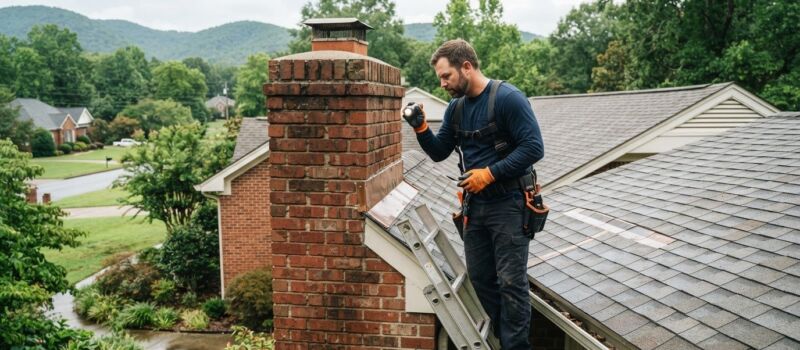
The roofer assesses visible roofing materials and checks details such as flashing, roof penetrations, valleys, and signs of moisture that may be affecting the structure. These observations help identify concerns and shape initial recommendations, but they can’t reveal every condition beneath the existing roof covering.
Some problems become visible only after tear-off exposes the roof deck. The initial inspection is a starting point, not a guarantee that every underlying condition is already known. Ask whether the contractor can share photos and written observations. These records help you understand what was seen, why replacement is recommended, and what remains subject to discovery.
How does the inspection become a replacement plan?
After assessing the roof, the contractor should discuss the proposed material, work scope, access arrangements, and how you’ll receive updates or raise questions. The plan should identify what’s included and excluded, and explain how unexpected damage will be documented and discussed before additional work proceeds. If you’re comparing asphalt shingles with metal roofing, ask how your selection affects the agreed scope.
Before signing, review the written details and clarify anything that feels uncertain. Ask who your project contact will be, how changes will be communicated, and which decisions may need your approval if hidden damage appears. Permit requirements vary by jurisdiction, so confirm applicable rules with the relevant Huntsville-area authority rather than relying on a general assumption.
Understanding how the roof deck supports the layers above it can also make the installation plan easier to follow. Domestic roof construction provides an overview of residential roof structures and coverings. With the inspection findings and scope in hand, you’ll have a clearer roadmap for the roof replacement process from start to finish.
Before the Roof Crew Arrives: Decisions and Home Preparation
Settling key decisions ahead of time can make installation day easier to manage. Confirm the roofing material and color, if applicable, along with the written scope and process for approving changes. Asphalt shingles are a primary residential option, while metal roofing is another possibility. Make sure you know what’s included, what isn’t, and how the contractor will explain unexpected findings before proceeding.
Which decisions should be settled before installation?
Clarify who your main project contact is and how you’ll receive updates about discoveries or schedule changes. Ask who coordinates material delivery, where the crew needs access, and how debris will be handled. Confirm whether vehicles need to be moved from the driveway and which entrances or areas should stay clear. Agreeing on these details helps prevent confusion when equipment and materials arrive.
Discuss the work sequence and household expectations in advance. The National Roofing Contractors Association guidelines can offer general roofing reference material, but your contractor should explain how the agreed roofing system will be installed at your home. In the Tennessee Valley, heat, rain, or storms can affect scheduling. Ask how updates will be shared instead of assuming a particular start or finish date.
How should you prepare your home and family?
Move cars away from work and delivery areas, and relocate patio furniture, potted plants, and other fragile outdoor items. Ask where materials may be staged and which parts of the yard or driveway the crew will use. Roof work can be noisy, and access may be limited while installation is underway.
Inside, consider protecting or moving attic belongings, especially items stored near the roof deck, where vibration or dust may be a concern. Plan ahead for pets, young children, naps, remote work, and other activities that may be disrupted by construction noise. Keep household members away from active work zones, and ask the contractor how the area will be managed for safety.
Before the crew arrives, agree on how you’ll get updates and whom to contact if something changes. Confirm the planned cleanup and debris removal, and ask whether the crew will check the surrounding property before leaving. These practical details are part of preparing for the roof replacement process from start to finish, not just choosing materials. If you’re planning a project in the Huntsville area, you can review residential roofing options as you prepare questions for your contractor.
Roof Tear-Off and Deck Inspection: What If Hidden Damage Appears?
Tear-off is when the existing roofing is removed so the underlying roof deck can be examined. Crews generally work in manageable sections, clearing old materials and exposing the surface beneath. This deck inspection is an important checkpoint: it gives the contractor a chance to identify concerns before underlayment and new shingles cover the area.
The visible roof condition before tear-off cannot confirm every concealed deck condition. Water damage or deterioration may be hidden under the roofing, so a finding that changes the agreed scope doesn’t automatically mean something has gone wrong. What matters is that the issue is shown, explained, and handled according to your written agreement.
What is the difference between tear-off and installing over existing shingles?
A tear-off removes the old roofing and gives the crew direct access to the deck. That access can reveal concealed issues and lets the contractor assess the surface before installing the specified new system. Installing over existing shingles leaves the old layer in place, so the deck isn’t exposed in the same way and underlying conditions may be harder to assess.
Neither approach is right for every roof. Suitability depends on the roof’s existing condition, the proposed system, and requirements that apply to the property. Ask the contractor to explain why they recommend a full tear-off or another approach, what it means for deck inspection, and how local requirements have been checked. Request that the recommendation and its reasoning be documented.
What should happen if the crew finds damaged decking?
Before the affected area is covered, ask the contractor to pause and show you where the concern is. Photos and a clear explanation can help you understand what was found and what corrective work is being proposed. Ask how the proposed change affects the agreed scope and what approval is needed before that work proceeds.
Check the written project agreement for its process for unexpected conditions and scope changes. It should clarify how the contractor will document the finding, explain the proposed work, and obtain your decision. Don’t assume a particular repair quantity or that an insurance policy will cover it. If insurance is involved, confirm coverage directly with your insurer. A calm, documented discussion keeps this stage of the roof replacement process from start to finish clear before new materials conceal the deck again.
New Roof Installation: Underlayment, Flashing, and Shingles in Sequence
Once the roof deck has been inspected and prepared, installation follows the system agreed on for your home. The general sequence is to prepare the deck, install the specified protective layers, detail roof transitions and openings, then install the shingles. Materials and methods depend on the selected roofing system and manufacturer’s instructions, so ask your contractor to explain how the written scope translates to the work on your roof.
How do underlayment and flashing protect vulnerable areas?
Underlayment sits beneath the visible roofing material, adding a protective layer between the deck and shingles. Flashing is used where the roof meets another surface or has an opening, helping direct water away from those transitions. Valleys, roof edges, chimneys, and penetrations such as vents need careful detailing because they interrupt the broad, continuous roof surface.
Specific layers and details vary by roofing system and product instructions. Ask which materials are included in your plan and how the crew will address vulnerable areas on your home. Proper detailing supports the roof assembly, but no installation explanation should be treated as a promise that leaks are impossible.
What should homeowners expect during shingle installation?
After the protective layers and transition details are in place, the crew installs the selected shingles according to the agreed scope and applicable product instructions. Work may progress across separate roof sections, depending on the home’s layout and site conditions. You may not see every layer from the ground, so keep the project contact available for questions about what’s being completed and what comes next.
If you have questions about visible details, ventilation components, or an approved scope change, raise them with the contractor rather than approaching the work area. Stay clear of active work zones for your safety. In North Alabama, heat, rain, or storms can affect work on an exposed roof. Ask what measures the crew plans to use to protect exposed areas and how weather-related delays will be communicated. The roof replacement process from start to finish may need to adjust when conditions change, so clear updates help you understand the plan without assuming a specific schedule.
For help understanding the installation plan for a residential asphalt shingle or metal roof, discuss your roofing project with a local contractor.
Final Roof Walkthrough, Cleanup, and Replacement Next Steps
Closeout is your chance to confirm that the agreed work is complete, ask about anything that remains unclear, and collect project records for future reference. Review the roof with the contractor from a safe location rather than climbing onto it. If the crew documented a scope change during installation, ask how that work was completed and make sure the final project information reflects it.
What belongs on a roof replacement completion checklist?
Use the walkthrough to compare the finished work with the written scope. Ask the contractor to explain details you can’t easily see from the ground, and raise open questions before considering the project closed. Warranty terms and maintenance guidance vary, so request the information that applies to the selected materials and your written agreement.
- Confirm that agreed work and approved scope changes have been addressed.
- Ask what project records, care instructions, and applicable warranty information you’ll receive.
- Confirm debris removal and a final check of the surrounding property, including areas where materials or work equipment were present.
- Discuss any remaining questions with the project contact and clarify what follow-up, if any, is documented.
Cleanup is part of a thorough handover. Ask what debris removal was completed and whether the crew checked the yard, driveway, and other areas used during the project. If you notice a concern after the walkthrough, contact the contractor promptly and describe what you observed. Keep your written agreement and project documents together so you can refer to the scope and any recorded changes.
When should a homeowner contact a local roofer?
If you’re unsure whether the roof needs replacement or what the project should include, an inspection can help clarify its condition and possible next steps. A roofer can explain observed concerns and discuss whether replacement is appropriate, without guaranteeing a particular outcome before assessing the home.
Thoughtful Roofer Inc. is a veteran-owned residential roofing company based in Huntsville, serving Huntsville, Madison, Owens Cross Roads, Gurley, and Athens. Its primary replacement option is asphalt shingle roofing, with metal roofing also available. A clear inspection, written scope, and closeout review help make the roof replacement process from start to finish easier to understand. To discuss your next steps, Discuss your roof replacement with Thoughtful Roofer Inc.
Move Forward With a Clear Roof Replacement Plan
A roof replacement feels more manageable when you know the key checkpoints: agree on materials and scope before work begins, prepare your household for the crew, and ask how newly uncovered damage will be documented and approved. At closeout, review the completed work and collect the project information you’ll need for future reference. These steps help you follow the roof replacement process from start to finish with fewer unanswered questions.
If you’re unsure about your roof’s condition or what a replacement project may involve, a local inspection can help clarify next steps. Thoughtful Roofer Inc. is a veteran-owned and operated residential roofing company serving the Huntsville area. Asphalt shingle roofing is its primary service, and the company also offers roof inspections and storm damage restoration.
Talk with Thoughtful Roofer Inc. about your roof replacement to discuss your concerns and project scope. With a clear plan and open communication, you can take the next step with greater confidence and care for your home.
Frequently Asked Questions
How long does the roof replacement process take from start to finish?
The timeline depends on the roof, selected material, project scope, weather, and whether tear-off reveals damage that needs attention. Rather than relying on a general estimate, ask your contractor for the expected sequence and how updates will be shared if conditions change. Confirm what could affect the schedule, including material delivery, access, and weather, and ask whom to contact if you need clarification during the project.
What happens during a roof replacement?
A roof replacement generally begins with an inspection and a written plan identifying the material and scope. Before work starts, the homeowner and contractor confirm access and communication arrangements. The crew then removes existing roofing as planned, checks the exposed deck, installs the specified layers and roofing materials, and completes cleanup and a final review. The roof replacement process from start to finish may change if hidden damage or weather affects the agreed work.
Do roofers remove the old shingles before installing a new roof?
For a full replacement, roofers commonly remove the existing shingles to expose and inspect the roof deck before installing the new system. The right approach depends on the roof’s condition, the agreed roofing system, and applicable local requirements. Ask your contractor whether tear-off is included, what an alternative would mean for deck inspection, and why the proposed approach suits your home. Request that the recommendation and its reasoning appear in the project documents.
What if a roofer finds damaged decking during tear-off?
If damaged decking appears, ask the roofer to show and document the affected area before it’s covered. The contractor should explain the proposed work and how it changes the written scope. Review the agreement’s process for approving additional work, and make sure you understand what requires your authorization. Don’t assume insurance will cover the repair. Check directly with your insurer if you plan to submit a claim.
Should I stay home during a roof replacement?
You may be able to stay home, but ask your contractor what makes sense for your household and the planned work. Roofing can bring loud noise, vibration, and temporary limits on driveway or yard access. Keep children and pets away from active work areas, and follow the crew’s instructions about safe entry and exit. If you work from home or need quiet, consider arranging a flexible schedule for the noisiest parts of the project.
How do I prepare my house for roof replacement?
Move vehicles from areas needed for crew access or material delivery, and relocate patio furniture, potted plants, and other fragile outdoor belongings. Protect or move attic items if vibration or dust could affect them. Plan for pets and children to stay clear of work zones, and consider how noise may affect calls, naps, or other household routines. Before work begins, confirm where the crew needs access and how you’ll receive project updates.
Will rain delay a roof replacement in Huntsville?
Rain can affect scheduling because the crew may need suitable conditions to remove or install roofing while protecting exposed areas. Ask your contractor how weather is monitored, what protection is planned if rain is forecast, and how schedule changes will be communicated. Conditions can vary across Huntsville, Madison, Owens Cross Roads, Gurley, and Athens, so rely on updates about your specific project rather than assuming work will proceed on a particular date.
What should I check before signing a roof replacement agreement?
Make sure the agreement clearly identifies the roofing material, work scope, access arrangements, and exclusions. Check how unexpected deck damage, proposed scope changes, and homeowner approvals will be handled. Ask who your project contact is and how schedule updates will arrive. Clarify cleanup expectations, closeout documents, and any applicable warranty terms or care instructions. Confirm permit requirements with the relevant local jurisdiction rather than relying on a general assumption.