What if the familiar image of rain rattling loudly on a barn roof doesn’t tell you what to expect inside a modern home? If you’re asking, “is metal roofing noisy in the rain,” the answer depends on more than the panels overhead. It’s a fair concern, especially if storms already make it hard to relax at home.
Rain can sound louder beneath a roof with little between the exterior panels and the space below. A residential roof is a complete assembly: decking, underlayment, attic insulation, ceilings, and other parts all affect the path sound takes into a room. A properly installed metal roof isn’t automatically noisy indoors, and an old shed or barn may not be a reliable comparison.
This article explains how roof assembly details can affect what you hear, how metal compares with asphalt shingles, and what to consider when planning a replacement. For homeowners in Huntsville, Madison, Owens Cross Roads, Gurley, and Athens, understanding the whole roofing system can help you weigh sound alongside durability and weather protection.
Key Takeaways
- Is metal roofing noisy in the rain? The answer depends on the roof assembly and your home, not just the panels.
- Roof and attic details can influence how rain sounds indoors.
- Comparing metal with shingles by material alone may not predict what you’ll hear.
- Consider which rooms and weather conditions matter most before choosing a replacement roof.
- A project-specific roof evaluation can help address noise concerns for homeowners in Huntsville and nearby North Alabama communities.
Is metal roofing noisy in rain? A common misconception.
Metal roofing isn’t automatically noisy indoors when it rains. What you hear depends on how the roof is built, the home beneath it, and the weather. Rain can make sound as it strikes a metal surface, but that doesn’t mean every homeowner will hear distracting clatter in every room. There is no single sound expectation that applies to every house.
If you’re asking, “is metal roofing noisy in the rain,” distinguish an exposed metal surface from a complete residential roof. Panels are only one part of the structure. Roof layers, attic conditions, and the room below all influence how much sound reaches your living space. A useful Metal roof overview describes the range of materials and roof types, but the material alone can’t predict the indoor experience.
Why people associate metal roofs with loud rain
The association often comes from a familiar sound: rain striking a barn, shed, porch cover, or other exposed metal structure. Those memories are real, but these structures may not have the layers found in a residential roof. A home’s roof assembly can include a solid deck and other materials between the exterior panels and interior rooms.
That difference matters. An exposed panel and a layered roof don’t transmit sound in exactly the same way, so a loud experience under a shed shouldn’t be treated as a forecast for a house. Homes also differ from one another. Roof design, attic configuration, ceilings, and room layout can all shape what a homeowner hears.
What homeowners can reasonably expect indoors
Think of rain noise as the result of several conditions working together: rainfall hitting the roof, the construction between the roof and ceiling, and the way sound is perceived inside. A room directly beneath the roof may sound different from one separated from it by a different attic or ceiling arrangement. Even within one house, rain may be more noticeable in some rooms than others.
Weather changes the experience, too. Steady rain may be less noticeable than an intense downpour or a storm with wind-driven precipitation. Wind can bring rain against different roof areas, while thunder and other storm sounds may add to what you hear. These changing conditions make blanket claims, such as promising a silent interior or predicting a particular noise level, unreliable.
Don’t judge a residential metal roof by the sound of an uncovered structure alone. Instead, consider the full roof and the specific home. If noise is a major concern, note which rooms matter most and whether you’re concerned about everyday rain, heavy downpours, or storms. Those details help ground the decision in your household’s needs rather than an old impression.
How a metal roof assembly affects rain sound inside the home
Sound doesn’t stop at the metal panels. When rain strikes a roof, vibrations can travel through connected building materials toward the attic and ceiling. What reaches a room depends on the whole route, including the roof deck, underlayment, attic layout, insulation, ceiling, and the way those parts are joined. That’s why asking “is metal roofing noisy in the rain” can’t be answered by looking at the roof covering alone.
Each home has its own construction history. A replacement roof may sit over existing components, while another project may involve changes to the roof assembly. The condition and configuration of the layers can matter as much as whether they are present. No material list can predict exactly how rain will sound in a particular bedroom or living room.
The role of decking, underlayment, and roof layers
Roof decking, often made from panels attached across the roof framing, provides a base for the roofing system. It separates the exterior covering from the open attic space found in some structures, but it shouldn’t be described as a soundproof barrier. Underlayment is another layer beneath the roof covering. Its role in the roof system doesn’t mean it will block all rain sound, and its effect depends on the assembly as a whole.
Details vary by home. The condition of the existing deck, roof framing, attachment points, and installation of replacement layers all shape the finished assembly. During a residential roofing evaluation, these conditions can be considered alongside the metal roof choice, rather than assuming every home will perform the same way.
How the attic and interior can change what you hear
For example, one homeowner may be most aware of rain in an upstairs bedroom beneath a sloped ceiling, while another may notice it less in a room with a different ceiling and attic arrangement. That doesn’t prove one roof material is always quieter. It shows why the home’s structure and the room’s location matter.
Before planning a roof, identify where sound is most concerning and describe the attic and ceiling conditions you know about. A project-specific review can connect those details to the proposed roof assembly without promising a particular indoor noise level. For homeowners considering residential metal roofing in Huntsville and nearby North Alabama communities, that conversation can help make the decision more specific to the home.
Metal roofing versus shingles: what the sound comparison can and cannot tell you
Homeowners often compare metal roofing with asphalt shingles by asking which one sounds quieter. The question makes sense, but the material names alone don’t provide a dependable answer. Indoor sound depends on how each roof is assembled and how that assembly meets the attic and ceiling. A meaningful comparison looks at complete systems, not just the surfaces exposed to rain.
To evaluate the options, focus on what can be compared fairly: roof construction, the home’s layout, and the conditions you’re concerned about. The same roof material can sound different in two houses, and two roofs on one house may have different details. So, is metal roofing noisy in the rain? The material by itself can’t tell you what you’ll hear indoors.
Why a simple metal-versus-shingle ranking can mislead
A material-only ranking can hide the details that shape sound transmission. Decking, attic design, insulation, ceiling construction, and interior finishes vary between homes. If a metal roof and a shingle roof are installed over different assemblies, any difference someone notices can’t automatically be attributed to the surface material. Avoid universal claims or decibel comparisons that don’t describe the specific test conditions and roof systems.
Use this framework to keep the comparison grounded in your home:
| Comparison factor | What to consider | What it can tell you |
|---|---|---|
| Roof assembly | Decking, underlayment, and other layers | Whether the two options are being compared on similar terms |
| Home conditions | Attic arrangement, ceilings, and rooms below the roof | Why sound may vary from one area or house to another |
| Sound expectations | Everyday rain or more intense weather | Which conditions matter most to your household |
Rain, thunderstorms, and other storm sounds
Steady rainfall is only one part of the soundscape during a storm. In Huntsville and across North Alabama, a thunderstorm may bring heavy rain, gusting wind, thunder, and rain striking windows or other parts of the home. Wind-driven rain can hit roof areas differently from a calm, steady shower. Those sounds may overlap, making it difficult to identify the roof as the only source of what you hear.
Neither metal nor asphalt shingles eliminate weather sounds. When comparing roofing options, consider the conditions that are personally disruptive, such as a strong downpour during sleep or storm noise in a frequently used room. Then compare the proposed roof assemblies and the home’s existing construction, rather than relying on a general reputation.
The most useful expectation is project-specific. A residential roofing evaluation can consider the home’s roof and attic conditions, the roofing options, and the rooms where noise matters. That gives you a more useful basis for deciding than a universal “metal is louder” or “shingles are quieter” rule.
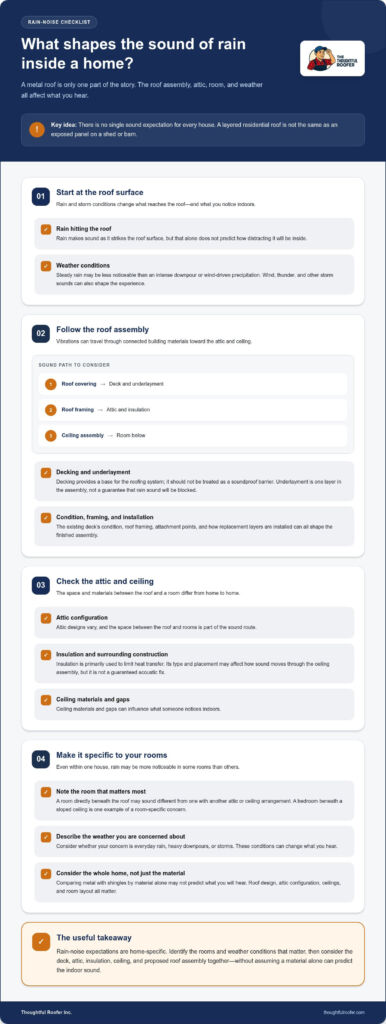
How to assess rain-noise concerns before choosing a metal roof
Before choosing a roof, turn a general worry about noise into specific questions about your home. Are you concerned about ordinary rainfall, intense storms, or sounds in a particular bedroom waking you? Clear answers help focus the conversation on the proposed roof assembly and the conditions that matter to your household, rather than on a broad reputation for metal roofs.
A practical checklist for discussing sound
Use this sequence to organize your concerns before discussing a roof replacement:
- Pinpoint the sound that concerns you. Note whether it’s steady rain, heavy downpours, wind-driven rain, or storm noise generally. If sleep or work is the main concern, identify the rooms where sound would be most disruptive.
- Describe the home’s current conditions. Share what you know about the attic, ceilings, and rooms directly beneath the roof. If rain sounds different from one part of the home to another, mention where you notice the difference.
- Discuss the proposed roof assembly. Ask how the decking, underlayment, and other planned layers relate to the existing roof and attic. Focus on how the system will be built for your home, not just on the metal panel material.
- Set realistic expectations. Discuss how the evaluation accounts for your particular concerns, while recognizing that no roof can make every weather sound disappear.
Those details are especially useful in North Alabama, where seasonal rain and thunderstorms bring different conditions from a calm shower. You don’t need to predict a precise sound level. The goal is to make sure your concern is understood and considered alongside the roof’s condition, design, and installation plan.
When an inspection can clarify the project
A project-specific roof inspection can help establish what’s currently in place and identify conditions relevant to replacement planning. Depending on what can be assessed, that may include the roof surface, visible assembly details, and attic conditions. The findings provide a practical basis for discussing how a new metal roof would fit the home. They aren’t a promise of a particular indoor noise level.
For example, if the room you’re most concerned about sits beneath a different ceiling or attic arrangement than the rest of the house, that context can guide a more useful conversation about the project. It can also help distinguish a general concern about rain sound from a condition specific to one area of your home.
Homeowners in Huntsville and nearby North Alabama communities can use local metal roofing guidance to consider the roof’s condition and the questions that matter before making a decision. Thoughtful Roofer Inc. provides roof inspections and metal roofing services. An evaluation can help you weigh noise concerns alongside your home’s needs without relying on assumptions or guarantees.
Choosing metal roofing with confidence in Huntsville and North Alabama
Choosing a roof doesn’t mean accepting a sound reputation as fact. The useful question isn’t whether metal is always louder or quieter than shingles. It’s how the proposed roof assembly fits your home, what conditions concern you, and what you can reasonably expect indoors. A project-specific discussion replaces assumptions with details about your roof and household.
For homeowners asking, is metal roofing noisy in the rain, the practical answer remains: it depends on the complete roof system and the home. Decking, underlayment, attic conditions, ceilings, and room layout can all be part of the discussion. No evaluation can guarantee silence during rain, but understanding the project can help you make a more informed choice.
What a project-specific roof discussion should cover
A helpful conversation connects your concern to the visible roof and relevant assembly details. That can include the condition of the existing roof, what can be observed about the attic, and how the proposed replacement is planned. It should also make the project scope clear, distinguishing what has been observed from what can’t be determined without further access or information.
Thoughtful Roofer Inc. installs and replaces residential metal roofs for local homeowners. The project discussion can focus on residential roof conditions without promising a particular indoor sound level. Bring up the rooms where noise matters most, whether you’re thinking about steady rain or storms, and any differences you’ve noticed across the home. Those specifics help keep the conversation focused on your needs.
A reassuring next step for local homeowners
Thoughtful Roofer serves Huntsville, Madison, Owens Cross Roads, Gurley, and Athens. A local residential roofing evaluation can connect your questions to the condition and configuration of your roof. It’s an opportunity to understand the planned work and talk through concerns before deciding, without treating a general impression as a prediction for your home.
Keep the main points in view as you weigh your options: metal roofing isn’t automatically noisy indoors, material labels alone can’t determine what you’ll hear, and the roof assembly and home conditions matter. A clear conversation about those details can help you decide whether metal roofing suits your project and expectations.
If you’re considering a roof replacement in the area, talk with Thoughtful Roofer about your roofing project. Share your rain-noise concerns and the rooms that matter to you so the discussion stays specific to your home and its roof.
Make your next roofing decision with confidence
Choosing a roof is also a chance to think about what will make your home feel comfortable and secure. If you’re still asking, “is metal roofing noisy in the rain,” use that concern as a starting point for a practical conversation about your home, rather than letting an old impression decide for you.
Thoughtful Roofer is a veteran-owned local roofing company providing residential metal roofing services in Huntsville and nearby North Alabama communities. A project discussion can help you consider your priorities and roof conditions before deciding what fits your home. No one can promise a particular indoor sound level, but clear information can make the choice more manageable.
Take the next step with a focused conversation. Talk with Thoughtful Roofer about your roofing project and share what matters most to your household. With the right questions in hand, you can move forward feeling informed and confident.
Frequently Asked Questions
Is metal roofing louder than shingles when it rains?
Not necessarily. Whether metal roofing is noisy in the rain depends on the roof system and the house, so the material label alone can’t rank indoor sound. A useful comparison looks at similar roof construction and the same rooms and weather conditions. If you’re comparing two homes, differences in their ceilings, attic layouts, and existing roof assemblies can make the comparison misleading, even if one has metal and the other has shingles.
Can you hear rain through a properly installed metal roof?
Yes, some rain sound may still be audible indoors, even with a residential roof assembly. “Properly installed” describes the roofing work, not a promise that the house will be silent. For a practical reference point, notice what you hear during rain in different rooms today. A room beneath a sloped ceiling, for example, may sound different from one with a separate ceiling and attic space above it.
What makes a metal roof noisy during heavy rain?
Heavy rain can make impacts on the roof more noticeable, but the indoor result also depends on the roof and the room below. Pay attention to whether the sound occurs across the house or seems concentrated in one area. A sudden change in sound, especially if accompanied by signs of roof damage or a leak, is a reason to arrange a roof inspection rather than assume the roofing material is the cause.
Does attic insulation reduce rain noise from a metal roof?
Insulation is installed primarily to help manage heat flow, and it may also affect sound transmission as part of the full ceiling and attic assembly. The effect depends on the existing construction, the insulation’s placement, and other connected layers. Adding insulation shouldn’t be treated as a guaranteed fix for roof noise. If you’re considering changes, first understand the attic’s current condition and the broader roofing or ceiling issue you want to address.
Are metal roofs noisy during Alabama thunderstorms?
They can produce audible rain impacts, but what you hear during a thunderstorm isn’t necessarily only the roof. In Huntsville and North Alabama, a storm may include gusts, thunder, and rain striking windows or other surfaces. To describe your concern clearly, note whether it’s the sound of rainfall, wind, or the overall storm that bothers you most. That distinction helps keep a roof discussion focused on the right concern.
Can an existing roof be inspected for noise concerns before replacement?
Yes. Thoughtful Roofer provides roof inspections to document visible roof conditions and, when accessible, relevant attic details before you choose a replacement. Share which rooms seem loudest and whether you notice the sound during ordinary rain or stronger storms. Those observations help connect the concern to the home’s actual conditions. An inspection can inform planning, but it can’t recreate every weather event or guarantee how a future roof will sound indoors.
What should I ask a roofer about rain noise before choosing metal roofing?
Ask how the proposed roof assembly relates to your home’s existing decking, attic, and ceiling, and which conditions are visible versus assumed. Explain where you’re most concerned about sound and whether heavy rain or wind-driven storms are the main issue. You can also discuss how the project scope addresses those observations. For a North Alabama home, Thoughtful Roofer can keep the conversation specific to the house and its roofing needs without promising silence.