What if the safest way to answer “is my roof walkable” is to stay off it? A roof may look sturdy from the ground, but its slope, roofing material, age, and condition all affect whether it can handle foot traffic. Even a careful step could cause a slip or fall, loosen shingle granules, crack roofing materials, or worsen damage you haven’t spotted yet.
If you’re unsure, that hesitation is sensible. You can start assessing your roof without climbing onto it. A careful visual check from the ground can help you spot warning signs without putting yourself at risk.
This guide explains how roofing material, slope, weather, and existing damage affect walkability, and how to look for visible concerns safely. You’ll also learn when a professional inspection is the better next step. For homeowners in Huntsville, Madison, Owens Cross Roads, Gurley, and Athens, a residential roof inspection can help assess concerns without asking you to test the roof under your own weight.
Key Takeaways
- “Is my roof walkable?” can’t be answered by appearance alone. Condition, slope, material, structure, and access all matter.
- Footsteps can put you at risk and damage roofing materials, even when the surface seems firm.
- Look for changes from the ground and inside your home, and note when you first noticed them.
- If footing or roof condition is uncertain, don’t climb up to test it.
- A residential roof inspection can help assess concerns without requiring you to walk on the roof.
Is My Roof Walkable? What the Question Really Means
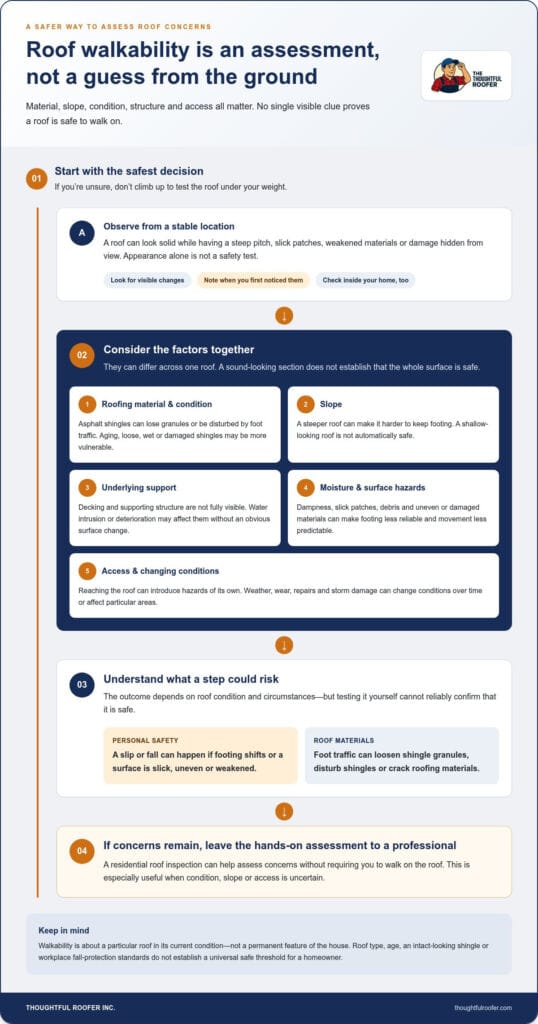
It’s natural to want a closer look when you spot a loose-looking shingle, a stain, or debris on your roof. But a view from the ground can’t establish whether the surface is safe to step on. A roof can appear solid and still have a steep pitch, slick patches, weakened materials, or damage that isn’t visible from below.
Roof walkability depends on the roofing material, slope, supporting structure, surface condition, and safe access. It can’t be judged by appearance alone. These factors work together, and conditions can vary across the same roof. A section that looks intact doesn’t prove that the whole surface is safe to walk on.
That’s why “is my roof walkable” isn’t a simple yes-or-no question a homeowner can settle by looking at the shingles. The covering may conceal concerns beneath it, while the route onto and across the roof can present separate hazards. Types of roofs and their construction provide useful context, but knowing the roof type alone doesn’t confirm it’s safe to walk on.
What makes a roof seem safe to walk on?
A low-looking roof can seem easier to reach, and an even-looking surface can give the impression of stability. Neither is a reliable safety test. Shingles or metal panels are only the visible covering. The structure beneath supports that covering, but its condition can’t be judged fully from the surface. Don’t step onto the roof to test whether it feels firm.
Why homeowners should treat roof access cautiously
A fall can happen quickly if footing shifts or the surface is slick, uneven, or weakened. Some hazards aren’t obvious from the ground, and simply reaching the roof can create risk. Wet weather, debris, and damaged materials can make movement less predictable. If the condition, slope, or access feels uncertain, stay off the roof and arrange a professional residential inspection.
Think of walkability as an assessment of a particular roof in its current condition, not a permanent feature of the house. Weather, wear, repairs, and other changes can affect the surface or structure over time. A roof that appears unchanged may still have hidden issues, so its appearance isn’t permission to walk on it. Start by observing from a stable location and leave hands-on assessment to a roofing professional.
What Determines Whether a Roof Can Be Walked On?
Roof walkability depends on the material, slope, current condition, underlying support, and safe access together. No single visible clue provides a universal safe threshold. If you’re asking, “is my roof walkable,” the answer requires more than a glance, and you shouldn’t test it by stepping onto the surface.
How roofing material and condition affect walkability
Roof coverings respond differently to contact, and their care requirements depend on material and condition. Asphalt shingles, for example, can lose granules or be disturbed by foot traffic. Aging, loose, wet, or damaged shingles may be more vulnerable. Dampness and debris can also make footing less reliable. A roof that looks uniform from below may have worn or weakened spots that need a closer professional assessment.
Why the slope and hidden structure matter
Slope affects how securely someone can stand and move. On a steeper roof, gravity can make it harder to keep your footing, especially if the surface is slick or uneven. A shallow-looking roof isn’t automatically safe either. Pitch is only one part of the assessment, and getting onto the roof and moving around can introduce additional hazards.
Safety rules for roof work are another consideration, but they don’t certify a particular roof as walkable. OSHA fall protection standards for roofing address protections for covered workplace activities; they aren’t a homeowner’s test for whether a residential roof can support a person. No single material, roof age, or visual sign establishes a safe all-purpose threshold.
If you notice changes after a storm or have concerns about shingles, roof decking, or the roof’s condition, a professional residential roof inspection can help assess the concern without you walking on the surface.
Does Walking on a Roof Cause Damage or Create a Safety Risk?
A roof can look firm from the ground and still be unsafe to access. Its surface may hide weak spots, and its slope, edges, and route of access all affect the chance of losing your footing. Walking on a roof creates another concern: pressure and movement can disturb roofing materials. Whether the main risk is a fall, damage, or both depends on the roof’s condition and the circumstances.
That doesn’t mean every footstep will damage every roof. But testing the surface yourself can’t reliably confirm that it’s safe. If you’re wondering, “is my roof walkable,” treat uncertainty as a reason to stay off it, not as a reason to try one careful step.
Can footsteps damage asphalt shingles?
Foot traffic can press on shingles and create friction as a person shifts or moves. Depending on the roof’s condition, that pressure may loosen or crack a shingle, abrade its surface, or dislodge protective granules. Older, worn, loose, or previously damaged shingles may be more vulnerable, but even a roof that looks intact from below can have areas that need attention.
Damage isn’t inevitable with every step. The risk varies with the material and its condition. Still, repeated or unnecessary foot traffic may add wear or complicate existing damage. You don’t need to walk the roof to look for clues. From a safe spot on the ground, note visible changes such as displaced shingles or debris, and arrange a professional inspection if something concerns you.
Why a roof can be hazardous even in good weather
Dry, sunny weather can make roof access seem straightforward, but it doesn’t remove the hazards. A pitched surface can make balance and movement difficult, while roof edges leave little room for a misstep. Uneven surfaces or damaged sections may be hard to see from below, and the route onto the roof can add risk before you take a single step.
Personal safety and roof preservation point to the same cautious choice: don’t climb up simply to investigate. A professional roof inspection can assess concerns without asking you to test the surface under your own weight. That gives you a clearer basis for deciding what needs attention while helping protect you and the roofing materials.
How Can You Check Roof Condition Without Walking on It?
You can gather useful clues without climbing onto your roof. Start from a stable spot on the ground, then look inside for signs that may point to a leak or change in the roof. These observations can help you describe what you’ve noticed, but they can’t confirm that the roof is structurally sound or rule out damage you can’t see.
What homeowners can observe from the ground
Use a simple sequence and stay in a secure location throughout. Don’t climb a ladder or move closer to improve your view.
- Scan the roof from the ground. Look for missing, displaced, or uneven shingles, visible debris, or areas that appear different from the rest of the roof. Binoculars or a phone camera can help you see details while you remain on stable ground.
- Look at the roofline. Note any apparent sagging or changes in its shape. These observations aren’t a diagnosis, but they’re useful to share with a roofing professional.
- Record what you notice. Take photos from a safe position and write down when you first saw the change, along with any weather event or leak you remember around that time. This can help explain how the concern has developed.
When a professional roof inspection is the safer next step
Arrange a professional assessment if you notice damaged-looking shingles, a leak, apparent changes to the roofline, or unexplained interior moisture. After severe weather in the Huntsville area, resist the urge to climb up and check for storm damage. An inspection is a safer way to assess your concerns. The site’s Professional Roofing Services guide provides related inspection context, while “Storm Damage Roof Repair in Huntsville, AL: The Homeowner’s Recovery Guide” covers storm-related next steps.
Thoughtful Roofer Inc. provides residential roof inspections for homeowners in Huntsville, Madison, Owens Cross Roads, Gurley, and Athens. Arrange a professional roof inspection instead of testing the roof by walking on it.
What to Do If You’re Unsure Whether Your Roof Is Walkable
If you’re still asking, “is my roof walkable,” you don’t need to climb up to settle the question. Staying off a roof when its condition or your footing is uncertain is a sound safety decision, not an overreaction. A residential roof inspection can help assess visible concerns without asking you to test the surface yourself.
What information helps prepare for an inspection?
A few clear details can help explain what you’ve noticed. Before the inspection, consider writing down:
- What caught your attention, such as a missing-looking shingle, a leak, or a change in the roofline.
- Where you noticed it, using a simple description such as the front of the house or above a particular room.
- When you first saw the change and whether it appears to have changed since then.
- Any interior signs, such as a ceiling stain or damp area, and where they are located.
- Whether severe weather occurred around the time the concern appeared.
Photos taken from a safe place may also help show what you observed. Don’t climb or reach toward the roof to get a better image. Your notes and ground-level observations provide helpful context, while the inspection provides a professional assessment.
A safer next step for Huntsville-area homeowners
Thoughtful Roofer Inc. provides residential roof inspections and repairs for homeowners in Huntsville, Madison, Owens Cross Roads, Gurley, and Athens. If you suspect storm damage or notice a leak, a professional assessment can help clarify what needs attention and whether roof repair is appropriate. You can share what you’ve observed without taking on the risk of walking the roof.
There’s no need to decide on your own whether the surface can support you. Leave roof access and assessment to a professional, especially when the roof’s condition or footing is uncertain. If you’re in the Huntsville area and would like help assessing a concern, schedule a roof inspection.
Choose a Safer Path to Roof Confidence
You don’t have to settle “is my roof walkable” by putting yourself on the roof. Choosing not to climb protects you while you decide what support would be useful. A professional assessment can help turn uncertainty into a clearer next step for caring for your home.
Thoughtful Roofer Inc. is a veteran-owned and operated local roofing company providing residential inspections, repairs, and storm-damage restoration in Huntsville and nearby communities. The company helps homeowners make informed decisions about their roof without taking unnecessary risks to get answers.
If a roof concern is weighing on you, take the next step at your own pace. Schedule a roof inspection with Thoughtful Roofer Inc. to better understand your home’s needs.
Frequently Asked Questions
Is it safe to walk on an asphalt shingle roof?
Not necessarily. Asphalt shingles don’t guarantee safe footing, and walking on them may disturb the surface or worsen wear. Even if you only need to reach one area, getting there may mean crossing other parts of the roof and navigating edges or changes in slope. Leave roof access to a professional who can assess the specific roof and use appropriate safety measures.
Can walking on my roof damage the shingles?
Yes, foot traffic can damage shingles, though damage isn’t inevitable with every step. Pressure and movement may scuff the surface, dislodge granules, or disturb shingles that are already worn or loose. If you’ve walked on the roof before, don’t assume damage occurred, but avoid repeating the visit to check. A professional can look for signs of wear or disturbance without asking you to inspect the surface yourself.
How can I tell if my roof is safe to walk on?
You can’t reliably establish that it’s safe by looking from the ground. If you’re asking, “is my roof walkable,” note the roof’s age if known, past repairs, leaks, and recent visible changes, then share that context during a residential inspection. These details can help guide the assessment, but they don’t replace it. Don’t use a ladder or your own weight to test the roof.
Does a low-pitched roof mean I can walk on it?
No. A low pitch may make a roof appear easier to access, but it doesn’t establish that the surface or structure can safely support a person. Roofing materials have different characteristics, and a shallow roof can still have fragile areas, moisture, or damage. Also consider how you would get onto and off the roof. If access or footing is uncertain, stay off and seek a professional assessment.
What should I do if I see possible roof damage after a storm?
Stay off the roof and record what you can see from a safe location. Note when the storm occurred, where the concern appears to be, and whether you notice a leak or interior stain. Share your observations with a residential roofing professional so the concern can be evaluated without climbing up to investigate.
Can a roof look sturdy but still be unsafe to walk on?
Yes. A smooth, intact-looking covering doesn’t reveal every condition beneath it. A leak, for example, may affect roof components below the visible surface before there’s an obvious exterior clue. A roof may also have uneven or weakened areas that are difficult to see from the ground. Appearance can help you notice changes, but it can’t confirm the roof’s structural condition or safe footing.