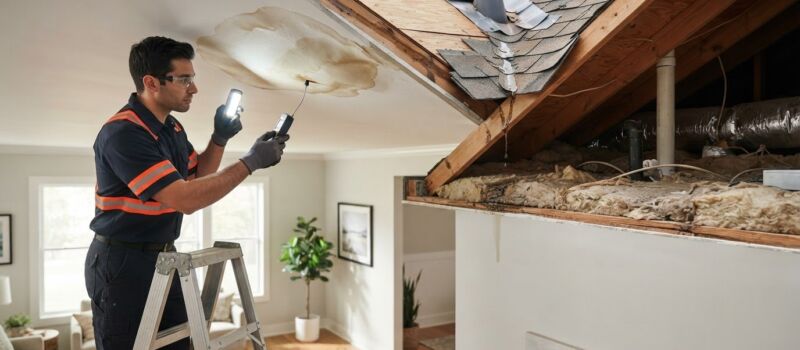
Your gutters can be made from durable material and still overflow in a hard Alabama downpour. Choosing the best gutters for heavy rain in Alabama is less about finding one “strongest” option and more about matching gutter size, downspout capacity, and installation to your roof and drainage conditions. When water spills over, it can threaten siding, landscaping, and the foundation, so it’s understandable to want a system that works reliably when the rain picks up.
The right choice depends on your home. Roof shape, local conditions, and debris all affect how a gutter system performs. A guard can’t make an undersized gutter or downspout handle more water. This guide compares common gutter materials and system features, including seamless gutters, guards, sizing, and drainage capacity, so you can weigh options without relying on broad product claims.
You’ll also find practical questions to ask a local installer before approving work, from how the proposed system fits your roof to where water will be directed. The goal is a clear, informed decision that helps protect your home and grounds.
Key Takeaways
- The best gutters for heavy rain in Alabama depend on how well the full drainage system matches your roof and property, not just the gutter material.
- Compare aluminum, steel, and other material options by durability, upkeep, appearance, and suitability for your home.
- Assess how roof shape, valleys, and downspout placement may affect where runoff collects and how it leaves your property.
- Gutter guards can help limit debris, but their design and maintenance needs matter, and they don’t make gutters maintenance-free.
- Before approving work, ask the installer to explain the proposed sizing, materials, downspouts, discharge plan, guard options, cleanup, and warranty terms.
Best Gutters for Heavy Rain in Alabama: What Performance Really Depends On
Overflowing gutters, sheets of roof runoff, or water collecting near your home can be unsettling. These signs deserve attention, but they don’t automatically mean the gutters are too small. A clog, poor slope, loose connection, damaged fascia, or a downspout that releases water too close to the home can cause similar problems.
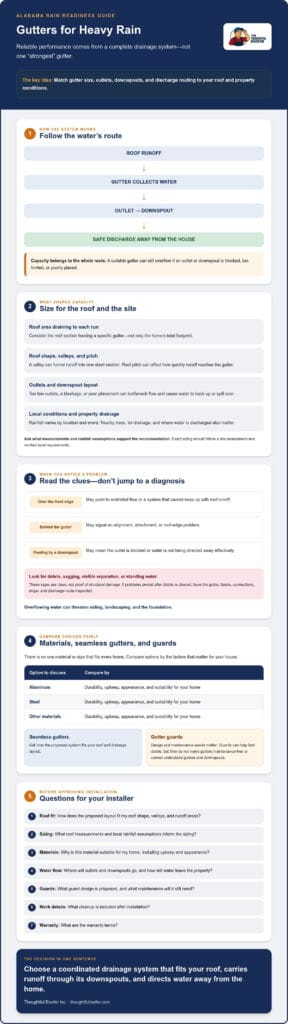
A system designed for heavy rain creates a coordinated path for water: gutters collect runoff, outlets move it into downspouts, and the discharge route carries it away from the house. Gutter capacity is the amount of water the complete system can collect and move during a given period without overflowing. The gutter itself is only one part of that capacity. For a basic overview of how gutters fit into a home’s water-management setup, see Rain gutter basics.
That’s why the best gutters for heavy rain in Alabama aren’t defined by one material or size for every home. Correct sizing, adequate outlets and downspouts, and sound installation all affect performance. Durable material can still underperform if water can’t drain through the system or is discharged in the wrong place.
How heavy rain can expose a weak drainage system
During a downpour, note where water goes. Overflow over the front edge may point to restricted flow or a system that can’t keep up with roof runoff. Water spilling behind the gutter can signal an alignment, attachment, or roof-edge problem. Pooling below a downspout may mean the outlet is blocked or the discharge point isn’t directing water away effectively.
These are clues, not a diagnosis. Look for debris, sagging sections, visible separation, or standing water, but don’t assume one symptom confirms structural damage. If problems persist after debris is cleared, arrange an inspection to check the gutter, fascia, connections, slope, and discharge route.
Why Alabama homes need property-specific guidance
Rainfall and storm conditions can vary by location and event, so avoid choosing a system based on a broad statewide claim alone. Ask what local rainfall assumptions inform the recommendation, and confirm specific design-rainfall figures with an authoritative source before relying on them.
Your home’s drainage demands also depend on roof area and pitch, concentrated runoff from valleys, nearby trees, and how the lot drains. For example, a roof valley can direct runoff into one short section, while a downspout that empties beside a low spot may leave water collecting near the home. A property-specific review can help identify those conditions. In Huntsville, Madison, Owens Cross Roads, Gurley, and Athens, Thoughtful Roofer Inc. offers seamless gutters and gutter guards as part of its residential roofing and gutter services.
How Gutter Size, Roof Runoff, and Downspouts Shape Rain Capacity
Rain capacity depends on the whole route water takes, not just the channel along the roof edge. A gutter can appear large enough yet overflow if runoff reaches it faster than outlets and downspouts can carry water away. For homeowners comparing the best gutters for heavy rain in Alabama, roof measurements and site conditions should guide sizing rather than a one-size-fits-all rule.
Runoff path: Roof plane → gutter → outlet → downspout → safe discharge point
Each part needs to work with the next. Too few outlets, a blocked downspout, or poorly chosen outlet locations can bottleneck flow. Water may then back up in the gutter or spill over, even if the gutter itself is suitable. Ask the installer to explain how the proposed layout moves water from each roof section to its discharge point.
What determines the right gutter and outlet capacity?
Start with the roof area draining toward each gutter run, not only the home’s total footprint. A valley can funnel water from two roof planes into one concentrated stream. Roof pitch also matters: a steeper plane may deliver runoff more quickly, putting greater demands on the gutter and outlet serving that section. Local rainfall conditions should be considered using reliable, location-appropriate data.
Installers should assess the gutter profile, placement, outlets, and downspout routing as one design. Don’t approve a specific size based on a quick visual estimate alone. Ask what roof measurements and rainfall assumptions support the recommendation, and whether applicable local standards have been checked. Exact dimensions should follow a site assessment and verified requirements.
How slope and discharge affect real-world performance
Gutters need a consistent path toward their outlets so water doesn’t sit in low spots or struggle to drain. If the slope is uneven, debris and standing water may collect. If outlets or downspouts are obstructed, flow can slow or stop. A well-sized gutter can’t make up for those problems.
Discharge matters just as much. A downspout that releases water beside the foundation can leave it collecting near the structure, while a suitable route carries it toward a safe area. Extensions, grading, underground drainage, or other site solutions may be options, but the right approach depends on the lot and should be assessed professionally.
Before approving a proposal, ask how the design accounts for roof sections, valleys, outlet locations, downspout capacity, and the final discharge route. Homeowners in Huntsville, Madison, Owens Cross Roads, Gurley, and Athens can also discuss gutter system options with Thoughtful Roofer Inc. while reviewing their roof and drainage conditions.
Aluminum, Steel, and Other Gutter Materials: Which Fits Your Alabama Home?
Material affects a gutter’s weight, appearance, upkeep, and suitability for a particular home, but it doesn’t determine rain capacity on its own. A strong gutter can still overflow if it’s undersized, poorly sloped, or paired with inadequate outlets and downspouts. Choosing among the best gutters for heavy rain in Alabama means weighing material alongside the full drainage design.
What should homeowners compare between gutter materials?
Aluminum and steel are broad material categories, not complete specifications. The exact product, finish, thickness, and fastening approach can vary, so ask the installer to identify what’s included in the proposal and confirm regional availability. Other material options may also be worth considering, depending on the home and what local suppliers can provide.
Compare the proposed material’s weight and finish options with your home’s exterior and roof-edge conditions. Think about nearby trees, weather exposure, and how much debris may collect, since these factors can influence cleaning and upkeep needs. Installation quality matters too: a suitable material won’t compensate for poor placement or an ineffective drainage route.
Before choosing, request the material specifications and applicable warranty terms in writing. Ask what maintenance the manufacturer recommends and how the selected product fits the roof, fascia, and drainage plan. That gives you a clearer basis for comparing proposals than a general claim that one material is “stronger” or “best.”
Seamless versus sectional gutters in heavy rain
Sectional gutters are assembled from shorter pieces joined along their runs. Seamless gutters use longer continuous sections, with joints still needed at corners and certain connections. Fewer joints along a run can mean fewer joint locations to inspect, but seamless systems can still develop leaks or drainage problems. Slope, attachment, outlets, and maintenance remain important.
Ask how the installer will handle corners and outlets, and what to watch for during routine inspections. If gutter work is part of broader exterior planning, review how it relates to the roof and its runoff path. Thoughtful Roofer Inc. offers seamless gutters alongside roofing services. Its guide to professional roofing services provides context for considering coordinated exterior work.
Do Gutter Guards Help During Alabama Downpours?
Gutter guards can help reduce some debris entering your gutters, but they won’t make the system maintenance-free. Their value depends on what falls from nearby trees, the guard design, and whether the gutters and downspouts are sized and installed to move water effectively. For homeowners weighing the best gutters for heavy rain in Alabama, guards are one part of the drainage plan, not a substitute for it.
When gutter guards may be worth considering
Think about the debris on your roof and how safely you can access the gutters for routine checks. Homes under trees may collect leaves, seed pods, or smaller debris, while a more open lot may have different maintenance needs. Ask the installer which guard type is proposed, what debris it’s intended to limit, and how you’ll inspect and maintain it.
Before deciding, consider:
- Tree cover: What debris reaches the roof and gutters through the year?
- Access: Can you safely arrange regular inspections and cleaning?
- Guard design: What are its specifications, and how does it handle the debris around your home?
- Upkeep: What cleaning or maintenance does the installer recommend, and how often should the system be checked?
Request the product details and maintenance expectations in writing. Guards can reduce debris entry, but no guard should be presented as a promise that clogs or cleaning will never be an issue.
When guards may not solve the underlying problem
If water overflows during heavy rain, first consider whether the gutter, outlets, and downspouts can handle the roof runoff. Incorrect slope, poorly placed outlets, obstructions, or intense runoff concentrated from a roof valley can also affect performance. A guard won’t correct those issues, and debris may still need to be cleared from the gutter or downspout.
Check where downspouts release water, too. If water collects beside the home, the discharge route may need attention regardless of whether guards are installed. Have the entire flow path assessed before treating missing guards as the cause of recurring overflow.
After a storm, if you notice roof damage or new drainage problems, consider a broader roof assessment. Thoughtful Roofer Inc.’s storm damage recovery guide explains considerations for homeowners in Huntsville. To discuss gutter guards alongside your home’s drainage needs, ask Thoughtful Roofer Inc. about gutter guards.
Choosing and Installing the Best Gutters for Heavy Rain in Alabama
A clear proposal should explain how the system fits your roof and where runoff will go. Use this process to compare options and make an informed decision about the best gutters for heavy rain in Alabama:
- Inspect the symptoms. Note where gutters overflow, whether water spills behind them, and where it pools after leaving a downspout. Share recurring concerns with the installer, but don’t assume the cause without an assessment.
- Assess the roof and site. Ask how roof area, pitch, valleys, tree cover, and lot drainage affect the design. The installer should explain how these conditions inform gutter sizing, outlet placement, and downspout routing.
- Compare complete system designs. Review material, gutter profile, downspouts, discharge route, and any proposed guards together. A material choice alone doesn’t show whether the system is designed to carry runoff effectively.
- Review the installation scope. Confirm what work is included, how the site will be protected and cleaned up, and which maintenance steps you’ll need to plan for after installation.
Questions to ask a gutter installer before approving work
Ask for the reasoning behind the design, not just the product description. How did roof area, valleys, slope, and downspout locations shape the recommendation? What material and product specifications are included? Where will each downspout discharge? Is a guard proposed, and what upkeep does it require?
Request the work scope, material details, maintenance advice, and any applicable warranty terms in writing. Also ask whether permits or code checks apply to your project and who is responsible for confirming them. Requirements can vary by location, so verify them with the installer or relevant local authority rather than relying on a general assumption.
A practical next step for Huntsville-area homeowners
If overflow keeps returning, water collects near the home, or you’re planning gutter replacement, a property-specific review can help clarify what the system needs. Thoughtful Roofer Inc. is a veteran-owned residential roofing and gutter company serving Huntsville, Madison, Owens Cross Roads, Gurley, and Athens. Its gutter services include seamless gutter and gutter guard installation.
Bring your observations and questions to the discussion, then review the proposed system at your own pace. Contact Thoughtful Roofer Inc. to discuss your gutter needs.
Make Your Gutter Plan Ready for the Next Downpour
The best gutters for heavy rain in Alabama are part of a well-matched drainage system. Gutter size, outlet placement, downspout capacity, and where water is released all affect performance. Material matters, too, but a durable option can’t compensate for poor sizing or installation. Guards may reduce debris entering the gutters, yet they don’t remove the need for inspection and maintenance.
Before approving work, ask how the proposed design fits your roof and property, and request the material details, installation scope, maintenance guidance, and applicable warranty terms in writing. Clear answers can help you compare options and feel more confident about protecting your home.
Thoughtful Roofer Inc. is a veteran-owned local business offering seamless gutter and gutter guard installation in Huntsville, Madison, Owens Cross Roads, Gurley, and Athens. If you’re dealing with persistent overflow or planning a replacement, contact the company to discuss your gutter needs. A property-specific plan can help you take the next step toward managing roof runoff.
Frequently Asked Questions
What are the best gutters for heavy rain in Alabama?
The best gutters for heavy rain in Alabama are part of a system sized and installed for the home’s roof and drainage conditions. Gutter material matters, but so do gutter profile, outlet placement, downspout routing, and where water is discharged. A suitable design for one roof may not suit another, especially where valleys concentrate runoff. Ask an installer to explain the site-specific reasoning behind the proposed system and provide product specifications in writing.
Are 6-inch gutters better for heavy rain?
Six-inch gutters may be appropriate when a roof’s runoff demands more capacity, but they aren’t automatically the right choice for every home. Roof area, pitch, valleys, rainfall assumptions, outlets, and downspouts all influence performance. A larger gutter won’t solve blocked outlets or poor drainage. Ask the installer to measure the roof and explain why the recommended size fits your home, rather than selecting a size based only on a general rule.
Are seamless gutters better than sectional gutters in heavy rain?
Seamless gutters have fewer joints along each run than sectional systems, which can mean fewer joints to inspect. That doesn’t make them leak-proof or guarantee better performance in heavy rain. Installation, slope, outlets, downspouts, and maintenance still matter. Compare the proposed system’s specifications and ask how corners and connections will be handled. Thoughtful Roofer Inc. offers seamless gutter installation, but the right design should still be based on your roof and site.
Do gutter guards prevent gutters from overflowing?
No. Gutter guards can reduce some debris entering gutters, but they don’t prevent every clog or eliminate maintenance. They also can’t correct undersized gutters, poor slope, blocked downspouts, or an ineffective discharge route. Before adding guards to address overflow, check whether water can move through the entire system. Ask which guard type is proposed, what debris it is suited for, and what inspection and upkeep the manufacturer or installer recommends.
How many downspouts does a house need for heavy rain?
There isn’t one downspout count that suits every house. The number and placement depend on roof sections draining into each gutter run, the system’s design, and the route water must take away from the home. Valleys may concentrate runoff in specific areas, while long runs may need a carefully planned outlet layout. Ask the installer to show how the proposed downspouts serve each roof section and where they discharge.
What should I do if my gutters overflow during a storm?
Stay clear of ladders and overflowing areas during the storm. Once conditions are safe, observe from the ground where water spills, whether it comes from the front or behind the gutter, and where downspouts release it. Don’t assume overflow means the gutters are too small, since debris, slope, outlets, or discharge can also be involved. If the problem persists or you notice damage, arrange an inspection before deciding what work is needed.
Do I need a gutter professional to choose a system for my Alabama home?
You can compare materials and prepare questions yourself, but a professional review can help match the design to roof measurements, valleys, downspout locations, and lot drainage. It’s especially useful if overflow keeps returning or you’re planning a replacement. Thoughtful Roofer Inc. is a veteran-owned local business offering seamless gutters and gutter guards in Huntsville, Madison, Owens Cross Roads, Gurley, and Athens. Ask for clear specifications and a written scope before approving work.