What if the most confident roofing pitch isn’t the strongest evidence that a company is right for your home? If you’re researching how to vet a roofing company, it can be hard to separate verifiable credentials from sales claims, especially when storm damage makes every decision feel urgent.
It’s reasonable to want a roofer who’ll protect your home, explain the work clearly, and put the details in writing. A dependable choice shouldn’t depend on who promises the most. Look for proof you can check, a scope you can understand, and answers that hold up when you compare companies.
This guide gives you a repeatable checklist for evaluating roofers in 2026. You’ll learn what to verify about credentials and insurance, how to compare estimates line by line, and what to ask about references, materials, and warranty terms. You’ll also find practical steps for documenting storm damage and keeping insurance conversations grounded in what you can observe, without letting pressure rush your decision. Whether you’re planning a replacement or responding to a leak, use the same calm process to assess local help in Huntsville, Madison, Owens Cross Roads, Gurley, or Athens.
Key Takeaways
- Use a consistent process for how to vet a roofing company, starting with project fit and checking claims against documents you can verify.
- Confirm the roofer’s identity, applicable credentials, insurance, references, and written terms; check current requirements with official sources.
- Compare proposals side by side, looking for clear details on materials, removal, disposal, ventilation, flashing, cleanup, and exclusions.
- After storm damage, take time to ask questions and document what you observe. Pressure tactics are warning signs to investigate, not automatic proof of misconduct.
- Choose the company whose evidence, project scope, and communication are clearest, then make sure the agreed next steps are in writing.
How to vet a roofing company in Huntsville: start with the right fit
Choosing a roofer can feel high-stakes, and storm damage can add pressure when you’re worried about protecting your home. Start by defining the work you need, then assess each company using the same evidence-based process. Vetting isn’t simply judging a sales pitch. It means checking whether the company fits your project, whether its claims have supporting evidence, what it commits to in writing, and how clearly it communicates.
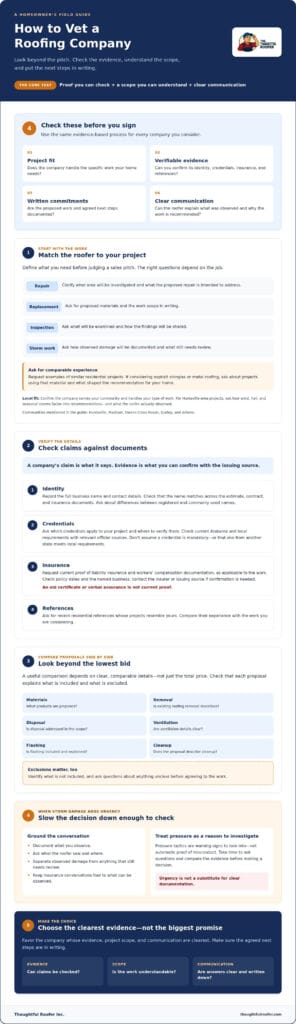
Check four things before you sign: project fit, verifiable evidence, written commitments, and clear communication.
Match the company’s experience to your roofing project
A roofer may refer to professional associations as part of its background. The National Roofing Contractors Association is a U.S. roofing trade association, but a name or membership claim shouldn’t replace checking the company’s project-specific evidence, written scope, and references.
Check local service fit around Huntsville
Before arranging an inspection, confirm that the company serves your community and handles the type of work you need. Then ask how North Alabama’s wind, hail, and seasonal storms factor into its inspection and repair recommendations. Listen for reasoning tied to your roof’s observed condition, not a generic claim that every home needs the same work. Ask what the roofer observed, where the concern is located, and how the recommended work addresses it. The answers should help you understand the reasoning, even if you decide to seek another opinion.
For broader context on evaluating local options, see this Huntsville roofing contractors guide. Use it as background, then apply the same questions to each company you consider. That’s a practical way to approach how to vet a roofing company without mistaking local visibility or a polished pitch for proof that it’s the right fit.
How to verify a roofer’s credentials, insurance, and references
Once you know the project fits the company’s work, check its identity and supporting documents before signing. A confident answer is a starting point, not verification. Requirements may depend on the work and location, so confirm current Alabama and local rules with the relevant official agencies rather than relying on a contractor’s interpretation or a general online checklist.
A company’s claim is what it says; evidence is what you can confirm with the issuing source. Use this sequence to keep your checks organized:
- 1. Identity: Record the company’s full business name and contact details. Make sure the name matches across the estimate, contract, and insurance documents. Ask about differences, such as a registered business name that differs from the name used in conversation.
- 2. Credentials: Ask which credentials apply to your specific project and where to verify them. Check requirements with official Alabama and local sources. Don’t assume a credential is mandatory, or that a credential from another state meets local requirements.
- 3. Insurance: Request current proof of liability insurance and workers’ compensation documentation, as applicable to the work. Check the policy dates and named business, then contact the insurer or issuing source if you need confirmation. Don’t treat an old certificate or a verbal assurance as current proof.
- 4. References: Ask for recent residential references whose projects resemble yours. A roofer should be able to explain how those examples relate to your repair, replacement, or storm work.
- 5. Written terms: Before you sign, make sure the agreement identifies the parties and describes the work, materials, payment terms, and any relevant warranty terms. Ask for unclear or missing items to be addressed in writing.
The NRCA roofing industry information can help homeowners explore roofing guidance, but association resources aren’t a substitute for checking a specific company’s credentials, insurance, or contract. Verify those details directly with the appropriate source whenever possible.
Ask references questions that reveal the working relationship
Go beyond “Were you happy?” Ask how the company communicated, whether the work area was cleaned up, how schedule changes were handled, and whether the roofer followed up after the project. Ask whether the final work matched the written scope and how the company handled questions or unexpected changes. Listen for specific examples and recurring themes across conversations. One enthusiastic testimonial can be useful, but it offers a narrow view. Consistent, detailed feedback gives you more context to weigh alongside documents and written terms.
This kind of verification is a practical part of how to vet a roofing company: compare what the company says with records, independent confirmation, and firsthand accounts. If you’re assessing a local option, you can also learn more about residential roofing and storm-damage services in Huntsville, then apply the same checks to any roofer you consider.
How to compare roofing estimates without being misled by the lowest bid
A lower total isn’t automatically a better value, and it doesn’t prove a roofer is cutting corners. The important question is what each estimate includes. When practical, collect at least two written proposals so you can compare the work described, not just the totals. If the scopes differ, similar-looking prices may cover very different projects. Before comparing totals, check that the proposals describe the same work areas and materials.
Use a side-by-side checklist. Ask each company to clarify blank or vague entries before you compare:
| Estimate detail | What to check |
|---|---|
| Scope and materials | Are the work areas and proposed roofing materials identified clearly? |
| Removal and disposal | Does the proposal say whether existing roofing will be removed and how debris will be handled? |
| Ventilation and flashing | Does it explain whether these components will be inspected, replaced, or left as-is? |
| Cleanup | Does it describe how the work area will be cleaned up? |
| Exclusions | What work or materials aren’t included? |
Terms like “complete roof system” can hide important differences. Ask what that phrase means for your home, including installation details and the treatment of existing components. Also ask how concealed decking damage or other unexpected conditions would be documented, priced, and approved before additional work begins. Request the explanation in writing. That gives you a clearer basis for comparing proposals and reduces the chance of differing assumptions later.
Review payment terms, changes, and warranty language
Before signing, read the payment schedule and the conditions for changes or additional work. Make sure you understand when payments are due and what process applies if the scope needs to change. Ask which warranty terms come from the material manufacturer and which, if any, are commitments from the contractor. Have each party’s terms documented, and don’t assume a verbal assurance is part of the agreement.
If one proposal is much lower, ask what it excludes before judging its value or the roofer’s intent. A difference might reflect a narrower scope, different materials, or omitted work, but you’ll need written clarification to know. Comparing item by item is a practical part of how to vet a roofing company.
The California Contractors State License Board consumer resources explain checks for contractors in California. They aren’t a source for Alabama requirements, so use the appropriate Alabama or local authority for Huntsville-area rules. For a local point of comparison, you can also review Thoughtful Roofer Inc.’s residential roofing services alongside other written proposals.
How to spot pressure tactics and handle storm-damage claims carefully
After wind or hail, it’s natural to want answers quickly, especially if you’re concerned about leaks or further damage. Still, urgency doesn’t mean you have to sign before you understand the agreement. A careful roofer should give you room to review the proposed work, ask questions, and keep important details in writing.
Some behaviors deserve a closer look, but they aren’t automatic proof of misconduct. Treat them as reasons to pause and verify:
- Someone insists you sign immediately and won’t allow time to read the written terms.
- The business identity, work scope, or payment conditions remain unclear after you ask for them in writing.
- A contractor guarantees insurance approval, a particular settlement, or a specific repair outcome.
- Reasonable questions about observed damage, proposed work, or documentation go unanswered.
These are prompts for further checks, not grounds to assume intent. Ask for the company’s identity, the proposed scope, and payment terms in writing. If answers are vague or the pressure continues, take time to verify the details and compare your options before committing.
Keep storm documentation clear and organized
Save dated photographs, inspection notes, estimates, and relevant communications with your insurer in one place. Ask the contractor to explain what damage they observed, where they saw it, and how those observations support the proposed work. Keep that explanation separate from coverage decisions: a roofing contractor can document visible conditions, but the insurer determines coverage under the terms of your policy. A roofer’s assessment isn’t a promise that a claim will be approved or paid at a particular amount.
If new or concealed conditions are identified as work proceeds, ask how they’ll be documented and how you’ll review any proposed change before it’s made. Clear records make it easier to understand what was observed, what work was recommended, and what questions remain for your insurer.
For additional storm-specific steps, see the Huntsville storm-damage recovery guide. It can help you organize the process while you evaluate local help and keep your records together.
A sound approach to how to vet a roofing company after a storm is to prioritize clear documentation over confident promises. If you need a local option for storm-damage repair and insurance-claim assistance, contact Thoughtful Roofer Inc. about your storm-damage concerns. Claim outcomes depend on the insurer and policy terms.
How to choose a roofing company and agree on clear next steps
A sound choice isn’t necessarily the company with the smoothest pitch or the shortest estimate. Choose the roofer whose identity and relevant experience you can verify, whose written scope makes sense for your home, and whose communication helps you understand what happens next. If an answer is unclear, ask for an explanation before you decide.
Use a final checklist before committing
Keep this checklist handy as you review your options. You should be able to check each item or identify what still needs clarification:
- Company details: Does the business identity match across the estimate, contract, and insurance documents?
- Project fit: Has the company explained its experience with work similar to yours?
- Verification: Have you checked applicable credentials and insurance documents through appropriate sources?
- Proposal comparison: Are the scopes comparable, with materials, work details, and exclusions clearly described?
- References: Have you heard specific feedback about similar residential work?
- Written terms: Do you understand the payment schedule, process for changes, and any warranty language?
- Records: Will you keep a copy of the signed agreement and project communications together?
If a box remains unchecked, pause and ask for the information in writing. Taking time to clarify a term or compare a scope is a practical step toward protecting your home and avoiding mismatched expectations.
Make the next conversation low-pressure and specific
Before speaking with a roofer, jot down what you’ve noticed and what you need to understand. Ask what condition they observed, which repair options may fit, how timing will be discussed, and how project findings and changes will be documented. For a Huntsville-area home, ask whether wind, hail, or other storm exposure affects what they prioritize during an evaluation. Clear questions make it easier to judge whether the answers are useful and complete.
Thoughtful Roofer Inc. is a veteran-owned residential roofing company based in Huntsville and serving nearby communities. Homeowners can consider it alongside other local options, using the same checklist to evaluate fit and written details. Learning how to vet a roofing company gives you a repeatable process, whether you’re weighing a repair or planning a roof replacement.
Talk with Thoughtful Roofer Inc. about your roofing needs and share what you’re looking to address. A conversation can help you understand whether the company’s residential roofing services fit your project, without committing before you’ve reviewed the details.
Choose your roofer with confidence
A dependable roofing decision starts with evidence, not urgency. Confirm the company’s identity and relevant credentials, compare written proposals by scope rather than price alone, and make sure payment terms, exclusions, and warranty language are clear before signing. After storm damage, keep records organized and distinguish a contractor’s observations from the insurer’s coverage decision.
That’s the heart of how to vet a roofing company: choose the roofer whose qualifications and insurance you can verify, whose written plan fits your home, and whose answers help you feel informed. You don’t have to rush past questions to protect your roof.
Thoughtful Roofer Inc. is a veteran-owned and operated local business serving Huntsville and nearby communities, with residential roof inspections, repairs, installations, and storm restoration. If you’re weighing your next step, talk with Thoughtful Roofer about your roofing needs. Bring your questions, take the time you need, and move forward with greater confidence.
Frequently Asked Questions
How do I know if a roofing company is reputable?
What should I check before hiring a roofing contractor in Alabama?
Check the contractor’s business identity, insurance documents, references, written scope, and applicable state or local requirements before signing. Because requirements may depend on project scope and location, confirm current rules with official Alabama and local sources rather than relying on assumptions. Review payment terms, the process for approving changes, and warranty language. Ask for unclear promises in writing. This checklist is general guidance, not legal advice, and doesn’t replace checking rules for your specific project.
How many roofing estimates should I get before choosing a company?
There’s no universal number of estimates that guarantees the right choice. Comparing more than one written proposal, when practical, can reveal differences in materials, labor, removal, disposal, and exclusions. First check that each company is qualified for the work and that its proposal describes a similar scope. A stack of estimates isn’t useful if they cover different jobs. Ask contractors to explain gaps, then compare the work and terms, not only the lowest total.
What should a roofing estimate include?
A useful estimate describes the proposed work and materials, removal and disposal, relevant installation details, exclusions, payment terms, and how unexpected conditions will be documented and approved. It should also distinguish manufacturer warranty coverage from any contractor commitments. Exact documents vary by project, so ask for clarification if phrases such as “complete roof system” don’t explain what’s included. Compare estimates side by side only after confirming they cover similar work on your home.
Should I sign a roofing contract after a storm?
Don’t sign solely because someone says you must act immediately. Review the written scope, business identity, payment terms, and any cancellation or change provisions that apply, and check current rules for your project if needed. A roofer can document observed roof damage, but your insurer determines coverage under your policy. Keep photos and communications, ask questions, and take time to understand the agreement before committing, even when storm damage makes the situation feel urgent.
Can a roofing company guarantee my insurance claim will be approved?
No roofer can promise an insurer’s decision. A contractor may inspect visible roof conditions, document observed damage, and provide a repair proposal, but coverage depends on your policy, the supporting evidence, and the insurer’s review. Be cautious about guaranteed approvals or specific settlement amounts. Keep your own records, and ask the contractor to separate observations about the roof from conclusions about insurance coverage. If something is unclear, confirm it with your insurer.
What are warning signs of an unreliable roofing contractor?
Warning signs that deserve further checking include refusal to provide written terms, an unclear business identity, pressure to sign immediately, a vague scope, or promises that can’t be documented. One concern alone doesn’t prove misconduct, so look at the full context and verify claims. Pause, request evidence, and consider another written proposal when practical. That extra care can help Huntsville-area homeowners make a steadier decision, particularly when storm damage adds pressure.