Is your skylight actually broken, or is your roof simply failing to protect it? Most homeowners assume a drip from the ceiling means the glass is cracked, but the reality is often found in the shingles and flashing surrounding the frame. You’re likely feeling that familiar knot of anxiety as you watch water pool on your flooring while researching the best way of fixing a leak near a skylight. It’s stressful to deal with North Alabama’s unpredictable storms when you aren’t sure if a contractor is being honest or just pushing a high-pressure sale.
This guide will help you master the repair process by teaching you how to distinguish between harmless condensation and active structural failures. We’ll walk through the immediate steps you can take to stop water damage right now before it spreads. You’ll also learn the true variables behind repair costs and how our Thoughtful inspection and proprietary, meticulous workflow can resolve these issues permanently. Whether you’re dealing with a recent storm or a persistent drip, we’ll provide the clarity you need to protect your home’s safety and your peace of mind.
Key Takeaways
- Learn how to use the “Paper Towel Test” to accurately distinguish between harmless interior condensation and an active structural roof leak.
- Discover why fixing a leak near a skylight in North Alabama often requires addressing the surrounding shingle integration rather than just applying more sealant.
- Understand the dangers of the “Caulk Trap” and why excessive DIY sealing can actually accelerate wood rot by trapping moisture against your roof deck.
- Identify the critical steps for a permanent repair, including the inspection of the wooden curb and decking for moisture damage.
- Gain peace of mind by learning how a proprietary, meticulous workflow and insurance advocacy can protect your home from future weather extremes.
Is Your Skylight Actually Leaking? Diagnostic Steps for Homeowners
Have you noticed a persistent drip or a damp spot on your ceiling? It’s natural to feel a sense of urgency when water enters your home, but the first step isn’t to climb onto the roof. Safety is our primary concern for every North Alabama neighbor. Before you reach for a ladder, perform an initial inspection from the safety of your living room. Use a high powered flashlight to examine the area around the skylight frame. Look for localized drips versus broad, circular water rings. A tight, consistent drip often points to a specific breach in the seal, while large, spreading rings may indicate water traveling from a completely different part of your roof system.
One of the most effective ways to confirm an active leak is the “Paper Towel Test.” Tape a single, dry paper towel to the ceiling or the skylight frame where you suspect moisture is entering. If the towel becomes saturated during a dry, humid day, you’re likely dealing with condensation. If it only gets wet during a heavy downpour, you have an exterior structural issue. While understanding roof flashing is critical for identifying external failures, sometimes the problem is much closer to home. Fixing a leak near a skylight requires knowing exactly what you’re fighting before you spend a dime on repairs.
The Condensation Factor in North Alabama
Huntsville’s humidity is legendary, and it plays a major role in how your home breathes. When warm, moist indoor air hits the cold glass of an older or poorly insulated skylight, it liquefies. This moisture then runs down the frame, mimicking a roof leak. If you see fogging between the panes or moisture beads across the entire glass surface, your “leak” is actually a ventilation or insulation problem. You can often reduce this interior moisture by using dehumidifiers or improving the airflow in rooms with vaulted ceilings. This simple check can save you from the anxiety of unnecessary structural repairs.
Tracking the Water Path
Water is a patient traveler that rarely follows a straight line. It can enter through a damaged shingle several feet above the window, crawl down a rafter, and finally reveal itself at the skylight. Grab your flashlight and look for “shiners.” These are nails that missed the wooden rafter and now stick out into the attic space. In our climate, these nails often collect frost or condensation, which then drips onto your ceiling. Documenting these specific wet spots is vital for the roof inspections we conduct. By providing us with photos or notes on when the dripping starts, you help us apply our proprietary workflow to find the true source of the intrusion quickly and accurately.
Common Causes of Leaks Near Skylights: Flashing, Seals, and Shingles
Why do skylights fail more often than standard vertical windows? It’s because they sit at an angle where water pressure and environmental exposure are at their highest. Fixing a leak near a skylight requires looking at the three-part anatomy: the glass pane, the frame, and the metal flashing. While the glass itself rarely fails unless struck by debris, the integration between these parts is where trouble begins. In the Tennessee Valley, we deal with intense wind-driven rain that standard seals weren’t always designed to handle. High-velocity winds can push water upward, forcing it under shingles and through small gaps in the gasket. If your roof has a “saddle” or “cricket,” which is the small peaked structure behind a skylight, debris like pine needles often collects there. This creates a dam, causing water to pool and eventually seep through the flashing.
The Role of Step Flashing
Step flashing is a series of L-shaped metal pieces woven into your asphalt shingle roofing. It’s the primary defense against water intrusion. If these metal pieces are rusted, bent, or improperly layered, gravity will pull water straight into your home. We often see failures here because shingles were replaced in the past without updating the old, brittle flashing. Understanding these components is the first step in fixing a leak near a skylight for good. When flashing is neglected, it doesn’t matter how much sealant you apply; the water will eventually find a way underneath the metal and into your decking.
Weather Extremes and Seal Integrity
Alabama heat cycles are brutal on rubberized gaskets. The constant expansion and contraction can cause seals to crack long before the shingles reach their 20-year lifespan. Additionally, our spring storms often bring hail that can create micro-cracks in acrylic or glass domes. High winds don’t just move rain; they can lift the perimeter shingles, exposing the mounting flange to direct moisture. If you’re concerned about how recent weather has affected your roof’s safety, a quick professional evaluation can determine if your gaskets are still providing a secure, watertight barrier. Our team looks for these specific environmental stress markers to ensure your home remains a stable sanctuary against the elements.
DIY Quick Fixes vs. Professional Repair: Assessing the Risk
Fixing a leak near a skylight often starts with a frantic trip to the hardware store. While a temporary patch can buy you time during a heavy storm, it’s vital to know where the emergency fix ends and structural damage begins. If you see water actively pouring in, a heavy duty tarp secured with weighted sandbags or specialized roofing tape is a smart move. This protects your interior flooring and drywall from immediate ruin. You might also consider a minor glass seal if the leak is clearly coming through a visible crack in the pane. However, these are stopgap measures designed to last days, not years. The goal is to stabilize the situation until a proper inspection can occur.
Many homeowners fall into what we call the “Caulk Trap.” It’s tempting to buy several tubes of silicone and “goop” every visible seam around the window. This often makes fixing a leak near a skylight much harder in the long run. Excessive sealant creates a dam that traps water against the wooden frame rather than letting it shed away. Instead of helping, the roof now holds moisture against the structure, which accelerates the decay of your decking and rafters. If you find yourself reaching for a third tube of caulk, you’ve likely moved past a simple repair and into a territory that requires specialized tools.
The Dangers of DIY Roofing
Safety is our highest priority for our North Alabama neighbors. Roof slopes are deceptive, and a single slip can be life-altering. Professional roofers use OSHA-approved harnesses and specialized anchor points that most homeowners simply don’t have in their garage. Beyond physical safety, consider your financial protection. Most shingle manufacturers will void your material warranty if they find evidence of uncertified or improper repairs. Roofing cement can hide structural rot for years. By the time you realize the DIY fix didn’t work, the repair cost has often tripled because the underlying wood has softened or molded.
When to Call a Professional
How do you know when you’ve reached the point of no return? If you feel any “give” or soft spots in the roof decking when you press near the skylight frame, the wood is likely compromised. Multiple leaks appearing simultaneously after a single storm event are another clear sign of systemic failure. In these moments, you need more than a contractor; you need a partner who values your home’s integrity. As a veteran-owned company, we prioritize honesty over high-pressure sales. We’ll tell you clearly if a simple gasket replacement will suffice or if the surrounding shingle system needs a deeper intervention to ensure your household’s safety.

The Step-by-Step Process for Fixing a Skylight Leak Permanently
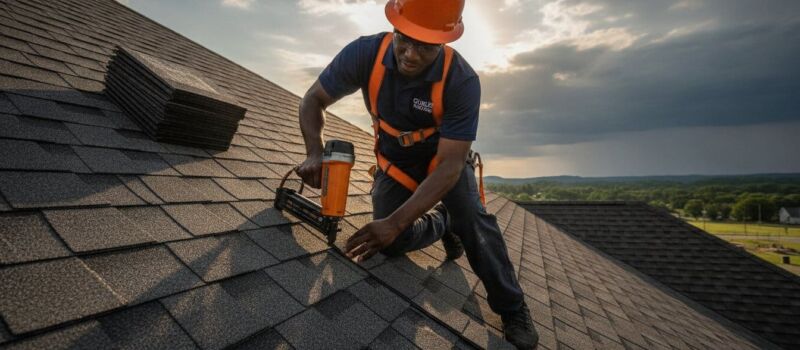
How do we move from a temporary patch to a roof that stands up to North Alabama’s heavy spring rains? Fixing a leak near a skylight requires a methodical approach that goes beneath the surface. We start by carefully removing the surrounding shingles to expose the mounting flange and the original underlayment. This step is critical because it allows us to inspect the wooden curb and roof decking for moisture-induced rot. Rotten decking cannot hold a nail securely, which means your new shingles would be vulnerable to the next high-wind event. Once the structure is confirmed sound, we install a high-temperature ice and water shield. This rubberized underlayment acts as a secondary waterproof barrier, sealing tightly around nail penetrations and the skylight frame itself.
Replacing the Flashing Kit
Why do we insist on manufacturer-specific flashing kits instead of custom-bent metal? These kits are engineered for the specific dimensions and drainage patterns of your skylight model. When our team is fixing a leak near a skylight, we prioritize this manufacturer-led approach to ensure a perfect fit. We follow a precise “shingle-style” sequence, starting with the sill flashing at the bottom, followed by individual step flashing pieces on the sides, and finishing with the head flashing at the top. This ensures that gravity works with your roof rather than against it. We also verify that the counter-flashing is properly seated against the frame, which prevents wind-driven rain from being pushed behind the metal during severe weather.
Restoring the Roof Surface
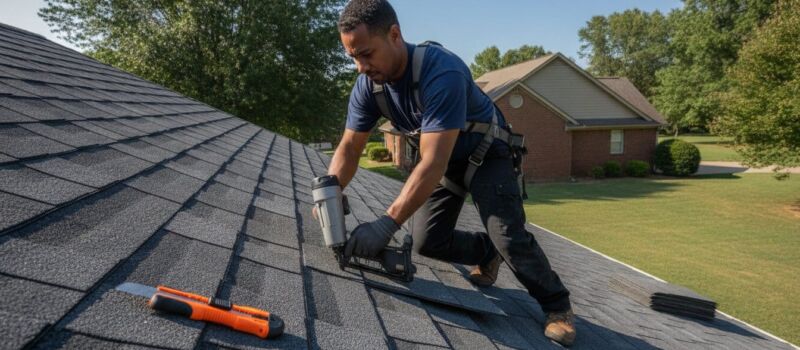
The final stage involves weaving new architectural shingles back into your existing roof system. We take the time to color-match the new materials to your Huntsville home, ensuring the repair is as visually seamless as it is watertight. Our team uses specific nailing patterns to prevent future wind-lift during our region’s frequent storm cycles. By integrating specialized storm damage roof repair techniques, we build a perimeter that is more durable than the original installation. This meticulous attention to detail is part of our proprietary workflow designed to keep your family safe and dry through every season.
If you’re ready to move past temporary patches and secure your home’s future with a permanent solution, schedule a professional skylight assessment with our expert team today.
The Thoughtful Solution: Long-Term Protection and Insurance Advocacy
How do you ensure that fixing a leak near a skylight doesn’t become an annual chore? The secret lies in a holistic approach to home protection that looks beyond the glass. Our proprietary workflow is a meticulous process designed to catch the small details that high-pressure contractors often overlook. We don’t just look for the drip; we analyze the entire roof system to ensure every component is working in harmony. This intentionality provides you with a stabilizing force for your home, turning a stressful maintenance crisis into a long-term victory for your household’s safety.
If a recent North Alabama storm caused your leak, you shouldn’t have to fight the insurance company alone. Navigating the administrative hurdles of a claim is often more exhausting than the physical repair itself. Our unique Administrative Advocacy service means we act as your partner throughout the process. We provide the detailed documentation and professional insights that adjusters require to process your claim fairly. This support ensures you receive the full scope of repair your home deserves without the typical anxiety of high-pressure sales tactics.
Integrating Gutters and Drainage
A skylight’s worst enemy is standing water. When gutters are clogged with debris, rain can back up under your shingles and reach the delicate flashing around your roof penetrations. Installing high-quality seamless gutters is a proactive way to direct water away from these vulnerable areas. The Thoughtful connection between gutter health and roof longevity is simple: a clear path for water means less pressure on your skylight seals. Regular maintenance, such as clearing the “saddle” area behind the skylight frame, will prevent the moisture buildup that leads to structural rot.
Our Veteran-Owned Commitment
As a veteran-owned business based in Madison, we value integrity over easy profits. We will never recommend a full replacement when fixing a leak near a skylight is a viable and safe option for your family. Our team is deeply invested in the well-being of the Huntsville community, and we treat every roof as if it were protecting our own neighbors. This local expertise allows us to recommend materials specifically suited for Alabama’s heat and wind patterns, ensuring your repair lasts for years to come. You can trust our organized and transparent approach to provide the peace of mind you need.
Ready to protect your home with a permanent solution? Schedule your Thoughtful Leak Diagnostic today and let our experienced team guide you through a stress-free repair process.
Securing Your Home Against Future Storms
Is your home truly ready for the next heavy rain? Understanding the difference between simple condensation and a structural failure is the first step toward lasting peace of mind. We’ve explored how proper flashing integration and professional-grade materials are the only ways to ensure a permanent resolution. While a temporary patch might stop the immediate drip, fixing a leak near a skylight for the long term requires a meticulous eye and a deep understanding of our unique North Alabama climate.
As a veteran-owned and operated team, we’re dedicated to protecting the safety and stability of your household. We specialize in North Alabama storm restoration and provide the administrative advocacy you need to handle complex insurance claims without the stress. You don’t have to face these structural challenges alone. Our community-oriented approach ensures your home remains a secure sanctuary for years to come. We’re here to act as your guide through every step of the repair process.
Protect your home from water damage; Schedule a Thoughtful Roof Inspection today!
Take the next step with confidence, knowing your roof is in expert hands.
Frequently Asked Questions
How do I know if my skylight leak is covered by insurance?
Your coverage typically depends on the root cause of the water intrusion. If fixing a leak near a skylight is necessary because of a sudden event like a hail storm or a fallen limb, your policy likely covers the repair. However, leaks caused by aged seals or lack of maintenance are usually considered a homeowner responsibility. We provide administrative advocacy to help you document the damage correctly for your insurance adjuster.
Can I just use silicone caulk to fix a skylight leak?
Using silicone caulk is a temporary patch that often creates long-term structural problems. This “caulk trap” prevents water from shedding naturally and holds moisture against the wooden frame, which leads to rot. A permanent solution involves replacing the metal flashing and ensuring the underlying shingles are integrated correctly. It’s better to address the flashing than to rely on temporary sealants that eventually peel and fail.
How much does it typically cost to fix a leak near a skylight in Huntsville?
Repair costs vary significantly based on the severity of the damage and the accessibility of your roof. While minor resealing is less intensive, a full flashing replacement requires more labor and materials. We recommend a professional diagnostic to assess if you have underlying wood rot or shingle damage. This ensures you receive an accurate estimate tailored to your home’s specific needs rather than a generic guess.
Should I replace my skylight when I get a new roof?
Replacing an older skylight during a roof replacement is highly recommended to ensure the lifespans of both systems match. A new asphalt shingle roof can last decades, and an aged skylight is likely to fail before the shingles do. Installing them together allows for a seamless integration of the flashing and underlayment. This proactive step prevents you from having to tear up a new roof later to fix a window failure.
Is it normal for skylights to drip during very cold Alabama winters?
Dripping during a cold snap is often caused by interior condensation rather than a structural failure. When warm, humid air inside your home hits the cold glass surface, it turns into water droplets that run down the frame. This is especially common in North Alabama homes with vaulted ceilings. Improving your home’s ventilation or using a dehumidifier can often resolve this issue without requiring any roof repairs.
How long does a professional skylight repair take?
Most professional skylight repairs are completed within four to six hours. If our inspection reveals significant wood rot in the decking or rafters, the process may take a full day to ensure the structure is properly stabilized. Our proprietary workflow ensures we work efficiently without rushing the critical sealing steps. We prioritize getting your home watertight and secure before the next afternoon storm rolls through the Tennessee Valley.
What is the difference between a roof leak and skylight condensation?
A roof leak typically occurs during or immediately after rain, while condensation happens during temperature shifts regardless of the weather. You can distinguish between them by checking if the moisture is on the surface of the glass or coming from behind the trim. If fixing a leak near a skylight is truly necessary, the water will likely be discolored and appear only during storms. Condensation is usually clear and affects the entire pane.
Can a clogged gutter cause my skylight to leak?
Clogged gutters can absolutely lead to skylight failures by causing water to back up under your shingles. When rain cannot flow freely into your downspouts, it pools in the roof valleys and pushes against the skylight flashing. This constant water pressure eventually finds a way through even the strongest seals. Keeping your drainage system clear is a vital part of protecting your roof’s integrity and preventing expensive interior water damage.