What if “lifetime” coverage ends up covering less than you expect? It’s understandable to want peace of mind with a lifetime roofing warranty, especially when your roof protects your home through storms and everyday wear. But the word alone doesn’t tell you how long coverage lasts, what it pays for, or what could limit it.
A roofing warranty may cover defective materials, installation errors, or both, and those protections aren’t interchangeable. Storm damage may also be treated differently from a product defect, so read the actual terms instead of assuming a warranty will cover every repair. The details matter for your household and your budget.
This guide explains what “lifetime” typically means in a warranty document and how manufacturer and workmanship coverage differ. You’ll learn what to compare, including exclusions, maintenance responsibilities, transfer rules, and coverage periods, so you can ask informed questions before choosing a roofer. For homeowners in Huntsville, Madison, Owens Cross Roads, Gurley, and Athens, written terms are a steadier guide than a sales slogan. The goal is to help you understand what a warranty can and can’t promise before you commit.
Key Takeaways
- “Lifetime” depends on the written warranty’s definition, so check the document for the actual coverage period and conditions.
- Compare material, workmanship, and any system coverage separately, and identify who is responsible for each promise.
- Don’t assume a lifetime warranty covers storm damage. Review exclusions and clarify how weather damage and insurance questions are handled.
- Use a checklist to compare claim steps, maintenance responsibilities, and whether coverage can transfer to a new homeowner.
- For peace of mind with a lifetime roofing warranty, weigh the written terms alongside the installation plan and the roofer’s process for answering questions.
What Does a Lifetime Roofing Warranty Actually Mean?
A lifetime promise can sound reassuring when you’re making a major decision about the roof protecting your home. But lifetime doesn’t guarantee that the roof will last forever or that every repair will be covered. Its meaning depends on the written warranty, including what it covers, who qualifies, and when protection ends. For real peace of mind with a lifetime roofing warranty, read the terms rather than relying on a phrase in a sales conversation.
What can lifetime mean in a roofing warranty?
The document defines the applicable period and the people, property, and roofing components covered. Check whether eligibility depends on who owns the home, which products were installed, or completing steps such as registration. Don’t assume every warranty uses the same definition or duration.
A marketing phrase may summarize an offer, but it isn’t a substitute for the actual terms. The legal definition of a warranty provides useful background on warranties as promises about a product or service. For a roofing project, the specific written document explains the promise that applies. If a proposal mentions lifetime coverage, ask for the current warranty documents and confirm that their terms match the offer.
Material coverage and workmanship coverage are different
These protections address different potential problems, and they may be issued or administered by different parties. Identify each one in the documents instead of assuming a single warranty covers the entire roof.
- Material coverage: Applies to specified roofing products if they have a covered defect and the claim meets the document’s conditions. Check which products are included and what remedy the warranty describes.
- Workmanship coverage: Addresses installation-related issues when its terms allow. Find out who provides this coverage, how long it applies, and how to report a concern.
- System coverage: If stated separately, review which roofing components and conditions it includes. Don’t assume it’s part of material or workmanship coverage.
For example, a document might direct a product-defect claim to a manufacturer and an installation concern to the contractor. That’s an illustration, not a promise about a particular roof. Confirm the claim contact and responsibilities for your project. Thoughtful Roofer Inc. is a veteran-owned residential roofer serving Huntsville and nearby communities. Ask the company and the relevant manufacturer to explain any warranty options for your project before deciding.
How Roofing Warranty Coverage Works From Shingles to Installation
A roof proposal may mention several kinds of protection, but those promises can come from different parties and cover different problems. Separate them before comparing bids. This makes it easier to see who to contact if an issue arises and what the written terms actually allow.
| Coverage type | What it may address | Who may issue or administer it |
|---|---|---|
| Material | Defects in specified roofing products, subject to the warranty’s conditions. | The manufacturer or another issuer named in the document. |
| Workmanship | Installation-related problems, if included under the stated terms. | The roofing contractor or another named provider. |
| System | Coverage for a defined combination of roofing components, if separately offered. | The issuer identified in the system warranty, which may set product and installation requirements. |
Check each warranty type separately: the issuer, covered problem, and claim process may differ. Don’t assume a manufacturer’s document covers installation or that a contractor’s workmanship promise covers defective materials. Even if a proposal uses broad language, look for the specific documents that explain each promise.
Who stands behind each part of the warranty?
The manufacturer and roofing contractor may be separate providers, but don’t infer responsibility from the type of coverage alone. Find the issuer’s name in the warranty, along with the contact method and steps for starting a claim. Ask who receives the initial notice, what records they’ll need, and whether the contractor has a role in evaluating or addressing the issue. Get those answers in writing before work begins.
Government guidance on what home warranties cover concerns warranties for new homes, not necessarily a roofing product or installation warranty. It’s a useful reminder to check what a particular document covers rather than assume one warranty applies to every part of a home project.
What details can affect eligibility and coverage?
Terms vary by document, so treat these as items to verify, not universal requirements. Check whether coverage depends on particular installation methods or components, registration, or ongoing maintenance. Look for maintenance duties, exclusions, notice deadlines, and claim instructions. Save the proposal, final paperwork, product details, and any registration confirmation together so you can find them if you need to make a claim.
For homeowners comparing roofing proposals in Huntsville, Madison, Owens Cross Roads, Gurley, and Athens, reviewing the installation plan and written coverage side by side can make responsibilities clearer. You can also explore residential roofing options from Thoughtful Roofer, a local residential roofer serving nearby communities. Confirm warranty options for a specific project directly with the company and the relevant manufacturer. That careful review is a practical step toward peace of mind with a lifetime roofing warranty.
Does a Lifetime Roof Warranty Cover Storm Damage?
A “lifetime” label doesn’t automatically mean every kind of roof damage is covered. A warranty may address a product defect or an installation issue, while damage after wind, hail, or another severe weather event may be treated differently. The exact answer depends on the warranty document, so check its storm-related language before relying on coverage.
Separate possible causes before deciding what to do next. A product defect, an installation concern, and visible damage after a storm are different issues to describe and document. Don’t assume the cause or that a warranty or insurance policy will pay for a repair. The FTC advice on warranties recommends reviewing coverage, exclusions, and claim procedures. Those details can help you identify what questions to ask about your roofing documents.
Warranty, homeowners insurance, and storm repairs are not interchangeable
A warranty and a homeowners insurance policy are separate documents with different terms and decision-makers. A roofing warranty explains the provider’s stated obligations for covered issues. Your policy sets out your insurance coverage and its claim process. Neither should be treated as a substitute for the other.
Read both documents and contact the relevant provider with questions about your situation. Keep the contractor’s observations distinct from any coverage decision: a roofer can describe visible conditions, while the warranty issuer or insurer determines how its own terms apply. Thoughtful Roofer provides storm restoration and assistance with insurance claims, but don’t assume a specific warranty will cover damage or that an insurance claim will be approved.
What should Huntsville-area homeowners verify after a storm?
If you suspect roof damage, arrange a documented professional inspection rather than relying on a quick glance from the ground. Ask for clear notes and photos, where appropriate, and a plain-language explanation of what was observed. Then compare those findings with the warranty and policy documents.
- Ask whether the observed concern appears consistent with a product issue, an installation concern, or visible storm damage. Treat this as an observation, not a coverage decision.
- Check the warranty for specific language about wind, hail, storms, exclusions, notice requirements, and how to submit a claim.
- Record when you noticed the concern and keep inspection notes, photos, and relevant documents together.
For a step-by-step overview of next actions, see our guide to storm damage roof repair in Huntsville. A careful assessment and organized records can help you ask clearer questions, though they can’t guarantee a particular warranty or insurance outcome. That distinction matters for homeowners seeking peace of mind with a lifetime roofing warranty.
How to Compare Lifetime Roofing Warranties Before You Sign
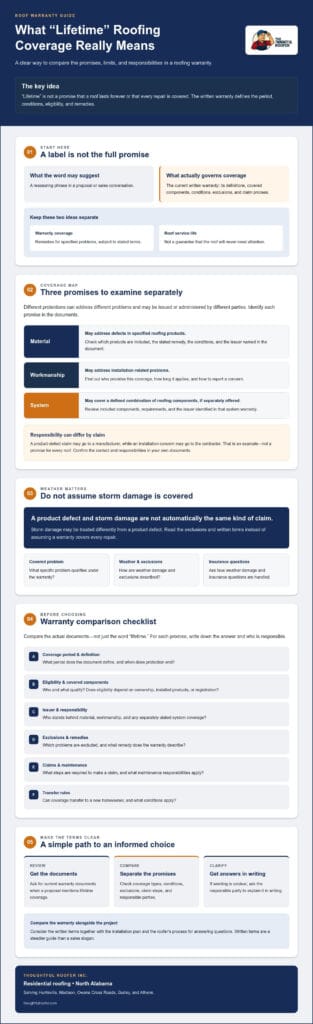
A useful comparison starts with the paperwork, not the promise in a proposal. Review the written warranty alongside the project scope, and use this checklist to spot differences before you commit. Terms vary, so ask the issuer to clarify anything that isn’t specific.
- Identify each document. Ask which written warranty governs each promise, who issues it, and who handles a future claim. A manufacturer’s document and a contractor’s workmanship terms may cover different concerns.
- Define the coverage. Check which materials, work, or roofing components are included. Confirm the stated coverage period, eligibility requirements, and conditions that apply to your home and project.
- Read exclusions and responsibilities. Ask what isn’t covered and what actions could affect eligibility. Verify any maintenance duties, installation requirements, registration steps, and claim deadlines in the current documents.
- Understand the claim process. Find out how to report a problem, whom to contact first, and what evidence or records may be requested. Don’t rely on a verbal explanation if the process isn’t clear on paper.
- Check transfer provisions. If you might sell the home, look for whether coverage can transfer, any conditions or deadlines, and whom to contact to complete the process.
- Keep project records. Ask what to retain, such as the signed proposal, product details, completion documents, registration confirmation, maintenance records, and inspection or repair notes.
Request written clarification for any answer that could affect your decision. That gives you a dependable reference if questions come up later, rather than leaving you to interpret a salesperson’s summary. Comparing the scope, responsible party, exclusions, claim steps, and transfer terms is a practical way to pursue peace of mind with a lifetime roofing warranty.
Compare the roofer as carefully as the warranty
Strong paperwork matters, but so does understanding who will do the work. Review relevant experience, references, the written scope, and how clearly the roofer answers questions. Make sure the proposal identifies the roofing materials and work being performed so you can compare bids on the same basis. For more guidance, consult a local resource on choosing roofing contractors in Huntsville and Madison.
Thoughtful Roofer is a veteran-owned residential roofing company serving Huntsville and nearby communities. Ask the roofer and relevant manufacturer to confirm any warranty options for your specific project. To discuss asphalt shingle roofing or roof leak repair, contact Thoughtful Roofer and bring your questions about the written scope and warranty documents.
Choose a North Alabama Roofer for Clear, Dependable Protection
A warranty is only one part of a sound roofing decision. Consider the written terms alongside the proposed materials, installation scope, and process for getting answers after the work is done. That broader view helps you judge whether the coverage fits the project, rather than relying on the word “lifetime” to do all the reassuring.
What a thoughtful roofing conversation should clarify
Bring your questions to the roofer before approving a proposal. Ask which materials are planned, what work the written scope includes, and which warranty documents apply. Clarify who issues each document, how the work will be documented, and whom to contact with questions later. If a storm has raised concerns, ask the roofer to explain inspection findings separately from any decision about insurance coverage.
These details help you assess whether the paperwork, work plan, and follow-up process fit together. They also give you a chance to request written answers instead of relying on verbal summaries. Thoughtful Roofer is a veteran-owned residential roofing company serving Huntsville, Madison, Owens Cross Roads, Gurley, and Athens. Ask the company and relevant manufacturer to verify any project-specific warranty options.
Take the next step with a local roofing professional
If you’re reviewing a proposal, bring it and the warranty documents to a conversation with a roofer. Ask what the scope means, which coverage documents are relevant, and what questions still need to be confirmed. Thoughtful Roofer serves homeowners in Huntsville, Madison, Owens Cross Roads, Gurley, and Athens. For more context on evaluating a contractor, explore a guide to professional roofing services and the questions homeowners can ask before choosing.
Ultimately, peace of mind with a lifetime roofing warranty comes from understanding the actual terms and choosing a roofer who can explain the proposed work and available documents clearly. If you have questions about an inspection or roofing project, talk with Thoughtful Roofer about your roofing questions. There’s no need to decide based on a slogan alone.
Find Peace of Mind With a Lifetime Roofing Warranty
A warranty’s “lifetime” label is only a starting point. The written terms explain what’s covered, who stands behind each promise, and what conditions apply. Keep material coverage, workmanship terms, and storm-related insurance questions distinct, then consider the warranty alongside the installation plan and the roofer’s process for answering questions.
That’s how you build peace of mind with a lifetime roofing warranty: by understanding the documents before you choose, not by relying on a slogan. If anything is unclear, ask the roofer and relevant manufacturer to explain the project-specific warranty options in writing.
Thoughtful Roofer is a veteran-owned local residential roofing company serving Huntsville, Madison, Owens Cross Roads, Gurley, and Athens. Its services include roof inspections, asphalt shingle roofing, repairs, and storm restoration. If you’re weighing a roofing project or have questions about an inspection, talk with Thoughtful Roofer about your roofing questions.
A clear conversation can help you take the next step with greater confidence and keep your home protected.
Frequently Asked Questions
Does a lifetime roofing warranty really last a lifetime?
Not necessarily for the entire life of the roof or home. For residential properties, “lifetime” may refer to the period the original homeowner owns the home, but the written warranty defines the applicable meaning, coverage period, and eligibility. Check the current document rather than relying on a proposal’s shorthand. If you’re planning a roof project in Huntsville or nearby, ask the roofer to identify the exact warranty terms in writing.
What does a lifetime roofing warranty usually cover?
It depends on the document. A manufacturer’s warranty may address defects in specified roofing materials, while a separate contractor warranty may cover installation-related issues under its terms. A system warranty, if offered, may set out coverage for a defined combination of components. Don’t assume one document covers materials, labor, and installation together. Confirm what is covered, who handles each promise, and what conditions apply.
Does a lifetime roof warranty cover hail or wind damage?
Not automatically. A lifetime label doesn’t establish whether hail, wind, or other storm damage is covered. Review the warranty’s exact language, exclusions, and claim instructions, then check your homeowners insurance policy separately. If you suspect damage after North Alabama weather, document what you notice and seek a professional assessment. Inspection findings can describe roof conditions, but the warranty issuer or insurer determines how its own terms apply.
Can a roofing warranty transfer to a new homeowner?
Possibly, but transferability depends on the specific warranty. Check whether the document permits a transfer, which coverage remains, and whether there are deadlines, registration steps, fees, or other conditions. Don’t assume a warranty follows the home automatically. If you’re buying or selling a home in Huntsville, Madison, or a nearby community, contact the named issuer and request written instructions before relying on coverage continuing.
What can void or limit a roofing warranty?
The warranty’s conditions and exclusions determine what may limit coverage. Review requirements for installation, registration, maintenance, and claim notice, along with any restrictions on repairs or changes to the roof. For example, check whether an unapproved repair or alteration could affect eligibility. Keep project records and ask the issuer to clarify unclear language in writing. Don’t treat any example as a universal rule without checking your document.
How do I compare roofing warranties before hiring a contractor?
Compare the written coverage, named issuer, exclusions, claim process, and transfer terms. Check what installation work and materials the proposal specifies, then ask what records and maintenance documentation you should keep. Request written answers about unclear terms, not just verbal assurances. Also compare the roofer’s relevant experience, references, scope details, and communication. A clear side-by-side review can help homeowners in Huntsville and nearby communities see what each proposal actually promises.
Should I choose a roofer based on a lifetime warranty?
No. Treat the phrase as one item to verify, not the sole reason to hire a contractor. Review the written terms alongside the materials, installation scope, and process for handling questions or concerns. Thoughtful Roofer is a veteran-owned local residential roofing company serving Huntsville and surrounding North Alabama communities. Ask the company and relevant manufacturer to verify project-specific options before deciding.