Why would a home in the heart of Dixie face the same winter roofing threats as a cabin in the North Woods? It feels counterintuitive to worry about heavy ice buildup in our relatively warm climate, yet the volatile temperature swings in Huntsville and across North Alabama create a stealth threat. You might be surprised to learn that preventing ice dams on roof alabama homes is one of the most critical steps you can take to avoid hidden leaks and expensive emergency repairs. If you’ve ever felt a surge of anxiety seeing icicles form while the sun is out, you aren’t alone. Most neighbors find the mechanics of winter roof damage confusing and worry about the safety of their household during a sudden freeze.
We understand that your home is your sanctuary, and keeping it dry and secure is our top priority. We promise to help you navigate these winter challenges by explaining the unique local weather patterns that cause ice to back up under your shingles. This guide previews actionable DIY prevention steps to improve your home’s resilience and provides a clear framework for knowing when to call for a professional inspection. By the end of this article, you’ll have a roadmap to navigate the winter months with confidence and the peace of mind you deserve.
Key Takeaways
- Understand how North Alabama’s “yo-yo” weather patterns trigger ice formation even when temperatures seem mild during the day.
- Discover how balancing attic ventilation and insulation creates a “cold roof” that stops ice from forming at the edges.
- Learn why debris-free seamless gutters and gutter guards are essential for redirecting meltwater safely away from your shingles.
- Follow our actionable 2026 guide for preventing ice dams on roof alabama homes to identify and fix hidden attic heat leaks.
- Explore how a proprietary inspection from a veteran-owned specialist can secure your home’s longevity and provide peace of mind.
Understanding Ice Dams in the North Alabama Climate
Have you noticed a thick ridge of ice clinging to your gutters after a cold snap? This isn’t just a winter decoration; it’s a structural warning sign. An ice dam is a ridge of ice that forms at the edge of a roof, preventing melting snow or ice from draining off. In North Alabama, this is a stealthy problem. Unlike the North, where ice stays for months, our dams often form and melt within 48 hours. This rapid cycle makes preventing ice dams on roof alabama homes a unique challenge that requires local expertise and a watchful eye.
Understanding the mechanics of ice dam formation on roofs is the first step toward security. When temperature imbalances occur between your roof surface and the outside air, the risk of damage increases. In our region, these imbalances are often hidden until a leak appears inside your ceiling. Most homeowners don’t realize that even a light frost can trigger this process if the attic isn’t properly regulated.
The Anatomy of an Alabama Ice Dam
How does this happen in a place like Huntsville? It starts with heat loss. When warm air escapes from your living space into the attic, it warms the upper part of your roof. Any frost or light snow on top begins to melt. As that water flows down toward the gutters, it hits the “cold eaves” where the roof extends past the heated walls of your house. The water refreezes there, creating a growing barrier. Asphalt shingles are particularly vulnerable because they’re designed to shed water downward; they aren’t meant to handle water backing up and sitting underneath them. This is why preventing ice dams on roof alabama properties starts with managing attic heat before the water ever reaches your shingles.
Why the Tennessee Valley is at Risk
Our region faces a specific “yo-yo” weather pattern. One day it’s 65 degrees and humid; the next, a cold front drops us into the 20s. High local humidity levels mean even a light frost can provide enough moisture for a dam if the attic is too warm. Our 2026 winter forecasts suggest these volatile fronts will be more frequent, increasing the risk of flash freezing. At Thoughtful Roofer Inc., we’ve seen that a quick freeze after a heavy rain is often more dangerous than actual snow. Rainwater trapped in gutters can freeze solid instantly, providing a foundation for a massive dam.
If a dam does cause a leak, the stress can be overwhelming. That’s why Thoughtful Roofer Inc. emphasizes “Administrative Advocacy.” We don’t just fix the shingles; we act as a stabilizing force to help you document the damage and navigate the complexities of restoration. We believe in protecting the safety of your household through every stage of the process, ensuring your home remains a sanctuary even during our most unpredictable winters.
The Attic Connection: Ventilation and Insulation
How does your attic influence the ice on your gutters? Most homeowners in Huntsville and Madison don’t realize their attic is the engine driving roof performance. The primary goal for preventing ice dams on roof alabama homes is maintaining a “cold roof.” This means the temperature of your roof deck should stay consistent with the outside air. When your attic is too warm, it melts the frost or ice above it, leading to the dangerous freeze-thaw cycles that create dams. The goal for an efficient attic is to maintain a neutral pressure environment where the air temperature inside the space matches the ambient outdoor temperature as closely as possible.
The Role of Proper Attic Insulation
Proper insulation is your first line of defense. It acts as a thermal blanket, keeping expensive heat inside your rooms and away from the roof shingles. We look for a high R-value, which measures the material’s resistance to heat flow. However, even high-quality insulation fails if there are “heat bypasses.” These are small gaps around recessed light fixtures, plumbing stacks, or attic hatches that let warm air leak upward. Identifying these gaps is a core part of our proprietary inspection process. Be careful not to simply pile in more material; if insulation is stuffed into the corners, it can block your vital air intake and cause more harm than good.
Balanced Ventilation: Soffit and Ridge Vents
Think of your attic ventilation like a set of lungs. A balanced system uses soffit vents at the eaves for intake and ridge or gable vents for exhaust. If your soffit vents are blocked by paint, debris, or insulation, the attic “suffocates.” This trapped heat warms the roof deck unevenly, melting ice in the center of the roof while the edges stay frozen. You might notice your attic is suffocating if you see frost forming on the underside of the roof boards or if you feel a sudden wave of heat when opening the attic hatch in winter. Many older homes in the Tennessee Valley were built with insufficient ventilation by today’s standards, making them prime targets for ice buildup.
If you’re unsure if your home meets current standards for preventing ice dams on roof alabama, a Thoughtful inspection can identify these hidden ventilation gaps before the next freeze. We focus on these technical details so you can focus on the safety of your family. Our team understands that a stable home starts with a well-regulated attic environment that stands up to our local climate extremes.
Gutters and Gutter Guards: The First Line of Defense
Can a handful of leaves really cause a roof leak in the middle of January? While we often associate gutters with summer thunderstorms, they’re actually a primary factor in preventing ice dams on roof alabama homes. When gutters are clear, meltwater flows safely away from your foundation. However, when they’re filled with pine needles or oak leaves, they provide a solid foundation for ice to build upon. This trapped water has nowhere to go but up, pushing back under your asphalt shingles and into your home’s structure.
We recommend seamless gutters because they eliminate the joints where debris and ice often snag. Every seam is a potential weak point where ice can expand and pull the system apart. Additionally, the pitch of your gutter system is vital. In the Tennessee Valley, even a slight sag can cause water to pool. During our winter temperature swings, that pooling water turns into a solid block of ice overnight, rendering the entire drainage system useless and leaving your roof vulnerable.
How Clogged Gutters Accelerate Damming
Think of a clogged gutter like an ice cube tray. Standing water freezes much faster than flowing water. When your gutters are blocked, they hold onto moisture that would otherwise drain. Once that water freezes, it creates a heavy, solid mass that adds hundreds of pounds of stress to your roof’s edge. This weight can cause gutters to pull away from the fascia board, creating gaps where water can rot your home’s woodwork. To stay ahead of these issues, review our guide on Seasonal Gutter Maintenance for Tennessee Valley Homes to ensure your system is ready for the first frost.
The Case for Professional Gutter Guards
Installing high-quality gutter guards is a proactive way of preventing ice dams on roof alabama properties. We prefer micro-mesh guards because they block even the smallest debris while allowing water to pass through freely. This prevents the “sludge” that often serves as the anchor for ice dams. Beyond the technical benefits, gutter guards provide a significant safety advantage. You won’t have to risk a dangerous ladder climb on a slick, icy morning to clear a blockage. Our Thoughtful approach involves custom fabrication for every home, ensuring a perfect fit that protects your roof deck and your peace of mind throughout the winter season.
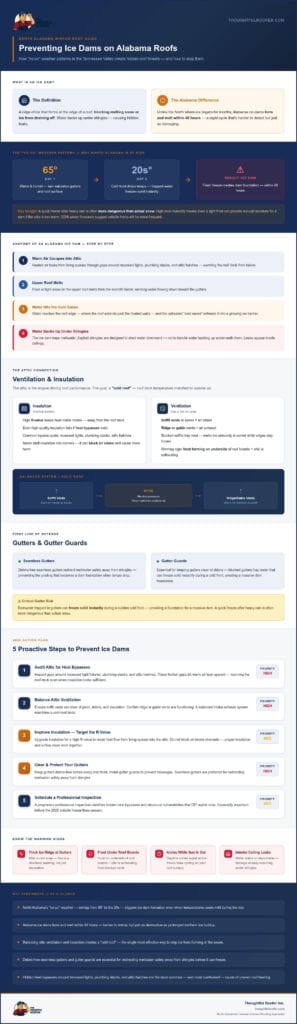
5 Proactive Steps to Prevent Ice Dams This Winter
How do you stay ahead of a flash freeze? Preparation is the most effective way to ensure the safety of your household and the integrity of your structure. While the weather in the Tennessee Valley is unpredictable, your maintenance schedule shouldn’t be. Taking these five steps now will go a long way toward preventing ice dams on roof alabama homes before the first frost of 2026 arrives.
- Clean your gutters: Remove all debris before the temperatures drop. This eliminates the “foundation” that allows ice to take hold.
- Seal attic bypasses: Use caulk or foam to seal gaps around light fixtures and plumbing stacks. This keeps warm air where it belongs: inside your living space.
- Inspect shingles: Look for cracked, curling, or missing shingles. When water backs up behind an ice dam, these are the first entry points for leaks.
- Clear downspouts: Ensure water can flow at least five feet away from your foundation to prevent ice from backing up into the gutter system.
- Schedule a professional check: A veteran-owned specialist can identify subtle ventilation flaws that a standard DIY walk-through might miss.
Immediate DIY Fixes
If you already see ice building up, you must act with caution. You can use a roof rake to gently pull snow or slush from the eaves while standing safely on the ground. Never climb onto an icy roof yourself. Some homeowners use the “pantyhose trick,” filling a stocking with calcium chloride and laying it across the dam to melt a channel. However, use this sparingly; calcium chloride can damage shingles and kill nearby plants. Most importantly, never use a hammer or shovel to break ice. One wrong swing can shatter your shingles and turn a minor ice problem into a major roof repair.
Identifying “Red Flag” Areas
Keep a close eye on the architectural features of your home. Roof valleys and dormers are natural collection points where ice accumulates faster than on flat surfaces. If you notice “ice whiskers” or giant icicles forming only in specific spots, your attic likely has a localized heat leak. These visual cues are early warning signs that your home’s defenses are struggling. If you’re seeing these signs alongside other wear, check out these 5 Signs Your Madison Home Needs a Roof Replacement to see if your roof’s lifespan is nearing its end.
Don’t wait for a ceiling leak to tell you there’s a problem. You can secure your home’s future by scheduling a Thoughtful roof inspection today. We’ll provide a clear, honest assessment of your winter readiness so you can rest easy when the next cold front rolls through.
The Thoughtful Approach to Winter Roof Protection
How can you be certain your home is ready for the next Huntsville freeze? At Thoughtful Roofer Inc., we believe that peace of mind shouldn’t be a luxury. We’ve developed a proprietary inspection method specifically designed for preventing ice dams on roof alabama homes. As a veteran-owned business, we bring a level of meticulous detail and discipline to every project, ensuring that your asphalt shingles or metal roofing are prepared for the Tennessee Valley’s volatile weather. We don’t just look at the surface; we evaluate the entire system to protect your family’s safety and the long-term stability of your structure.
If the 2026 winter season brings unexpected damage, our role as your partner doesn’t end with the physical repair. Thoughtful Roofer Inc. provides specialized administrative advocacy to help you navigate the complex process of insurance documentation. We understand that weather-related damage is stressful enough without the burden of paperwork. Our team acts as a stabilizing force, providing the clarity and support you need to restore your home and your peace of mind. We focus heavily on the safety of your household, ensuring every repair is built for longevity.
Why a Professional Inspection Matters
Detecting hidden vulnerabilities is the core of our “Thoughtful” process. Many leaks caused by ice dams only reveal themselves during a slow melt, often staying hidden behind walls until significant rot has occurred. Our experts evaluate the structural integrity of your roof deck, ensuring it can handle the heavy, uneven weight of ice loads. This proactive evaluation identifies weak points in your ventilation and insulation before they turn into emergency repairs. This level of intentionality saves you from the anxiety of a mid-winter roof failure and protects your investment.
Preparing Your Home for 2026
Acting before the first North Alabama freeze is the best way to secure your property. Thoughtful Roofer Inc. combines high-quality roofing materials, seamless gutters, and dedicated advocacy into one protective shield for your home. This comprehensive approach ensures that every component of your roof works in harmony to shed water and resist ice buildup. We take pride in our deep roots in the local community and treat every neighbor’s roof as if it were our own. When you choose a partner who values stability over high-pressure sales, you’re investing in the future of your household. You can count on us to be a reliable guide through any winter challenge our climate provides.
Securing Your Home Against the Next Freeze
Are you ready for the unpredictable winter fronts heading toward the Tennessee Valley? Protecting your home starts with understanding how North Alabama’s unique climate impacts your roof’s performance. By balancing your attic’s ventilation and ensuring your gutters remain clear of debris, you take the most important steps in preventing ice dams on roof alabama properties. These proactive measures don’t just stop leaks; they provide a foundation of safety for your entire household.
As North Alabama climate specialists, we use a proprietary meticulous workflow to identify hidden risks before they become emergency repairs. We understand the stress of home maintenance, and our veteran-owned team is here to act as your guide and protector. Don’t wait for the first frost of 2026 to discover a vulnerability. Get Your Free Winter-Ready Roof Inspection from Thoughtful Roofer Inc. Today and gain the peace of mind that comes from professional advocacy. Your home is your sanctuary, and we’re committed to keeping it dry and secure for years to come.
Frequently Asked Questions
Do ice dams really happen in Alabama if it doesn’t snow much?
Yes, ice dams occur in North Alabama due to freezing rain and heavy frost cycles rather than just deep snow. Our volatile temperature swings cause rapid melting and refreezing at the eaves. Even a thin layer of ice can block drainage if your attic is leaking heat. This is why preventing ice dams on roof alabama homes is a priority for residents in Huntsville and Madison who want to avoid structural damage during winter storms.
Will a new roof prevent ice dams from forming?
A new roof provides a fresh water barrier, but it doesn’t solve the underlying temperature issues that cause dams. If your attic lacks proper insulation or ventilation, ice will still form regardless of how new your shingles are. We combine high-quality asphalt or metal installations with our proprietary inspection process to ensure your entire roofing system works together. Addressing the thermal balance is the only way to achieve long-term protection for your household.
Can I use salt to melt ice on my roof shingles?
You should avoid using standard rock salt, also known as sodium chloride, on your roof shingles. Salt is highly corrosive and can damage the metal fasteners and flashing that hold your roof together. It also harms your landscaping when it washes off. If you must melt ice in an emergency, use calcium chloride pucks or a stocking filled with calcium chloride. However, these are temporary fixes that don’t replace the need for professional maintenance.
How do I know if an ice dam is causing a leak inside my house?
Look for water stains or damp spots on your ceilings and walls, specifically near the exterior edges of your home. You might also see moisture dripping from the attic rafters or notice windows that are suddenly difficult to open due to frame swelling. If you see giant icicles forming behind your gutters instead of over them, it’s a sign that water is backing up under your shingles. These red flags require immediate attention to prevent rot.
Are metal roofs better at preventing ice dams than asphalt shingles?
Metal roofs are generally more effective at preventing ice dams on roof alabama homes because their smooth surface allows frozen precipitation to slide off easily. Unlike asphalt shingles, which have a textured surface that grabs ice, metal systems promote faster drainage. When combined with proper insulation, a metal roof significantly reduces the time moisture spends on your roof deck. This makes them an excellent energy-efficient choice for homeowners in the Tennessee Valley seeking maximum winter durability.
Does homeowners insurance cover damage caused by ice dams in Alabama?
Most standard homeowners insurance policies in Alabama cover the sudden and accidental interior damage caused by ice dams, such as ruined drywall or flooring. However, they rarely cover the cost of removing the ice dam itself or the maintenance needed to prevent future occurrences. Our team provides administrative advocacy to help you document the damage and manage the claim process. We act as a stabilizing force to ensure you receive the support you deserve during restoration.
How much does it cost to have a professional remove an ice dam?
The cost of professional ice dam removal varies based on the height of your roof, the thickness of the ice, and the equipment required. Since every home in Athens and Owens Crossroads is different, we provide project-based fees after a thorough inspection. A professional removal usually involves specialized steaming equipment to safely melt the ice without damaging your shingles. Attempting to chip away ice yourself is often more expensive due to accidental roof damage.
What is the fastest way to stop an ice dam from leaking right now?
The fastest temporary way to stop an active leak is to create a channel through the ice so trapped water can drain. You can do this by filling a stocking with calcium chloride and laying it vertically across the dam. For a permanent and safe solution, professional steam removal is the most effective method. Once the immediate crisis passes, we recommend a Thoughtful inspection to identify the ventilation or insulation gaps that allowed the dam to form in the first place.