Would you trust a stranger who knocks on your door after a spring storm, or would you rather have a documented diagnostic report that proves exactly what’s happening above your ceiling? In Huntsville, where the average roof replacement costs between $6,844 and $7,716, guessing about your home’s health is a risk you don’t have to take. While many homeowners only think about roof inspections after a hailstorm, the reality of our Climate Zone 3A environment means that seasonal temperature swings and high humidity are working against your shingles every single day.
It’s natural to feel overwhelmed by the fear of “storm chasers” or the confusion of filing an insurance claim when you suspect hidden structural rot. You deserve a stabilizing force that prioritizes your family’s safety over a high-pressure sales pitch. This guide will help you master our “Thoughtful Process” for roof diagnostics, ensuring you have the professional evidence needed for insurance and the peace of mind that your North Alabama home is secure. We’ll break down the 2026 inspection costs, Madison County permit requirements, and the specific signs of wear that occur during our peak March through May storm season.
Key Takeaways
- Understand how Huntsville’s extreme temperature swings cause shingles to expand and contract, making regular health checks vital for your home’s defense.
- Master the four-layered “Thoughtful Process” for professional roof inspections to identify hidden issues across materials, structure, interior, and workmanship.
- Learn why a view from the driveway isn’t enough and how to avoid the safety hazards of DIY checks on steep-pitched Madison County homes.
- Discover the two critical maintenance windows in North Alabama, June and October, to stay ahead of seasonal storm cycles and heavy rainfall.
- Gain clarity on how to interpret a professional diagnostic report, which helps you differentiate between immediate repairs and long-term monitored conditions.
Why Regular Roof Inspections are Vital for Huntsville Homeowners
Have you ever wondered if your roof is truly protecting your family, or if it’s just one heavy storm away from a major leak? A professional roof inspection is more than a quick look from the driveway; it’s a comprehensive health check for your home’s primary defense system. Think of it as a wellness exam that ensures every layer of your shelter is performing as intended. By performing regular roof inspections, you move from a state of reactive anxiety to proactive security. You aren’t just looking for holes; you’re verifying the integrity of the structural deck, the ventilation system, and the waterproofing seals that keep the Alabama humidity where it belongs.
Our “Wise Protector” philosophy is simple: spotting a $500 flashing repair today prevents a $15,000 full replacement tomorrow. In Huntsville, where the average roof replacement cost is documented between $6,844 and $7,716, catching minor wear early is the most financially responsible move you can make. It’s about protecting your biggest investment and ensuring your family stays dry during our unpredictable North Alabama weather cycles. When you skip these checks, you’re essentially gambling with your home’s structural stability.
The Hidden Impact of North Alabama Climate
Huntsville is located in Climate Zone 3A, which means your roofing materials face unique stressors every day. During our 90°F+ summer days, shingles absorb intense heat, only to be hit by sudden, cooling afternoon thunderstorms. Thermal shock in Madison County occurs when asphalt shingles expand and contract so rapidly during these temperature swings that they develop microscopic cracks and lose protective granules. The high humidity of the Tennessee Valley also creates a breeding ground for moss and algae. These organisms don’t just look bad; they trap moisture against the shingles and eat away at the limestone filler, which significantly shortens the roof’s lifespan.
Insurance Compliance and Peace of Mind
Maintaining a documented history of your roof’s condition is often a requirement for keeping your manufacturer warranty valid. It also plays a vital role in your relationship with insurance providers. Most Alabama policies expect homeowners to perform basic maintenance to honor storm damage claims. When you have a professional report that details what a home inspection covers for the roof specifically, you establish a “baseline” for your property. This baseline is your strongest evidence if a tornado or hailstorm hits, proving that the damage was caused by a specific event rather than years of neglect. It provides the emotional stability of knowing your family and home are structurally sound before the next storm front rolls through.
The Comprehensive Roof Inspection Checklist: The “Thoughtful Process”
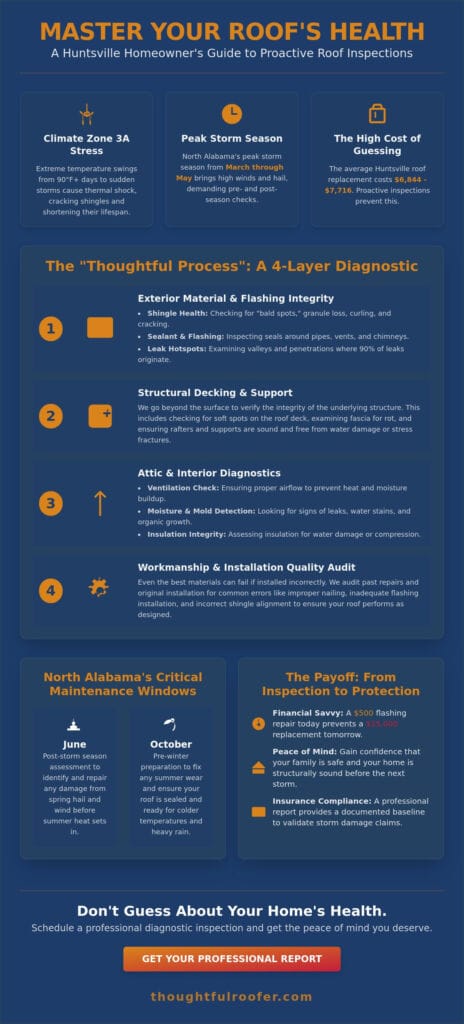
A standard check often misses the subtle signs of decay that lead to catastrophic failure. We developed the “Thoughtful Process” to eliminate that risk through a four-layered diagnostic approach. By examining the Material, Structural, Interior, and Workmanship components of your home, we provide a complete picture of your roof’s health. This methodical strategy ensures that whether you have a minor shingle issue or a deep-seated structural concern, nothing is overlooked during our roof inspections. We don’t just look for damage; we look for the root cause of potential future problems to ensure your family’s long-term protection.
Exterior Material and Flashing Integrity
The first layer of defense involves a granular look at your shingles and seals. You should look for “bald spots” where protective granules have washed into your gutters. These granules are essential for UV protection; without them, the sun’s rays accelerate shingle aging and lead to brittleness. We pay close attention to the “valleys” and “penetrations” around pipes and vents. These areas are where 90% of leaks in Huntsville homes originate due to the expansion and contraction of sealant materials. If you’ve noticed damp spots on your ceiling, our Leaking Roof Repair Me guide offers a deep dive into identifying these entry points early. We also verify the integrity of fascia boards and look for cracked flashing around chimneys that might have been compromised by seasonal temperature shifts.
Attic and Interior Diagnostics
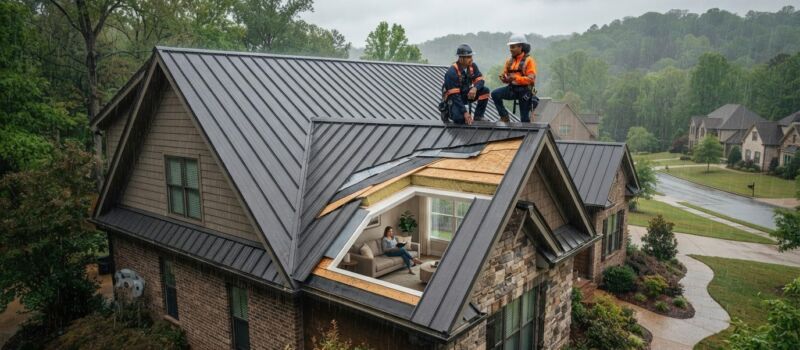
A truly thorough inspection moves inside the home to catch what the exterior might hide. We look for “rusted nails” in the attic, which is a counter-intuitive sign of poor ventilation rather than a direct leak. When moisture from your home can’t escape, it condenses on nail heads and eventually rots the wood deck from the inside out. We also identify water staining patterns on rafters that point to wind-driven rain entry points common during North Alabama’s spring storms. Our team checks for insulation “matting” and daylight peeking through the roof deck, both of which signal immediate trouble. This part of the “Thoughtful Process” ensures your attic has proper intake and exhaust airflow to prevent shingle “cooking” during our humid summers. Because this level of detail often requires accessing difficult or steep areas, professionals adhere to strict OSHA fall protection requirements to ensure the safety of everyone on site. If you’re worried about the state of your home’s defense system, scheduling a diagnostic consultation is the first step toward lasting peace of mind.
Professional vs. DIY: Why a Ladder and a Flashlight Aren’t Enough
Have you ever looked up at your roof from the curb and thought, “It looks fine to me”? It’s a common sentiment among Huntsville homeowners, yet this ground-level perspective is often the most dangerous form of home maintenance. While a visual check from the driveway might reveal a missing shingle or a fallen branch, it fails to capture the subtle signs of failure that lead to structural rot. Professional roof inspections go beyond what the naked eye can see from thirty feet away. They provide the stabilizing evidence you need to protect your family and your finances, especially when preparing for a storm damage roof repair insurance claim.
Safety is the most immediate concern when considering a DIY approach. Many Madison County homes feature steep-pitched gables and multi-story peaks that are treacherous for anyone without professional training and safety gear. Beyond the physical risk, a DIY attempt lacks the specialized documentation that insurance adjusters require. Whether you’re dealing with a minor leak or major wind damage, a handwritten note and a few blurry cell phone photos won’t suffice. You need a professional diagnostic report that serves as a legal and financial shield for your home. When selecting who performs that assessment, knowing how to identify a qualified near me roofing contractor who meets Alabama’s 2026 licensing standards is just as important as the inspection itself.
The Limitations of the “Ground-Level” View
Hail damage is notoriously difficult to spot from the ground. When a storm hits North Alabama, it often causes “bruising,” which are soft spots in the asphalt shingle where the fiberglass mat has been fractured. These spots look identical to healthy shingles from the street, but they’ve lost their waterproof integrity. A specialized expert performs a hands-on physical check to feel for these fractures, whereas a general home inspector might only look for broad surface issues. This level of detail is what separates a generic check-up from a “Thoughtful Process” diagnostic.
Advanced Diagnostic Tools in Action
Modern technology has transformed how we protect local homes. We use high-resolution drone footage to document hard-to-reach areas like steep gables or chimney crickets that are otherwise inaccessible. This provides a crystal-clear record for your insurance company, leaving no room for disputes about the extent of the damage. We also utilize thermal imaging to find moisture trapped between shingle layers before it ever drips onto your ceiling. Infrared technology identifies temperature anomalies that signal hidden saturation. These tools allow us to catch “invisible” leaks that would otherwise go unnoticed for months, preventing the growth of mold and the decay of your home’s structural rafters.
Timing Your Inspection: Navigating North Alabama’s Storm Cycles
How do you know when the right time is to check your home’s armor? In the Tennessee Valley, our weather isn’t just a topic of conversation; it’s a constant force acting on your shingles. While generic national advice suggests an annual check, Huntsville’s unique position in a “Tornado Alley” extension requires a more strategic approach to roof inspections. We recommend two critical windows for every local homeowner: June, immediately following the volatile spring storm season, and October, before the winter freeze cycle begins. These windows allow us to catch damage from high-wind events and prepare your home for the expansion and contraction of the coming freeze.
Waiting for a brown spot to appear on your ceiling is the most expensive mistake a Madison homeowner can make. By the time water penetrates your living space, the structural rafters and insulation have likely been saturated for weeks. Proactive checks identify compromised sealants and caulking that have been made brittle by seasonal temperature swings before they fail completely. It’s much easier to reseal a vent pipe in the calm of October than it is to track down an active leak during a December downpour. This foresight is the hallmark of the “Thoughtful Process,” prioritizing your family’s safety and your budget’s stability.
Post-Storm Recovery in the Tennessee Valley
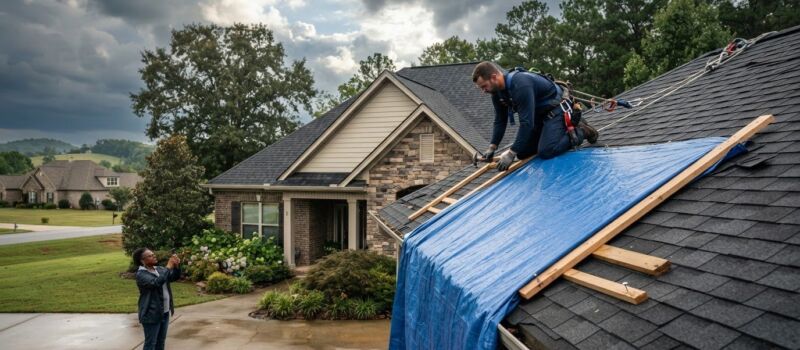
Severe weather in Madison or Athens often leaves behind “wind uplift.” This occurs when winds exceeding 50mph break the adhesive seal of a shingle without blowing it off entirely. From the ground, the roof looks perfect, but that shingle is now a ticking time bomb. The next heavy rain will drive moisture underneath the loose flap, leading to hidden rot. If your neighborhood experiences 1-inch hail or severe thunderstorms, you should call for a professional diagnostic immediately. Finding the Best Roofing Contractors in Huntsville, AL ensures you have a partner who understands these local patterns and can provide the documentation your insurance company requires for a successful claim.
Preparing for the “Winter Freeze” Cycle
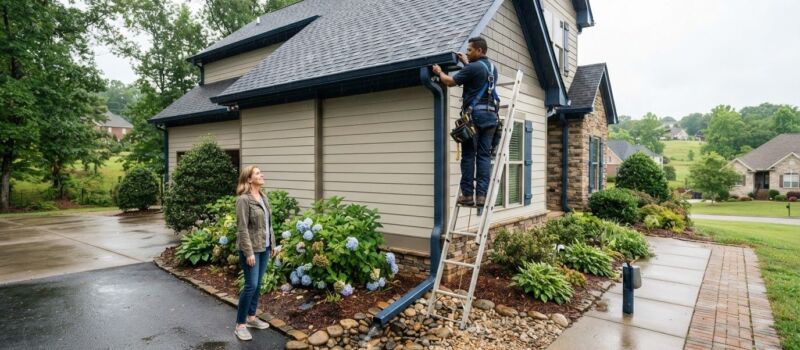
Autumn in North Alabama is beautiful, but our heavy tree canopy poses a specific threat to your roof’s drainage system. Falling leaves and pine needles quickly clog gutters, causing water to back up under the eave shingles. When the temperature drops below freezing, this trapped water turns into ice dams, forcing moisture into your soffits and fascia boards. A thoughtful October check ensures your drainage is clear and your flashing is secure before the wet Alabama winter arrives. This preventative step preserves your roof’s integrity and prevents the structural decay that often starts at the roof’s edge. To ensure your home is ready for the next season, schedule your thoughtful storm-recovery inspection today.
From Inspection Report to Protection Plan: Next Steps
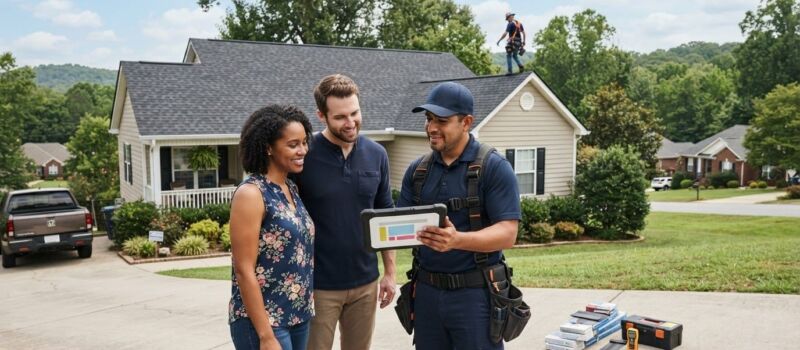
How do you move from a list of technical findings to a concrete plan for your home’s safety? Receiving the results of professional roof inspections can feel overwhelming if you aren’t sure what to prioritize. We believe a diagnostic report should provide a clear path forward, not a source of stress. To make the information manageable, we organize our findings into two distinct categories: “Critical Repairs” and “Monitored Conditions.” This allows you to distinguish between immediate threats to your home’s interior and normal wear that simply needs to be watched over time.
Critical Repairs include issues like active leaks, compromised flashing, or structural sagging that require swift action to protect your family and home. In contrast, Monitored Conditions are areas where the materials are aging as expected but don’t yet pose a risk. This transparent approach ensures you never feel pressured into unnecessary work while giving you the stability of knowing exactly where your roof stands in its lifespan. Whether you need an immediate fix or a long-term maintenance strategy, our goal is to act as a stabilizing force in your home’s upkeep. Understanding the full scope of roof repair in Huntsville, AL — from permit requirements to local labor rates — helps you make confident, informed decisions when the time comes to act on your inspection findings.
Navigating the Insurance Claim Maze
Dealing with insurance companies after a North Alabama storm is often the most exhausting part of being a homeowner. Our specialized “Insurance Assistance” process is designed to act as your personal advocate during the claim phase. We coordinate directly with adjusters to ensure every “thoughtful detail” of damage is documented and accounted for in their assessment. It’s vital to have your roofer present during the insurance adjuster’s visit; we speak the technical language of roofing and can point out subtle “bruising” or wind uplift that an adjuster might overlook during a busy season. This level of advocacy goes beyond simple construction, providing a full-service partnership that protects your financial interests.
Choosing a Local, Veteran-Owned Partner
Trust is the foundation of any successful home project, especially in a market often crowded with “storm chasers.” As a veteran-owned business, we bring a “service-first” mentality to the Huntsville community, prioritizing integrity and transparency over high-pressure sales tactics. Our “Thoughtful Process” is a meticulous workflow that ensures no part of your customer journey feels rushed or ignored. We act as a “Wise Protector” for your property, offering honest results that you can count on for years to come. You deserve a partner who is deeply invested in the well-being of the local community and understands the specific demands of our regional climate. Schedule your comprehensive inspection today to secure your peace of mind and ensure your home remains a safe haven for your family.
Securing Your Family’s Shelter for the Seasons Ahead
Your roof is your home’s first line of defense against North Alabama’s unpredictable weather. By mastering the diagnostic layers of our “Thoughtful Process,” you’ve taken a vital step toward protecting your family from hidden structural rot and expensive emergency repairs. Whether you’re navigating the aftermath of a spring hailstorm or preparing for the winter freeze cycle, regular roof inspections provide the documented proof and peace of mind you deserve. You don’t have to face the complex insurance claim maze or the fear of “storm chasers” alone.
As a veteran-owned and operated local business, we’re proud to serve our neighbors in Huntsville, Madison, Owens Crossroads, Gurley, and Athens with integrity. We offer specialized Insurance Assistance to advocate for you during the claim phase, ensuring no detail of damage is overlooked by adjusters. It’s time to move from uncertainty to a clear protection plan for your biggest investment.
Schedule Your “Thoughtful Process” Roof Inspection Today and let us act as the stabilizing force your home needs. Your family’s safety is our highest priority, and we’re here to guide you through every season with care.
Frequently Asked Questions
How much does a professional roof inspection cost in Huntsville, AL?
A standard professional roof inspection in Huntsville typically costs between $150 and $350. If your home requires a more specialized attic inspection to check for hidden structural rot or ventilation issues, you can expect to pay between $200 and $500. For homeowners who need a formal roof certification to estimate the remaining lifespan for a sale or refinance, the additional cost generally ranges from $75 to $200.
Will my insurance company pay for a roof inspection after a storm?
Most insurance providers don’t cover the initial cost of roof inspections, but they rely heavily on the documentation these reports provide. We view the inspection fee as a necessary step in our “Insurance Assistance” process. Having a professional diagnostic report ready ensures that your storm damage claim is backed by verified evidence, which simplifies the conversation with your insurance adjuster and protects your financial interests.
How long does a typical roof inspection take for a Madison home?
A thorough diagnostic for a Madison home usually takes between 45 and 90 minutes. This timeframe allows us to follow our “Thoughtful Process” without rushing, covering both the exterior material check and the interior attic assessment. Larger properties with multiple gables or complex rooflines might take slightly longer to ensure every square foot of your home’s defense system is meticulously documented and photographed.
Can I do my own roof inspection with a drone?
You can use a drone for a preliminary visual check, but it won’t catch the “invisible” damage that leads to leaks. Drones are excellent for capturing high-resolution images of steep peaks, but they can’t feel for “bruising” in the asphalt mat or detect moisture levels in your insulation. A “Wise Protector” approach requires a physical, hands-on assessment to identify the structural issues that a camera lens simply can’t see.
What is the difference between a home inspection and a roof inspection?
A home inspection is a generalist’s overview of the entire property, while a roof inspection is a specialized diagnostic focused solely on your home’s primary shelter. While a general inspector might note the age of the shingles, a specialist deep-dives into the flashing integrity, ventilation flow, and the microscopic health of the materials. This specialized expertise is vital for maintaining manufacturer warranties and ensuring long-term durability.
How often should I have my roof inspected in North Alabama?
We recommend scheduling an inspection twice a year, specifically during the June and October windows. These dates are strategic; June allows us to catch damage from the spring storm season, while October prepares your home for the winter freeze cycle. Because Huntsville is in Climate Zone 3A, these regular checks are the best way to prevent seasonal temperature swings from causing premature shingle failure.
What are the signs of hail damage that I can see from the ground?
While most damage is subtle, you can look for heavy granule loss that resembles dark sand in your gutters or downspout splash blocks. Dents on your metal mailbox, outdoor grill, or soft metal downspouts are also strong indicators that your roof sustained impact during a storm. If you notice these ground-level signs, it’s time to call for a professional diagnostic to check for fractured shingle mats.
Does a roof inspection report help when selling my home in Athens?
A professional report is an excellent asset when listing a home in Athens. It provides potential buyers with transparent proof of the roof’s condition and can even include a certification of the remaining lifespan. This level of detail builds immediate trust and peace of mind, often preventing the roof from becoming a sticking point during the final stages of the real estate negotiation.