If your roof starts leaking three years after a heavy Alabama storm, do you know who is actually responsible for the repair bill? It is a stressful question that many homeowners face, especially when they realize that a “lifetime” guarantee might not be as simple as it sounds. You are likely searching for clarity on what does a roofing warranty cover because you want to avoid hidden costs and ensure your family stays safe under a reliable structure.
We understand that the fine print can feel like a maze designed to protect the company rather than your home. This 2026 guide will help you decode the critical differences between manufacturer and workmanship warranties so you never pay for a repair that should be covered. We will look at how high-tier protections like the GAF Golden Pledge or Owens Corning Platinum Protection function in the real world. You will also learn how our proprietary “Thoughtful” installation process acts as your first line of defense against common coverage exclusions. This ensures your investment stays secure and gives you total peace of mind regarding your home’s longevity.
Key Takeaways
- Understand that your protection is split into two distinct parts: the manufacturer covers material defects, while the contractor handles installation errors.
- Learn exactly what does a roofing warranty cover regarding factory defects like curling or premature aging to avoid paying for failures you didn’t cause.
- Discover why a contractor’s workmanship guarantee is your best defense against leaks caused by poor flashing or improper nailing.
- Identify common exclusions, such as storm damage or “Acts of God,” that are typically handled by insurance rather than a standard warranty.
- Gain a clear roadmap for navigating complex administrative claims using a methodical approach to keep your home safe and your investment secure.
The Two Pillars of Protection: Understanding Roofing Warranties in 2026
Have you ever looked at your roof after a spring storm in Alabama and wondered if you’re actually protected? Many homeowners assume a warranty is a single piece of paper that covers every possible mishap. In reality, it’s a dual-layered safety net. To understand What is a Warranty? in the context of your home, you have to look at it as two separate legal agreements. When asking what does a roofing warranty cover, the answer depends on whether the fault lies with the factory that made the shingles or the person who climbed the ladder to install them.
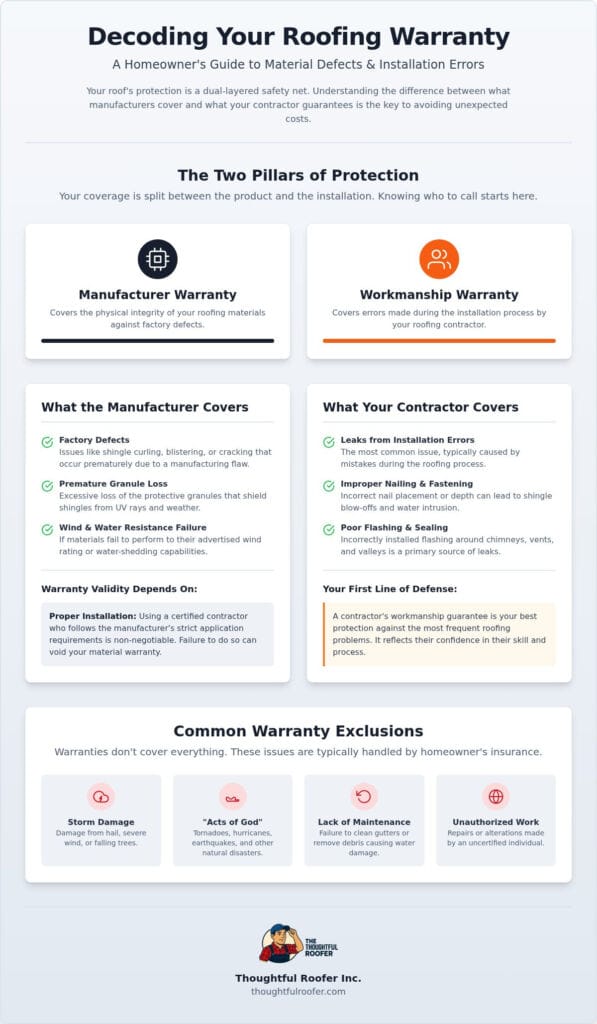
The first pillar is the manufacturer warranty, which covers the physical integrity of your asphalt shingles or metal panels. The second is the workmanship warranty, which focuses on the human element of the project. If you have one without the other, your Huntsville home remains vulnerable to expensive leaks that fall into a coverage gap. We believe in providing total transparency so you aren’t left guessing about the safety of your structure.
Why the Distinction Matters for Your Wallet
Identifying the source of a problem determines who pays for the fix. Consider Scenario A: you notice your shingles are losing their protective granules years before they should. This is a material defect, and the manufacturer is responsible for the remedy. Now consider Scenario B: water is seeping into your attic because the metal flashing around your chimney wasn’t sealed correctly. That’s a labor error. If your contractor doesn’t provide a strong workmanship guarantee, that repair cost comes straight out of your pocket. Knowing what does a roofing warranty cover helps you pinpoint exactly which party to call when a leak appears.
The Role of the Contractor in Warranty Validity
Most homeowners don’t realize that their material protection is tied directly to the quality of the installation. Manufacturers have strict requirements for how their products must be applied. If a roofer uses the wrong nails or ignores ventilation standards, the manufacturer can legally deny your claim, even if the shingles themselves are defective. This makes hiring expert roofing in Huntsville, AL essential for keeping your long-term protection intact. A Standard Manufacturer Warranty is the baseline protection that ensures your materials are free from factory defects for a set period. By using our proprietary “Thoughtful” workflow, we ensure every nail and shingle meets these rigid standards so your safety net never fails when you need it most.
Manufacturer Warranties: Protecting Your Roof’s Physical Materials
How long should your shingles actually last? When homeowners ask what does a roofing warranty cover, they are often looking for a guarantee that their investment is built to endure the elements. The manufacturer warranty is the factory’s promise that the shingles, underlayment, and ridge vents you purchased will perform as advertised. These agreements are governed by Federal Warranty Law, which ensures that companies provide clear information about what happens if their products fail prematurely.
Most standard material warranties protect you against specific factory defects. This includes issues like shingles that curl shortly after installation, blistering, or premature granule loss that leaves the asphalt core exposed. In 2026, the industry standard for entry-level shingles typically starts with a 20-year or 30-year limited warranty. Many premium products now carry “Lifetime” labels, though it’s vital to remember that in roofing terms, “Lifetime” usually refers to the period you own the home, not an infinite number of years.
A significant trend in 2026 is the move toward “system-based” warranties. Manufacturers like GAF and Owens Corning now offer their best protection only when you use their complete suite of components. This means your shingles, starter strips, and ventilation must all come from the same brand. Buying a complete system creates a unified shield for your home, making it much harder for a manufacturer to claim that a third-party component caused your roof to fail.
What Is Usually Included in Material Coverage?
Standard coverage ensures that if your shingles fail to shed water or resist wind as promised, the manufacturer will provide replacements. However, the value of this coverage often changes over time. Most basic warranties have a 10-year non-pro-rated period. During these first ten years, the manufacturer covers the full cost of the materials. After that, the warranty becomes pro-rated, meaning the value of the payout drops every year as the roof ages. You should also check if your policy covers the “Labor to Replace.” Some basic warranties only send you a pallet of shingles but leave you to pay the roofer to install them.
Enhanced Manufacturer Warranties
The “Gold Standard” for protection comes through enhanced warranties available only through certified contractors. These upgraded agreements, such as the GAF Golden Pledge or Owens Corning Platinum Protection, often extend the non-pro-rated period to 50 years. They also cover the costs of tearing off the old roof and disposing of the debris, which are significant expenses usually left to the homeowner. These comprehensive plans are the best way to secure asphalt shingle roofing in Huntsville against the unpredictable North Alabama climate. If you are unsure which level of protection your current roof carries, reaching out to a veteran-owned advocate for a quick review can provide the clarity you need to feel secure.
Workmanship Warranties: Why Your Contractor’s Skill Matters Most
Did you know that the vast majority of roof failures aren’t caused by defective shingles? Most leaks stem from human error during the installation process. While the manufacturer protects the physical product, the workmanship warranty is a separate agreement provided directly by your roofing contractor. Understanding exactly what does a roofing warranty cover requires looking closely at the labor side of the equation. This guarantee is your protection against mistakes made by the crew while they were on your roof.
Industry standards for workmanship coverage vary wildly. Some local contractors offer a one-year or two-year “tailgate” warranty, which often expires just as the first real problems begin to surface. Others provide 10-year or even “Lifetime” labor guarantees. However, a workmanship warranty is only as good as the company’s reputation and longevity. If a business closes its doors, your labor guarantee disappears with them. As a veteran-owned company, we believe that integrity is the strongest warranty you can buy; we treat every installation as a long-term commitment to our Huntsville neighbors.
Common Installation Errors Covered by Workmanship
When labor is performed correctly, your roof should easily withstand the typical Alabama climate. When it isn’t, specific issues tend to arise that a workmanship warranty should address:
- Leaking Valleys: Valleys carry the highest volume of water on your roof. If the underlayment or shingles aren’t woven or cut correctly, water will find its way into your home.
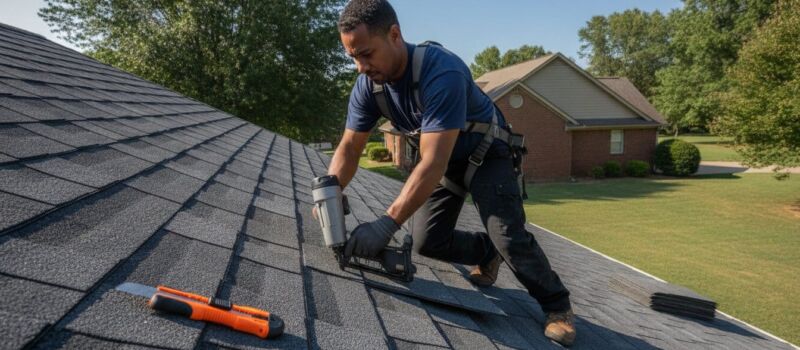
- High-Nailing: This occurs when nails are driven above the manufacturer’s designated strike zone. It leaves shingles loose and prone to blowing off during high winds.
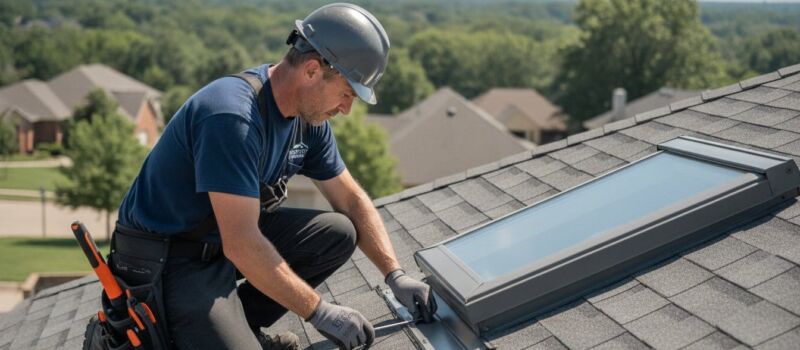
- Improper Flashing: Flashing around chimneys, skylights, and dormers must be meticulously sealed. Poorly installed flashing is the number one cause of localized attic leaks.
- Ventilation Failures: If ridge vents or soffit vents are installed incorrectly, heat and moisture build up in your attic, which can actually void your material warranty.
The ‘Thoughtful’ Approach to Installation
We believe the best way to handle a warranty claim is to ensure you never have to make one. Our proprietary “Thoughtful” workflow focuses on a meticulous installation process that exceeds standard requirements. By taking extra time to double-check flashing seals and nail placements, we reduce the risk of future leaks to nearly zero. If you do encounter an issue, our team provides professional roof repair in Huntsville that stands firmly behind our labor. This methodical approach gives you the security of knowing that your family is protected by both a premium product and the highest level of craftsmanship available in North Alabama.
The Fine Print: What Your Roofing Warranty Likely Won’t Cover
Understanding what does a roofing warranty cover is just as important as knowing what it omits. Many homeowners are surprised to learn that their coverage is not an “all-risk” insurance policy. Instead, it is a specific guarantee against failures in materials or installation. If an external force damages your home, the manufacturer and the contractor are rarely the ones responsible for the repair bill. We believe in being transparent about these boundaries so you aren’t left with an unexpected expense during a crisis.
Common exclusions often include natural wear and tear that occurs as a roof ages. You won’t be able to file a claim because your shingles have slightly faded in the Alabama sun or because a small patch of moss has begun to grow on the north side of your garage. Additionally, unauthorized alterations can immediately void your protection. If you hire a third party to install solar panels or a satellite dish and they penetrate the roofing system, you lose your legal recourse for any leaks that develop in those specific areas. Even neglecting simple maintenance can be a dealbreaker. If you allow gutters to remain clogged for years, causing water to back up under the eaves, the manufacturer may label the damage as “preventable neglect” and deny your claim.
The Storm Damage Gap: Warranty vs. Insurance
In Huntsville, we deal with severe weather that tests the limits of any structure. It’s vital to distinguish between a warranty issue and a storm claim. A warranty covers a shingle that fails on a sunny day because of a factory defect. It doesn’t cover a tree falling on your roof during a tornado or hail stones bruising your shingles. For these “Acts of God,” you must turn to your homeowner’s insurance rather than the manufacturer. This is where storm damage roof repair documentation becomes your most valuable asset. Thoughtful Roofer Inc. acts as your administrative advocate during these stressful times, helping you navigate the complex overlap between what your warranty handles and what your insurance policy should pay for.
How to Keep Your Warranty Valid
When you understand what does a roofing warranty cover, you realize that simple record-keeping is your best defense against a denied claim. Your coverage is a two-way street that requires you to treat the home with care. Catching minor issues early through annual inspections prevents a small leak from becoming “negligence” in the eyes of a manufacturer. You should keep a detailed folder of every repair, inspection, and gutter cleaning performed on your property. Most importantly, you should never attempt a “DIY” fix on a roof that is still under protection. Even a well-intentioned patch can void your workmanship guarantee. If you are worried about a specific spot on your roof, you can request a professional inspection from Thoughtful Roofer Inc. to ensure your safety net remains fully intact.
Securing Your Investment: How to Navigate Warranty Claims in North Alabama
What should you do the moment you spot a water stain on your ceiling or a loose shingle in your yard? Finding a problem with your roof is stressful, but having a clear roadmap can turn a potential disaster into a managed repair. When you understand what does a roofing warranty cover, the next step is knowing how to activate that protection without getting lost in administrative red tape. Navigating a claim requires a methodical approach that prioritizes documentation and local expertise.
The first step is to identify the source of the issue. Is it a material failure, such as shingles that are cracking, or a workmanship error like a leaking valley? As we established earlier, this distinction determines which pillar of your warranty you will lean on. Once you have a general idea of the problem, contact your original contractor immediately. A local Huntsville expert who understands our specific climate is much more likely to provide a prompt inspection than a national chain. After contacting them, document everything. Take high-resolution photos of the damage from the ground and keep a digital copy of your original contract and any previous maintenance receipts.
Questions to Ask Your Roofer About Their Warranty
Before you sign a contract or initiate a repair, you need to verify the specific terms of your coverage. Consider asking these three vital questions:
- Is this warranty transferable if I sell my Madison home? A transferable warranty adds significant value during a resale, but it often requires a fee and notification to the manufacturer within 30 days of the closing.
- Does your workmanship warranty cover the cost of materials for the repair? Some labor guarantees only cover the time spent on the roof, leaving you to pay for the replacement shingles or flashing.
- What specific maintenance do I need to perform to keep this valid? Ask for a written list of requirements, such as annual gutter cleanings, to ensure you don’t accidentally void your coverage through neglect.
The Final Checklist for Homeowners
To ensure your home stays protected for the long haul, run through this final checklist before your project is considered complete. First, review your contract to ensure there is a dedicated “Workmanship Guarantee” section with a clear duration. Second, verify that the contractor has registered your products with the manufacturer. Many homeowners assume this happens automatically, but if the registration isn’t filed, you may only be left with the most basic, limited coverage rather than a full system warranty. Finally, keep all these documents in a secure, accessible place. Understanding what does a roofing warranty cover is your best defense against future costs.
Ready for a roof that’s installed with precision? Contact Thoughtful Roofer Inc. for a professional inspection today.
Protecting Your Home’s Future with Confidence
Choosing the right protection for your Huntsville home shouldn’t feel like a gamble. Now that you understand what does a roofing warranty cover, you can see how the manufacturer’s material guarantee and a contractor’s workmanship promise work together to form a complete safety net. We have discussed how factory defects and installation errors require different paths for resolution, and why keeping meticulous records is the best way to prevent your coverage from being voided by a technicality. The safety of your household depends on these details being handled with precision from the very first day.
At Thoughtful Roofer Inc., we believe in providing more than just shingles and nails. We offer a stabilizing force for our community through our proprietary installation workflow and specialized administrative advocacy. Our team acts as your mentor through complex warranty and insurance hurdles, ensuring your investment remains secure for the long haul. Protect your home with the expert installation and solid guarantees of Thoughtful Roofer Inc. We are here to help you build a safer, more dependable future for your family.
Frequently Asked Questions
Does a roofing warranty cover leaks?
Yes, a warranty covers leaks, but the cause of the water entry determines which policy applies. A workmanship warranty covers leaks resulting from poor sealing, improper flashing, or incorrect nailing. If the leak is caused by a factory defect in the shingles, the manufacturer warranty applies. However, leaks caused by external storm damage are typically handled by insurance rather than a warranty.
How long is a typical roofing warranty?
Typical material warranties range from 20 to 50 years, while workmanship guarantees usually last between 2 and 10 years. In 2026, many premium shingle brands offer “Lifetime” coverage, which generally remains valid for as long as you own the property. It’s important to verify if your coverage is pro-rated, as the financial value often decreases after the first 10 years of the roof’s life.
Will my warranty cover hail damage?
No, standard roofing warranties do not cover hail damage because it’s considered an “Act of God” rather than a defect. Manufacturers only guarantee against failures in the materials they produced. If a North Alabama storm bruises your shingles or cracks your vents, you’ll need to file a claim with your homeowner’s insurance provider instead of the manufacturer.
Is a roofing warranty transferable to a new owner?
Most roofing warranties are transferable, but they typically allow for only one transfer to the next homeowner. You usually have a narrow 30-day window after the home sale to notify the manufacturer and pay a transfer fee. This feature is a significant selling point for homes in Madison and Huntsville, as it provides the new owner with immediate peace of mind.
What voids a roofing manufacturer warranty?
Several factors can void your protection, including improper attic ventilation and pressure washing your shingles. Installing solar panels or satellite dishes without professional oversight can also void specific sections of your coverage. Manufacturers often deny claims if they discover the roof wasn’t installed to their exact specifications, which is why our proprietary installation workflow is so vital for your protection.
What is the difference between a roof warranty and home insurance?
A roof warranty protects you against internal failures, while home insurance protects you against external damage. If your shingles fail because they were manufactured poorly, the warranty pays for the remedy. If a tornado or fallen tree damages your structure, insurance pays. Understanding what does a roofing warranty cover helps you decide whether to call your contractor or your insurance agent first.
Does a warranty cover the cost of labor for repairs?
Workmanship warranties always cover labor, but standard manufacturer warranties often only provide the replacement materials. To get labor costs covered for material defects, you typically need an enhanced “system” warranty. These premium options are generally only available when you hire a certified contractor to install the manufacturer’s complete suite of components, from underlayment to ridge vents.
How do I file a roofing warranty claim?
Start by contacting your original roofing contractor to perform a professional inspection and document the specific failure. You’ll need your original contract, high-resolution photos of the damage, and proof of regular maintenance. We act as an administrative advocate for our clients, helping you organize these documents to ensure the manufacturer’s claim process is handled with the integrity you deserve.