You’re sitting in your living room when a rhythmic “plink, plink, plink” echoes from the ceiling, and your heart sinks as a dark spot spreads across the drywall. It’s a moment of pure anxiety; you’re worried about your furniture, your flooring, and the potential for a massive repair bill. Knowing exactly what to do if your roof is leaking during rain can mean the difference between a simple patch and a total structural disaster. We understand how overwhelming this feels, but right now, you need to be the calm in the storm for your household.
We agree that your home is your most important investment, and seeing it under threat is incredibly stressful. This guide promises to provide you with a clear, step-by-step triage plan to minimize water damage and protect your interior while the rain is still falling. You’ll learn how to manage the water flow, document the situation for your insurance provider, and prepare for a professional roof leak repair. We will walk through how to act fast to prevent mold growth and structural rot, ensuring your family stays safe and your home remains secure.
Key Takeaways
- Learn how to protect your valuables by immediately clearing the area and containing water flow with simple household items.
- Discover exactly what to do if your roof is leaking during rain to stabilize your home’s interior without risking your safety on a slick roof.
- Understand critical safety protocols for locating leaks from inside your attic and why you must wait for dry conditions before attempting exterior repairs.
- Master the documentation process required to support your insurance claim, including the specific photos and logs that adjusters need to see.
- Explore how a proprietary diagnostic workflow ensures a permanent roof leak repair that addresses hidden vulnerabilities missed by standard inspections.
Immediate Interior Triage: How to Stop the Water Damage Now
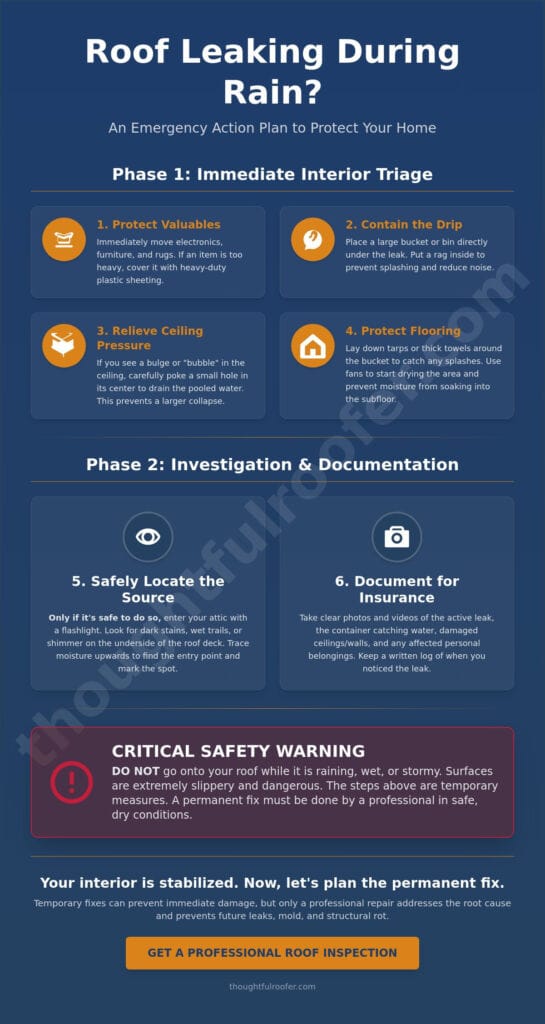
How do you react when water starts dripping through your ceiling? It’s a high-stress moment that requires a steady hand and a clear, methodical plan. Before you worry about the shingles or the rafters, you must focus on the interior of your home to prevent a bad situation from getting worse. Knowing exactly what to do if your roof is leaking during rain starts with an immediate assessment of your valuables. Move your electronics, upholstered furniture, and rugs to another room. If an item is too heavy to move, cover it with a heavy-duty plastic tarp or even a shower curtain to deflect any stray splashes.
Containment is your next line of defense. Grab a large bucket, a deep pot, or a plastic storage bin and place it directly under the drip. To prevent the constant “plink” sound from causing more anxiety, place an old rag in the bottom of the container. This simple trick also stops water from splashing out onto your flooring. Understanding what to do if your roof is leaking during rain allows you to stay calm and take control of the situation. understanding water damage helps you realize that even small amounts of moisture can lead to significant structural issues or mold growth if left unmanaged. Stay in the room and monitor the container to ensure it doesn’t overflow before the rain subsides.
Releasing Water Pressure to Save Your Ceiling
Many homeowners are terrified when they see a “bubble” forming in their ceiling drywall, but this is actually a manageable situation that you can stabilize. That bulge means water is pooling behind the paint or the drywall paper. If you leave it alone, the weight will eventually cause a large, messy section of the ceiling to collapse. Take a screwdriver or a small drill bit and carefully poke a hole right in the center of the bulge. This creates a controlled “relief hole” that allows the water to drain into your bucket, preserving the surrounding drywall and preventing a much larger repair bill later. It’s a simple act of triage that protects your home’s structural integrity.
Protecting Your Flooring and Subfloor
While catching the main leak is vital, you must also protect the ground beneath you. Water often travels in ways we don’t expect; peripheral moisture can quickly ruin hardwood or soak into carpets. Lay down heavy-duty plastic sheeting or tarps around your collection area to catch any overspray. If you don’t have plastic, use thick towels to create a barrier around the bucket. Once the leak is under control, turn on overhead fans or bring in floor fans to start the drying process immediately. Keeping the air moving is the best way to prevent the subfloor from holding onto moisture and warping over time.
Safely Locating the Leak Source from the Attic
Why does a leak often appear in the middle of a room when the roof peak is several feet away? Once you’ve stabilized the interior, the next phase of what to do if your roof is leaking during rain involves a careful investigation of your attic. This is where the mystery of the leak’s origin is often solved. However, safety must remain your primary concern. Only enter the attic space if it’s properly floored and you can move around without stepping through the ceiling drywall. If you have any doubts about the stability of the space, it’s best to wait for a professional to arrive.
Bring a high-powered flashlight with you. Water is notoriously difficult to see in a dark attic, but it often leaves a distinct “shimmer” on wooden rafters or roof sheathing. Shine your light across the underside of the roof deck. You aren’t just looking for drips; you’re looking for dark stains or wet trails. Once you find the suspected entry point, mark the area clearly with a piece of painter’s tape or a permanent marker. This simple step provides invaluable data for your roof leak repair specialist, allowing them to pinpoint the failure once the weather clears. Knowing what to do if your roof is leaking during rain helps you act as an informed partner in the repair process.
The ‘Path of Least Resistance’ Rule
Water rarely takes a direct route from the shingle to your ceiling. It follows the path of least resistance, often traveling along the top of a rafter for several feet before finally dropping onto your insulation. Trace any visible moisture upward toward the roof peak to find the true source. Pay close attention to “hot spots” like chimney flashings, plumbing vents, and valleys. In colder months, understanding the mechanics of preventing ice dams can also help you identify where snow melt might be backing up under your shingles. Remember that damp insulation acts like a massive sponge, holding gallons of water that can eventually lead to mold or structural rot.
Temporary Internal Diversion
If the leak is accessible, you can sometimes stop the damage before it reaches your living space by placing a “catch pan” or small bucket directly under the attic drip. This creates a secondary line of defense for your home’s interior. However, you must never leave an attic bucket unattended for long periods. A single heavy downpour can fill a container faster than you might expect, leading to an overflow that causes even more damage than the original leak. Water tracking can lead a leak 10 feet away from its actual entry point on the exterior. Keep your diversion tools organized and check them frequently until the storm passes.
Managing Emergency Roof Repairs and Tarping Safely
Is your first instinct to grab a ladder and a tarp as soon as you spot a leak? While we admire that protective spirit, we must insist on the Golden Rule of home maintenance: never climb onto a wet roof while it’s raining or the wind is blowing. It’s a matter of safety that far outweighs the immediate threat of water damage. According to data from 2024, falls are a leading cause of death in construction, accounting for 389 out of 1,034 fatalities. If professionals with safety gear face these risks, an unprotected homeowner shouldn’t take the chance. If you’re wondering what to do if your roof is leaking during rain, the answer is to stay on the ground until the shingles have completely dried.
Instead of risking a dangerous fall, your best course of action is to contact a storm damage roof repair specialist for emergency tarping. Professionals have the right safety gear, including personal fall arrest systems mandated by OSHA for steep-slope roofs. They also understand how to secure a tarp without causing more damage to your structure. While it’s tempting to try a quick fix, an improperly secured tarp can catch the wind like a sail, potentially pulling up more shingles or even damaging your roof deck. Knowing what to do if your roof is leaking during rain means prioritizing your physical safety while coordinating a professional response.
Why DIY Tarping is a Last Resort
Wet asphalt shingles are as slippery as ice. This is especially true on the steep pitches common in North Alabama architecture. Even a slight mist can turn a standard roof into a slide. Beyond the slip risk, most homeowners don’t have the proper tools to secure a tarp correctly. Using nails to hammer down plastic often creates dozens of new holes in your decking, which only complicates the eventual permanent repair. Professional teams use specific “sandbag” or “cleat” methods that provide a watertight seal without further compromising your shingles. They act as a stabilizing force, ensuring the temporary fix doesn’t create a secondary set of problems for your home.
Identifying Storm Damage from the Ground
You can gather a significant amount of information without ever leaving the safety of your lawn. Grab a pair of binoculars and scan your roofline for obvious signs of distress. Look for missing shingles, sections of exposed underlayment, or large tree limbs that may have impacted the surface. Check your downspouts for an unusual accumulation of shingle granules. A heavy presence of these granules often indicates significant hail impact or age-related deterioration that has been accelerated by the storm. You should also note any visible damage to the flashing around your chimney or valleys, as these are common failure points where water likes to intrude during heavy downpours.
Documenting Damage for Your Insurance Claim
Why is your smartphone the most valuable tool in your house right now? While you’re managing buckets and towels, your phone is capturing the evidence you’ll need for a successful insurance claim. Knowing what to do if your roof is leaking during rain includes acting as a temporary field adjuster. Start by taking clear, well-lit videos of the water as it enters your home. Capture the drips, the ceiling bulges, and any water tracking down your walls. These “active leak” visuals are far more persuasive to an insurance company than photos of dry water stains taken days after the storm has passed.
Keep a detailed log of the timeline. Note exactly when you first noticed the leak and the severity of the weather at that moment. This data helps link the damage to a specific storm event, which is a critical requirement for most policies. You must also save every receipt for materials you purchased for triage. Whether it’s a new tarp, extra buckets, or the fee for a professional emergency tarping service, these costs are often reimbursable as part of your “reasonable repairs” coverage. Don’t throw away ruined electronics, furniture, or saturated rugs yet. Move them to a dry area like a garage, but keep them until your adjuster has performed a physical inspection. For those navigating complex claims, our administrative advocacy support can help simplify the process.
The Administrative Advocacy Mindset
Most insurance policies contain a clause requiring homeowners to take immediate action to “mitigate further damage.” By following the triage steps we’ve outlined, you’re fulfilling your contractual obligation to protect the property. Detailed documentation is the key to a smooth roof repair in Huntsville claim. It’s also vital to understand that professional documentation from a roofer carries significant weight with adjusters because it provides a technical perspective on the failure point. Recent changes in 2026, such as the FHFA update allowing Actual Cash Value (ACV) coverage for certain single-family homes, make precise documentation even more important for your final payout.
Communication with Your Insurance Agent
Call your insurance agent as soon as the immediate interior threat is stabilized. Don’t wait for the rain to stop. Ask specifically about your deductible amount and whether your policy includes “Loss of Use” coverage. This specific coverage can help pay for temporary housing or meals if the leak has made a bedroom or kitchen uninhabitable. Start a “damage folder” on your computer or a physical accordion file. Place all your photos, weather notes, and repair receipts in one organized location. This preparation demonstrates that you are an organized, proactive homeowner, which often leads to a faster and more transparent claims experience.
Professional Restoration: The Thoughtful Roofer Solution
How do you move from surviving the storm to restoring your home’s integrity? Once the immediate crisis has been managed, the focus shifts from temporary containment to a permanent solution. While the steps you took in previous sections were vital in knowing what to do if your roof is leaking during rain, those measures are only the first half of the journey. A leak is often a symptom of a larger, underlying issue that requires a meticulous, professional eye to resolve. As a veteran-owned local business, we act as a stabilizing force for our North Alabama neighbors, providing the calm expertise needed to navigate the aftermath of severe weather.
While we serve the North Alabama area, we recognize that homeowners everywhere need reliable support. For those in other regions looking for a dedicated, family-owned team with decades of expertise, you can visit Advanced Roofing to see how they provide quality care and long-term protection for their customers.
Our approach goes beyond a simple patch. We utilize a proprietary diagnostic process designed to uncover the “hidden” leaks that many competitors overlook. Water is a patient invader; it can saturate your insulation and begin rotting your roof decking long before you see a new spot on the ceiling. It’s essential to check for mold growth and structural decay after any significant water intrusion. By identifying these issues early, we help you avoid the compounding costs of structural failure and health hazards. Our team is deeply invested in the longevity of your home, treating every repair with the same care we would apply to our own property.
Similarly, for homeowners in the United Kingdom, Oxford Driveways And Roofing Ltd. brings this same level of specialist expertise to roofing and property maintenance, ensuring long-term protection for your home.
Additionally, for those based in central Ireland, Dooley Roofing & Guttering provides dependable roofing and guttering services to protect homes from the elements and ensure long-term structural health.
Our Comprehensive Roof Leak Diagnostic
A truly effective repair requires a holistic look at the entire roofing system. We don’t just look at the shingles; we conduct a deep-dive examination of the flashing, underlayment, and attic ventilation. These components must work in harmony to keep your home dry and energy-efficient. We specialize in professional roofing services that restore your peace of mind and provide a clear path forward. To support your insurance claim, our team provides a comprehensive report that documents the exact cause of the failure. This technical evidence is a powerful tool for maximizing your claim and ensuring your insurer understands the full scope of the required work.
Next Steps: Getting Your Home Back to Normal
The transition back to normalcy should be as low-friction as possible. Once the weather clears, the best next step is to schedule a professional assessment. We offer a no-pressure inspection to help you understand the condition of your roof and the specific steps needed for a permanent fix. If you’re concerned about the financial impact of a sudden repair, you should check with your provider about available financing options that can help spread the cost over time. Your safety and the security of your household are our top priorities. When you’re ready to move from triage to a permanent resolution, Contact Thoughtful Roofer for an Emergency Inspection to begin the restoration process.
Moving from Crisis Triage to Permanent Protection
Managing a sudden leak is incredibly stressful, but having a clear plan for what to do if your roof is leaking during rain ensures you remain the steady leader your household needs. You’ve already taken the most important steps by stabilizing your interior, containing the water flow, and documenting the damage safely for your insurer. By prioritizing your physical safety and staying off the wet roof, you’ve protected the most valuable part of your home: your family. Now that the immediate triage is complete, it’s time to transition toward a lasting restoration that prevents future failures.
As a veteran-owned and operated team, we bring discipline and order to the chaos of storm damage. We utilize a proprietary storm damage workflow to ensure every hidden vulnerability is addressed, and we act as Huntsville’s trusted administrative advocates to support you through the insurance process. Request a Thoughtful Roof Inspection Today to let us handle the technical burden while you regain your peace of mind. You’ve done the hard work of stabilizing the situation; now let us provide the permanent security your home deserves.
Frequently Asked Questions
Is a roof leak an emergency that needs immediate attention?
A roof leak is always an emergency because water is actively compromising your home’s structural integrity and interior safety. Even a small drip can quickly saturate insulation, damage electrical systems, and lead to mold growth within 24 to 48 hours. Knowing what to do if your roof is leaking during rain starts with recognizing that delay often leads to much more expensive repairs. Immediate action protects your flooring, furniture, and the wooden decking of your roof from long term rot.
Should I call my insurance company or a roofer first?
You should contact a professional roofer first to stabilize the damage and prevent further water intrusion. Most insurance policies require homeowners to “mitigate the loss,” which means you must take reasonable steps to stop the damage from getting worse. Professional teams with extensive experience, such as ASAP Roofers Dublin, can provide emergency tarping and the detailed documentation your adjuster will need. Once the property is secure, you can then file your claim with the necessary evidence already in hand to support a smoother approval process.
Can I patch a leaking roof while it is still raining?
Attempting to patch a roof while it’s still raining is both dangerous and ineffective. Shingles are incredibly slippery when wet, and most roofing cements or adhesives won’t bond properly to a saturated surface. Instead of a DIY patch, focus on interior containment and wait for a professional who has the safety gear to manage the situation. Understanding what to do if your roof is leaking during rain means prioritizing your physical safety over a temporary exterior fix that likely won’t hold.
How much does an emergency roof tarping cost in Huntsville?
The cost for emergency tarping depends on several factors, including the steepness of your roof, the height of the building, and the total square footage that needs coverage. While general industry data provides a broad range for these services, you should check with a local professional for a specific quote based on your home’s architecture. Keep in mind that emergency dispatch fees are common for rapid response, as crews must be mobilized quickly to protect your home from an active storm.
What happens if I ignore a small leak during a storm?
Ignoring a small leak can lead to catastrophic consequences, including ceiling collapse and widespread mold infestation. Water doesn’t stay in one place; it travels along rafters and pools behind drywall, quietly rotting the skeleton of your home. What starts as a minor stain can quickly compromise your attic’s insulation, making your home less energy efficient. Small leaks are often signs of larger systemic failures that will only grow more expensive and difficult to repair if they aren’t addressed immediately.
Will my insurance pay for a new roof if it leaks during rain?
Insurance typically pays for a new roof if the leak was caused by a covered “peril,” such as high winds or hail impact. However, they may deny the claim if the leak is attributed to normal wear and tear or a lack of maintenance. It is important to remember that as of March 2026, many insurers have shifted to Actual Cash Value (ACV) coverage for roofs. This means the payout is based on the depreciated value of the roof rather than the full cost of a brand new replacement.
How do I know if my roof leak is caused by hail or wind damage?
Wind damage is usually visible through missing, lifted, or creased shingles, while hail damage often leaves “bruises” or circular indentations. You can check your downspouts for an unusual amount of shingle granules, which is a common sign of heavy hail impact. If you see shingles scattered in your yard or exposed underlayment on the roof, wind is the likely culprit. A professional inspection is the only way to verify the cause and provide the technical proof required for an insurance claim.
Can a leaking roof cause a fire if water hits the wiring?
Yes, a leaking roof poses a significant fire risk if water comes into contact with electrical junction boxes, light fixtures, or frayed wiring. Water is a conductor, and intrusion can cause short circuits that lead to sparks or overheating within your walls. If you notice water dripping near an outlet or a ceiling fan, you should turn off the power to that circuit at the breaker box immediately. Never touch electrical components in a room where the ceiling or walls are actively wet.