Age alone usually won’t qualify you for a new roof through homeowners insurance. Whether insurance will pay for a new roof due to age depends on what caused the damage and how your policy covers older roofs. Standard policies generally exclude normal wear and tear, but damage from a covered event, such as wind, hail, or fire, may be covered, subject to your policy terms and deductible.
It’s understandable to feel uncertain when an aging roof may need repairs or replacement, especially when your home’s protection and budget are at stake. This guide explains how insurers distinguish gradual deterioration from sudden damage, how actual cash value and replacement cost coverage affect claim payments, and when repairs or replacement may be appropriate. You’ll also learn how roof age can affect eligibility and premiums, helping you understand your coverage before deciding what to do next.
Key Takeaways
- Separate ordinary aging from sudden damage: coverage usually depends on the cause, your policy terms, and the deductible.
- Keep a clear record of roof damage and repairs to help explain what happened when preparing an insurance claim.
- Compare the roof’s condition, material, and extent of damage to decide whether targeted repairs or replacement is the more practical option.
- Roof age can affect policy eligibility, claim payments, and premiums, so understand how your insurer evaluates older roofs.
When should you choose roof repair or replace your roof?
Base your decision on the cause and extent of the damage, the roof’s condition, and your policy’s payment terms. Age alone usually doesn’t qualify a roof for replacement through homeowners insurance.
Roof Damage from Covered Events
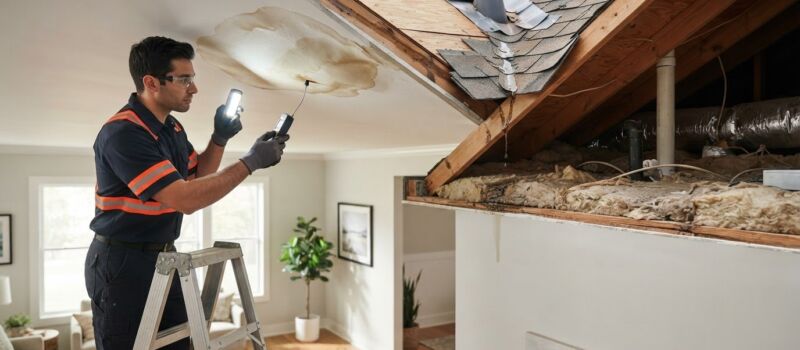
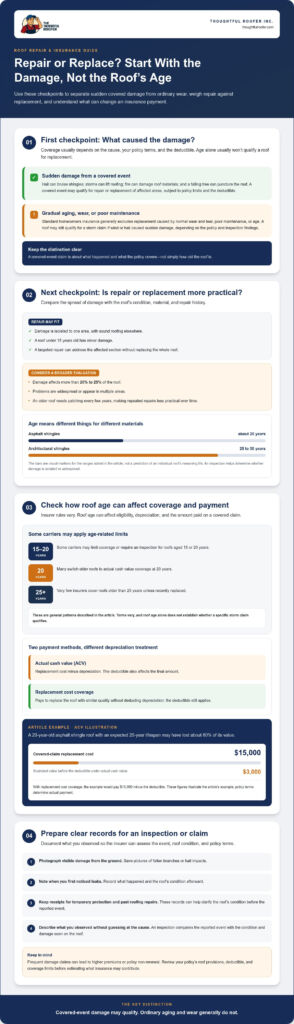
Damage from a covered event is sudden harm caused by something your policy covers. Hail can bruise shingles, storms can lift roofing, fire can damage roof materials, and a falling tree can puncture the roof. Homeowners insurance may pay to repair or replace affected areas, subject to policy limits and the deductible. Coverage for resulting water damage depends on the policy and what caused the damage. Establishing what happened helps distinguish a covered claim from gradual deterioration.
Coverage Considerations by Roof Age
A roof’s age can affect eligibility, depreciation, and the amount an insurer pays. Some carriers may limit coverage or require an inspection for roofs aged 15 or 20 years; many switch older roofs to actual cash value coverage at 20 years. Very few insurers cover roofs older than 25 years unless recently replaced. Terms vary, so age alone doesn’t establish whether a specific storm claim qualifies.
Actual cash value subtracts depreciation from replacement cost, while replacement cost coverage pays to replace the roof with similar quality without deducting depreciation. For example, a 20-year-old asphalt shingle roof with an expected 25-year lifespan may have lost about 80% of its value. On a covered claim with a $15,000 replacement cost, that example leaves $3,000 before the deductible under actual cash value. Replacement cost coverage would pay $15,000 minus the deductible.
Age-Related Damage and Wear
Age-related damage is deterioration that develops through ordinary use and exposure, rather than one covered event. Standard homeowners insurance generally excludes replacement caused by normal wear and tear, poor maintenance, or age. So, will insurance pay for a new roof due to age? Usually not when age is the only cause. A 20-year-old roof may still qualify for coverage if hail or wind caused sudden damage, depending on policy terms and inspection findings.
Repair may suit isolated damage, while replacement may make more sense when damage affects more than 20% to 25% of the roof. An older roof with widespread problems can also make repeated repairs less practical. The key distinction is whether the damage came from a covered event or gradual wear.
How do roof repair and insurance work together?
A roof claim links documented damage to its cause and your policy’s coverage and payment terms. Clear records can help distinguish storm damage from ordinary wear and tear.
Damage Documentation and Claim Preparation
Damage documentation is a dated record of what happened and the roof’s condition afterward. It can help show the insurer whether damage appears sudden or consistent with long-term deterioration. Photograph visible damage from the ground, save pictures of fallen branches or hail impacts, and note when you first noticed leaks. Keep receipts for temporary protection and past roofing repairs. Share these records when reporting the claim, and describe what you observed without guessing at the cause.
Inspections and Claim Decisions
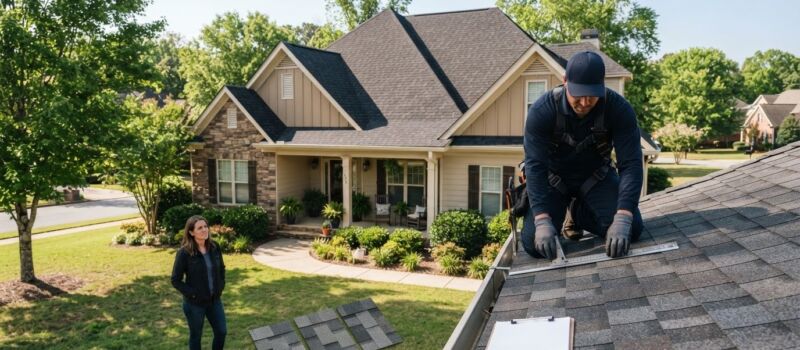
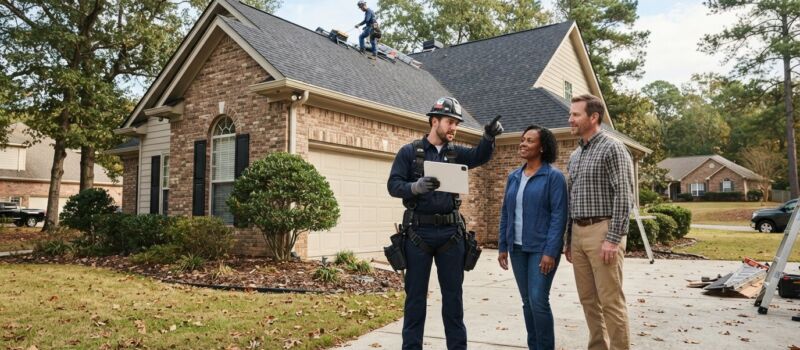
An insurer’s inspection assesses the roof’s condition, the reported event, and whether the observed damage matches the claim. For example, an adjuster may compare storm-related shingle damage with signs of long-term wear. The findings help determine whether the policy covers repairs or replacement and how the deductible and coverage limits apply. Older roofs may receive closer scrutiny because existing deterioration can affect the decision. Keep photos and repair records handy to clarify the roof’s condition before the reported event.
Depreciation in Roof Claim Payments
Depreciation reduces a roof’s assessed value as it ages, affecting payments under actual cash value coverage. A roof payment schedule can also lower reimbursement as the roof gets older. That means a covered claim on a 20-year-old roof could produce a different payment from the same damage on a newer roof. Replacement cost coverage treats depreciation differently, but the deductible still affects the amount paid. Review the policy’s roof provisions to understand which method applies before estimating what insurance will contribute.
Frequent damage claims can lead to higher premiums or policy non-renewal, so each claim deserves careful consideration. If a storm leaves an active leak, roof leak repair can address the immediate problem while the claim is reviewed.
How roof age affects repair or replacement decisions
Age is one factor, not the only measure of whether repair or full replacement makes sense. A 12-year-old roof with damage confined to one area may be more economical to repair, while repeated patching on an older roof can change the decision. Roof material, inspection findings, and the spread of damage all matter.
Match the Repair to the Roof’s Condition
A roof under 15 years old with minor damage may need repairs rather than replacement. For example, when damage is limited to one section, a repair can preserve sound roofing elsewhere. By contrast, a 15-to-18-year-old roof that needs patching every few years may cost more to maintain over time than replacing it once. Look at the pattern: isolated damage supports repair; recurring trouble across multiple areas points toward a broader evaluation.
Age also means different things for different materials. Asphalt shingles often last about 20 years, while architectural shingles may last 25 to 50 years. An inspection helps identify worn or damaged areas and whether they are isolated or widespread. A 19-year-old roof with damage in multiple spots, for instance, may be a stronger replacement candidate than a younger roof with one localized issue.
Understand Coverage and Estimate Details
Replacement cost value covers the cost to replace a roof with materials of similar quality without subtracting depreciation. Actual cash value subtracts depreciation from replacement cost, so similar damage can result in different claim payments. Your policy terms and deductible affect the amount available. Insurance coverage alone does not determine whether repairs or replacement will best protect your home.
A repair or replacement estimate should account for the roof’s size, material, and extent of damage. Costs vary based on the project, and clear estimates are provided upfront. Compare the written scope with the inspection findings: it should specify whether the work addresses one damaged area or involves a full replacement. That distinction can help you weigh immediate repairs against ongoing maintenance.
How roof age affects insurance eligibility and premiums
Insurers consider roof age and condition when setting eligibility, coverage terms, and premiums. There’s no single age cutoff across U.S. policies: state rules, policy wording, and insurer practices all influence how coverage works.
Roof age and condition can affect claim payments because insurers assess whether damage came from a covered event or ordinary wear and tear. They also determine whether payment is based on actual cash value, replacement cost, or a roof payment schedule.
Roof Age and Insurance Eligibility
Eligibility is an insurer’s decision to offer home insurance for a property with a roof of a particular age and condition. Some carriers may decline new policies for roofs older than 15 or 20 years, while others may require an inspection before setting coverage and rates. The roof’s material and visible condition can influence that assessment. For homeowners, this means age can matter before a claim is ever filed.
Roof Age and Policy Renewals
At renewal, an insurer may review the roof’s age, condition, and repair history. If the insurer considers the roof too old, it may decline renewal until repairs or replacement are completed. An inspection can identify worn or damaged shingles that need attention before renewal. Keep records of completed repairs and the roof’s condition to show how the home has been maintained.
Roof Condition and Claim Payouts
A roof’s condition helps distinguish recent storm damage from existing deterioration. Some insurers change older roofs to actual cash value coverage, which subtracts depreciation from replacement cost. Others use a payment schedule that reduces reimbursement as the roof ages. These terms can lead to different payments for similar damage. Review your policy limits, exclusions, and deductible alongside the roof’s age to understand the likely effect on coverage.
A new roof doesn’t automatically reduce premiums, though some insurers may offer a discount when replacement meets their criteria. For storm-related concerns, explore storm damage repair options to address roof damage and protect your home.
Thoughtful Roofer: Asphalt Shingle Roofing
Thoughtful Roofer helps homeowners assess roofing needs after storm damage or as shingles age. Its Asphalt Shingle Roofing service can address an older roof that needs replacement, while Storm Damage Repair can address damage caused by a covered event. The right service depends on the roof’s condition and the work needed to protect your home.
A clear inspection can help distinguish isolated damage from widespread wear, giving you practical information to consider alongside your insurance policy and claim decision. If replacement is appropriate, asphalt shingles are one roofing option; if a storm has damaged the roof, repairs may address affected areas. Contact Thoughtful Roofer to discuss your roof and the next step.
Take the Next Step Toward a More Secure Roof
Roof decisions involve more than the surface above your home. A sound plan considers how the roof, drainage, and materials work together to protect the structure. If you’re still asking whether insurance will pay for a new roof due to age, use your policy terms and the roof’s condition to guide your next conversation.
Thoughtful Roofer offers Asphalt Shingle Roofing, Metal Roofing, and Seamless Gutters to address roofing and drainage needs. Serving Huntsville and surrounding communities, including Madison, Owens Cross Roads, Gurley, and Athens, the company can help you assess the work your home requires and plan your next step.
Contact Thoughtful Roofer today to discuss your roof and possible next steps. A steady, informed decision can help you keep your home protected.
Frequently Asked Questions
Does Age Alone Disqualify a Roof?
No, roof age alone doesn’t automatically disqualify a home from insurance coverage. Insurers set different underwriting rules, and some may require an inspection or limit protection for older roofs. Material, visible condition, and maintenance history can also matter. A roof in sound condition may be assessed differently from one with curled shingles or recurring leaks, even if both roofs are the same age.
Does the Age of Your Roof Affect Insurance Rates?
Yes, roof age can affect premiums, but it doesn’t trigger one automatic rate change. An insurer may consider the roof’s condition, material, claims history, and coverage type. A new roof may qualify for a discount under some policies, but replacement doesn’t guarantee lower premiums. Review how the roof has been rated and which policy terms or condition factors affect your premium.
How Are Roof Claims Calculated?
An insurer calculates a roof claim by assessing covered damage, repair or replacement costs, the policy’s valuation method, and the deductible. Coverage limits and roof endorsements can also affect payment. Two homeowners with similar storm damage could receive different amounts if one policy subtracts depreciation or uses a roof payment schedule. The repair estimate isn’t necessarily the final payment, because policy terms and the deductible affect the amount.
Does Homeowners Insurance Cover Roof Replacement Due to Age or Normal Wear and Tear?
No. Homeowners insurance generally excludes replacement needed only because roofing materials have aged or deteriorated through ordinary use. A sudden covered event can still damage an older roof and lead to a claim, subject to policy terms. For example, insurers assess wind damage differently from shingles that have gradually cracked. Repair records can help clarify whether the reported damage is new or part of ongoing wear.
What Roof Damage Is Typically Covered by Homeowners Insurance?
Homeowners insurance commonly covers roof damage from listed events such as wind, hail, or fire. Some water damage may also be covered if it results from a covered cause. Protection depends on policy terms and exclusions; flooding and earthquakes are generally excluded from standard homeowners policies. For Huntsville-area homeowners, reviewing the policy’s covered events and water-damage language can clarify how a specific incident may be treated.
How Do Actual Cash Value and Replacement Cost Coverage Affect Roof Claims?
Actual cash value coverage subtracts depreciation from replacement cost, which can reduce payment for an older roof before the deductible. Replacement cost value covers replacing damaged roofing with new materials of similar quality without subtracting depreciation. The deductible still applies, and policy limits or roof endorsements can affect the result. Check your policy’s roof valuation terms to see which calculation applies.